Ashraf AboArafe
The landscape design for Phase One of Sultan Haitham City has secured second place in the “Future Visions in Progress” category at the 2025 Middle East Landscape Awards, held in Abu Dhabi and showcasing leading regional projects in sustainable urbanism and city design.
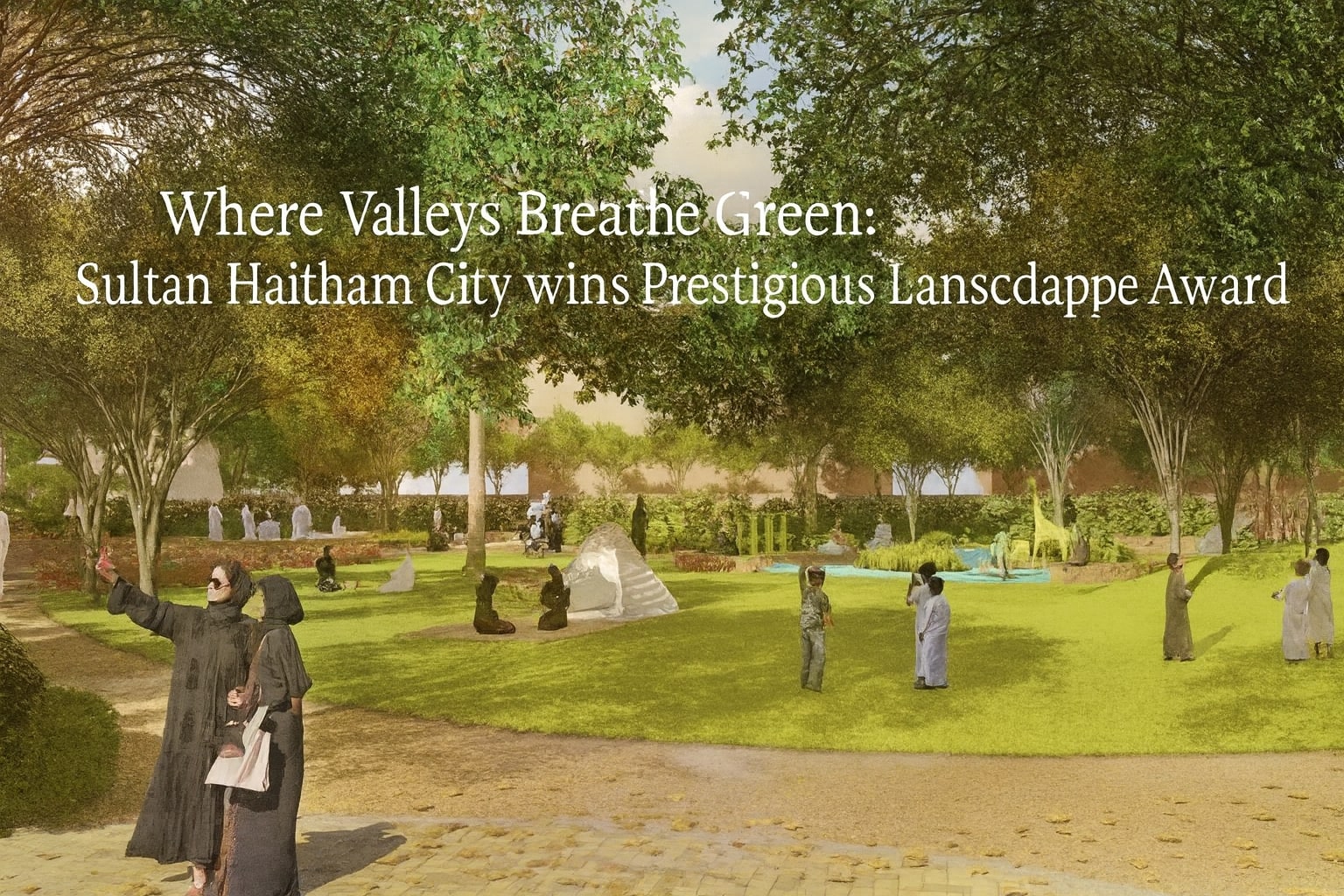
The winning project reflects a fully integrated urban vision developed through a partnership between LWK + Partners and Meinhardt. At its heart lies the transformation of the central wadi and green mobility corridors into a vibrant ecological spine—where nature is woven seamlessly into the city’s infrastructure. The design introduces an interconnected network of shaded pathways, open spaces, bike lanes, and pedestrian corridors, enabling year-round use of public spaces. Smart climatic solutions shape this environment, from tree canopies soaring up to ten meters high to “cool paths” that harness wind movement and sun-path analysis to create comfortable thermal conditions.
This approach establishes the foundation for the city’s evolving green infrastructure. A vast ecological system—featuring a central park, community gardens, and a green corridor linking neighborhoods to protected natural areas and biodiversity belts—unfolds across development phases. According to the masterplan, green areas will exceed 2.9 million square meters, making public spaces pivotal to daily life and central to enhancing residents’ urban experience.
Sustainability anchors every element of the project. Low-consumption irrigation systems, treated water use, and partial reliance on solar energy reduce water usage by 40–60% compared to conventional systems. The wadi itself is engineered to absorb rainwater and improve soil permeability, easing pressure on traditional drainage networks and enhancing natural resource management on-site.
The city’s mobility system reinforces a shift toward low-emission living. A cohesive network of light-mobility paths promotes walking, cycling, and micro-mobility, decreasing dependence on private vehicles, cutting emissions, and improving air quality.
Material selection also reflects a long-term sustainable ethos. Locally sourced Omani stone and natural paving slabs form the project’s backbone, while a significant portion of excavation materials is recycled and reused on-site for backfilling and land shaping—reducing waste and curbing emissions associated with transportation and excessive use of new materials.
Abdulhamid Al-Adawi, landscape architect at the Executive Office for Future City Projects at the Ministry of Housing and Urban Planning, noted:
“This achievement reflects the evolution of Sultan Haitham City’s design, which balances Omani identity with modern urban needs. The project transforms the wadi and green corridors into a living urban system that offers shade, walkways, and bike paths through low-maintenance solutions and native plants that enhance biodiversity—ultimately improving quality of life and creating family-friendly environments.”
This milestone reinforces Sultan Haitham City’s role as a pioneering urban project in the region, aligned with Oman’s ambition to build future cities that harmonize people, nature, and economic vitality through principles of sustainability and balanced urban development.