Ashraf AboArafe
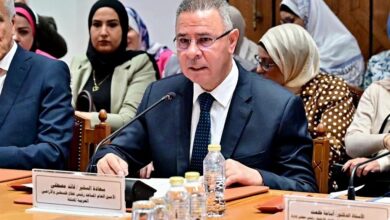
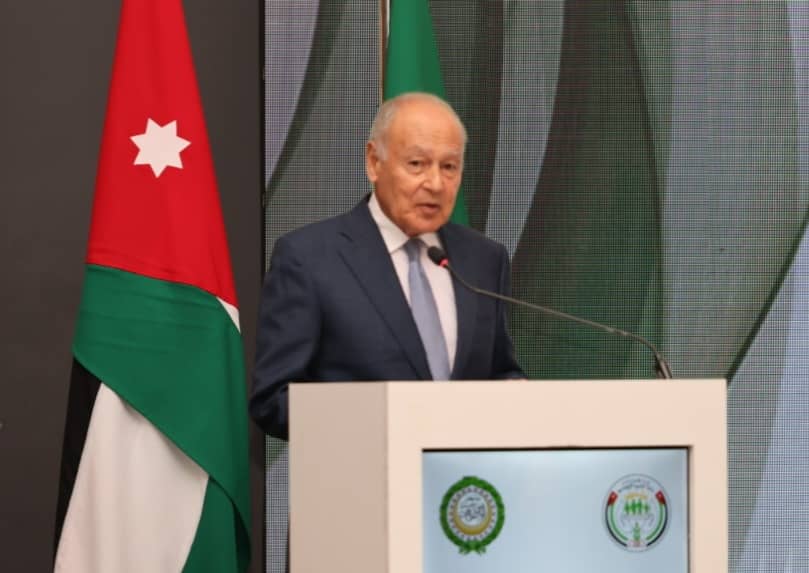
Amman – At the opening of the High-Level Arab Conference on the Implementation of the Doha Declaration of the Second World Summit for Social Development, held in the Hashemite Kingdom of Jordan, H.E. Ahmed Aboul Gheit, Secretary-General of the League of Arab States, delivered a far-reaching address that blended political conscience with a strategic vision for Arab social development.
Aboul Gheit began by expressing deep appreciation to Jordan—its leadership, government, and people—for their hospitality and longstanding role as a hub for Arab and international dialogue, extending particular thanks to Prime Minister Dr. Jaafar Hassan for sponsoring and participating in the conference, underscoring Jordan’s commitment to advancing Arab social development pathways.
Palestine at the Heart of the Arab Conscience
The Secretary-General stressed that the conference convenes amid unprecedented pressures facing the Arab region, foremost among them the ongoing tragedy in Palestine. He described Gaza as a land still bleeding after two years of what he termed a brutal and inhumane massacre, noting that even after a ceasefire, Palestinians—especially children—continue to die from cold, displacement, and deprivation.
Aboul Gheit warned that the occupation persists in emptying the ceasefire of its substance, evading obligations and defying international will, as if determined to prolong collective punishment indefinitely.
“There is no social duty more urgent,” he said, “than restoring life to Gaza’s society. Nor is there a form of resistance more effective than supporting Palestinians in Gaza, the West Bank, and East Jerusalem—strengthening their resilience to remain on their land.”
He emphasized that Arab capabilities, vast and diverse, must be mobilized to this noble goal, noting that while Arab states have provided massive humanitarian aid, much of it remains blocked, insufficient even for basic survival—let alone early recovery or the rebuilding of health and education systems deliberately destroyed. Yet, he affirmed, the will of the Palestinian people remains stronger than occupation.
From Doha to Amman: Turning Declarations into Action
Aboul Gheit highlighted the role of the Council of Arab Ministers of Social Affairs in formulating Arab priorities ahead of the Second World Summit for Social Development, through ministerial consultations held in Tunisia in mid-2025. He praised the constructive coordination with international partners, including Morocco, Belgium, Iraq (as Chair of the G77 and China), and Egypt, which helped ensure that Arab priorities were meaningfully reflected in the Doha Declaration.
He described the Amman conference as the Arab launch point for implementing the Doha outcomes, calling for the forthcoming Amman Declaration to include clear, time-bound steps aligned with Arab priorities and the Arab Vision 2045, adopted at the Arab Development Summit in Baghdad last May as a long-term roadmap for social transformation.
The Arab Vision 2045: Humanity Before Numbers
According to Aboul Gheit, the Arab Vision 2045 places the Arab citizen at the center of development—as both its instrument and ultimate goal. The vision calls for inclusive societies free from marginalization, founded on justice and equity, and supported by a solidarity-based economy that leverages digitalization and innovation to create jobs and expand social justice.
Together, he said, the Doha Declaration, Arab priorities, and Vision 2045 form a unified and coherent framework guiding Arab collective action toward sustainable and inclusive social development.
Institutional Foundations for Social Progress
The Secretary-General also recalled key Arab initiatives endorsed at recent summits, including the Arab Decade for Persons with Disabilities (adopted at the Riyadh Summit 2023), the Arab Framework to Eradicate Multidimensional Poverty, the Arab Strategy for Older Persons, and the New Social Contract Document—all forming an integrated policy architecture for social advancement.
In this context, he underscored the importance of the Arab Center for Social Policy Studies and Multidimensional Poverty, hosted by Jordan, describing it as a vital regional technical mechanism that deserves strong financial and institutional support to fulfill its mission.
A Final Measure: The Citizen’s Life
Concluding his address, Aboul Gheit stressed that all strategies and declarations must ultimately be measured by their impact on the daily life of the Arab citizen—their welfare, dignity, and quality of life according to internationally recognized standards.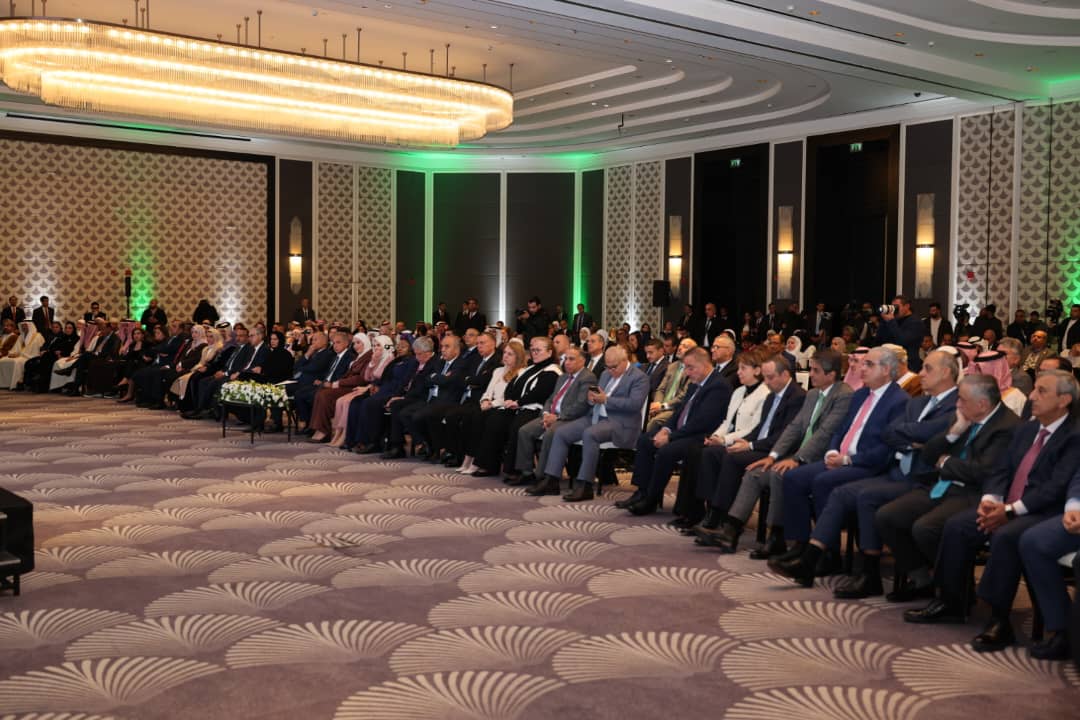
He voiced confidence that the Amman Declaration would adopt a practical, people-centered approach, placing the Arab citizen at the heart of development—both its means and its reward.
“Thank you,” he concluded, “and may peace and God’s mercy be upon you.”