Ashraf AboArafe
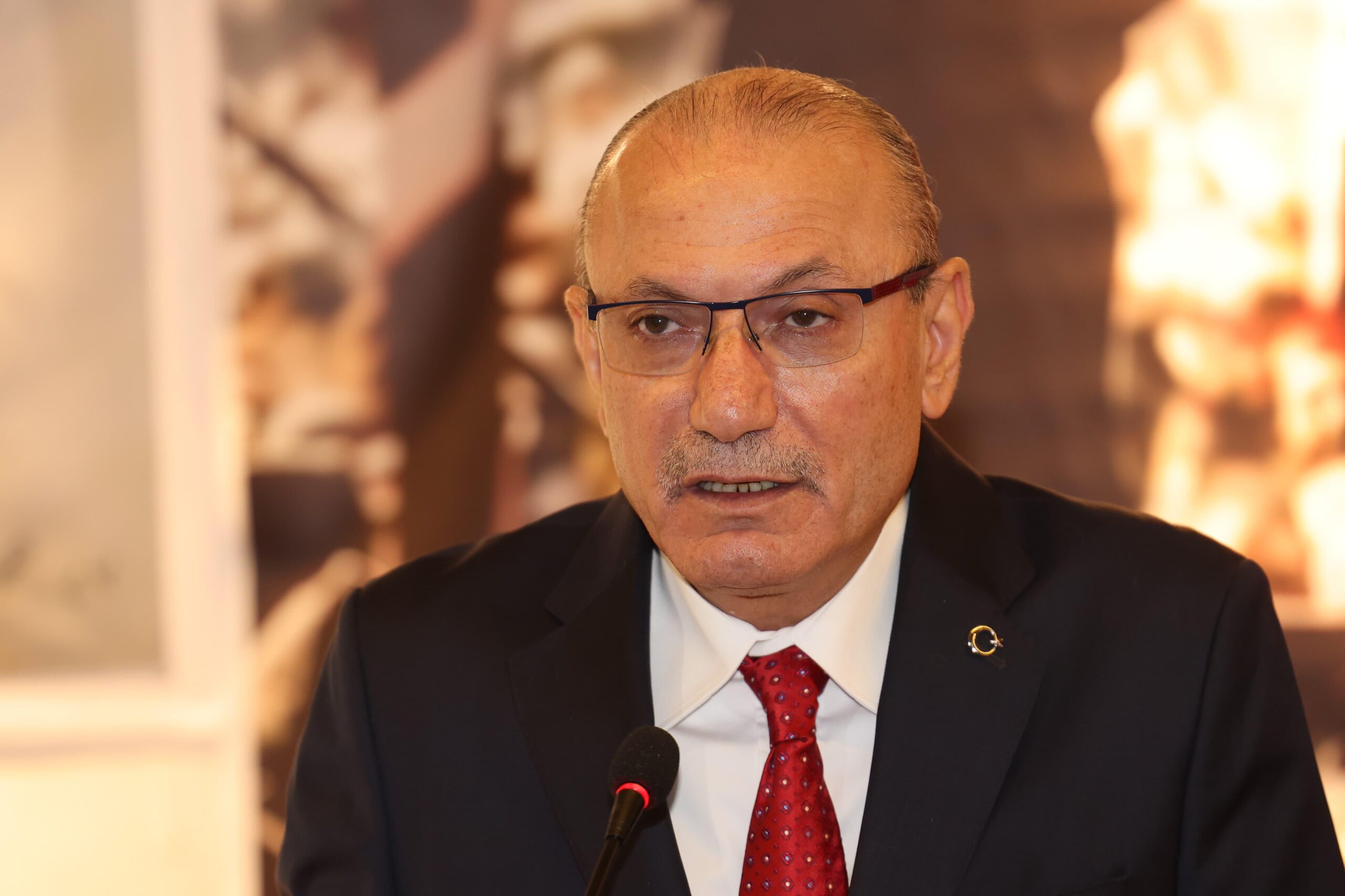
Turkish Ambassador to Cairo Salih Mutlu Şen has revealed that President Recep Tayyip Erdoğan will pay a very soon visit to Cairo—a visit framed not as protocol alone, but as a moment shaped by history and the future of the region.
Speaking during an in-depth interview on Madar Al-Ghad with journalist Sami Kleib, Ambassador Şen stressed that Türkiye’s regional vision rests firmly on the principle of regional ownership—a doctrine Ankara and Cairo now advance in tandem across multiple theatres, from the Horn of Africa to the Levant.
Cairo Awaits Ankara
The upcoming visit follows the landmark February 2024 meeting in Cairo, where President Abdel Fattah el-Sisi hosted President Erdoğan in what both sides described as a turning point in bilateral relations. The ambassador confirmed that preparations are underway to formalize a package of strategic agreements spanning trade, investment, and economic cooperation—signaling a durable reset between the two regional heavyweights.
“History was made in Sharm El-Sheikh,” Şen said. “Historians may write about this moment five or ten years from now.”
A United Front on Somalia
Ankara and Cairo have also aligned their diplomatic weight against Israel’s unilateral move to recognize “Somaliland,” a step both capitals reject as illegal and destabilizing. Türkiye and Egypt jointly led efforts within the Organization of Islamic Cooperation to issue clear condemnations, warning that such actions threaten to fracture Somalia and redraw the geopolitical map of the Red Sea and the Horn of Africa.
Şen argued that Israel’s maneuver aims to entrench influence in the Gulf of Aden and the Red Sea through non-regional actors—an approach that risks sowing long-term instability across Africa and the Arab world.
Syria: Unity or Fragmentation
On Syria, the ambassador reiterated Türkiye’s support for restoring stability and territorial integrity. He accused the Syrian Democratic Forces (SDF) of exploiting the chaos of past years to entrench de facto control, asserting that this dynamic ultimately serves Israeli interests by weakening a unified Syrian state.
While stressing that Türkiye does not seek direct confrontation with Israel on Syrian soil, Şen made clear that Ankara reserves the right to act if its borders are threatened or if Damascus formally requests bilateral assistance.
Gaza and the Question of Peace
Turning to Gaza, Şen underscored that Türkiye’s priority remains a two-state solution and an end to Palestinian suffering. He described Türkiye as a constructive guarantor in the recent peace initiatives associated with President Donald Trump, highlighting the Sharm El-Sheikh summit as a rare convergence of leadership involving Egypt, Türkiye, Qatar, and the United States.
“There can be no lasting regional peace without Palestinian sovereignty and dignity,” he said. “Security for Israel cannot come at the expense of Palestinian life.”
Asked about Hamas, the ambassador emphasized that Türkiye places the Palestinian people first, calling for unity and reconciliation among Palestinian factions once a credible political horizon toward statehood is secured.
A Region at a Crossroads
Throughout the interview, one message remained constant: Türkiye and Egypt now see their coordination as essential to shielding the region from fragmentation—whether in Somalia, Syria, or Palestine. In Şen’s telling, the rapprochement between Cairo and Ankara is not merely bilateral diplomacy, but a strategic attempt to reclaim regional agency from external designs.
As the anticipated presidential visit draws nearer, the subtext is unmistakable: when Cairo and Ankara speak together, the region listens—and history, once again, begins to take notes.