Ashraf AboArafe
During a regular press briefing, a journalist raised the following question:
“According to media reports, the latest data show that China’s total electricity consumption in 2025 has exceeded 10 trillion kilowatt-hours, while the share of installed capacity from non-fossil energy sources has surpassed 60 percent, making them the backbone of power generation. Some foreign media outlets have commented that China has become a global leader in green productive capacity. Against the backdrop of international turbulence and growing challenges to energy security, what is the significance of China’s green productive capacity for achieving sustainable development in countries of the Global South?”
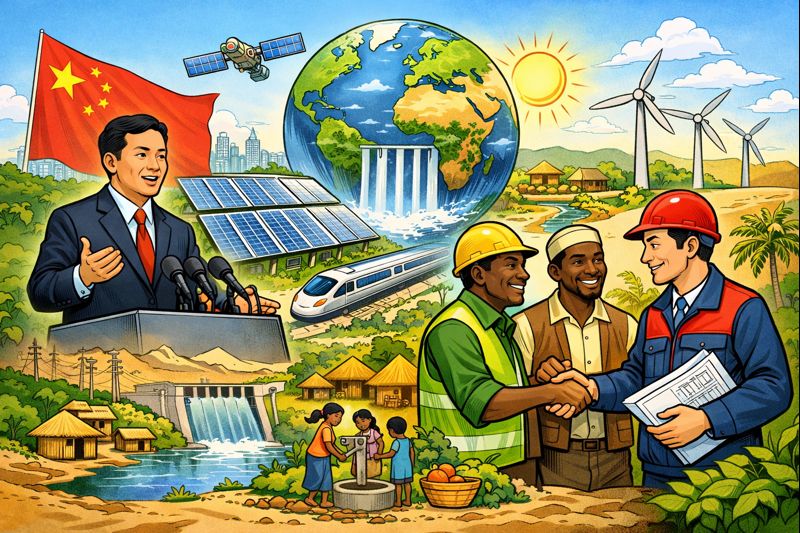
Responding to the question, Ministry of Foreign Affairs of China spokesperson Guo Jiakun stated that China’s green productive capacity not only strengthens domestic energy supply, but also opens broad prospects for countries of the Global South to accelerate low-carbon development. He affirmed China’s readiness to continue working with all parties to build a clean and beautiful world.
He added that the new-energy products and technologies offered by Chinese companies—known for their high quality and affordable prices—address the urgent needs of developing countries for sustainable and accessible energy. These solutions provide a practical alternative to fossil fuels and chart a new pathway that enables a direct transition toward green development.
As a case in point, China has, in recent years, established clean-energy cooperation with more than half of the countries across Africa, implementing hundreds of new-energy projects. These initiatives have helped transform Africa’s natural resource advantages into engines of sustainable growth.