Ashraf AboArafe
According to Xinhua News Agency, the second volume of a book documenting President Xi Jinping’s visits to ordinary households across China has been officially published.
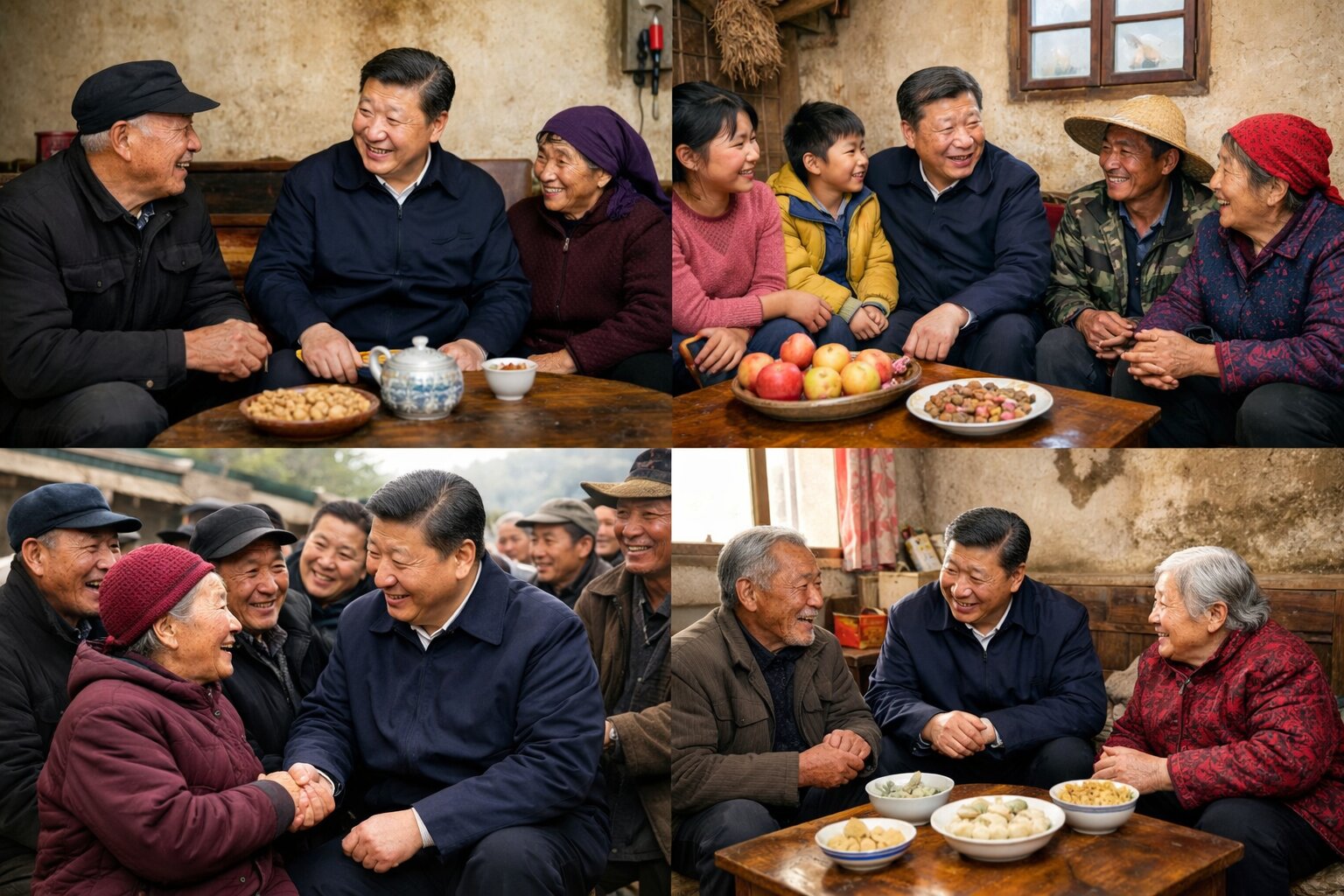
The book, released by the China Women Publishing House and compiled by the All-China Women’s Federation, presents 32 firsthand accounts from families, villages, and communities who received Xi during his domestic inspection tours. It vividly recounts moments when he entered people’s homes, sat with them, and discussed issues related to livelihoods and daily life.
A Political Narrative Rooted in Proximity
As reported by Xinhua, the volume focuses on Xi’s direct engagement with citizens at the grassroots level. Unlike policy speeches or macroeconomic briefings, these narratives highlight personal interactions — conversations about employment, rural revitalization, healthcare access, and education.
Within the political culture of the Communist Party of China, such visits symbolize the principle of maintaining close ties with the people. By transforming these interactions into a structured publication, the leadership reinforces the image of governance grounded in community-level realities.
The Social Lens: Family and Community
The fact that the book was compiled by the All-China Women’s Federation adds another layer of meaning. The institution plays a central role in advancing women’s participation in social development, poverty alleviation, and family welfare initiatives.
Through the stories of families and communities, the publication frames national development not as abstract policy, but as lived experience — embedded in households and daily routines.
Soft Power and Political Legitimacy
Beyond domestic readership, the publication carries broader narrative implications. In an era when political systems compete through messaging as much as through material power, documenting a leader’s presence inside citizens’ homes projects accessibility and attentiveness.
The message conveyed is clear: governance is not confined to offices and conference halls, but extends to kitchens, courtyards, and village living rooms.
Conclusion
As reported by Xinhua, the second volume consolidates a consistent theme in contemporary Chinese governance — leadership through direct engagement. By preserving these household visits in written form, the publication contributes to shaping both domestic perception and international understanding of China’s people-centered development approach.
It is a chronicle of visits.
Yet at a deeper level, it is a narrative about how political authority is cultivated through proximity to the people.