Ashraf AboArafe
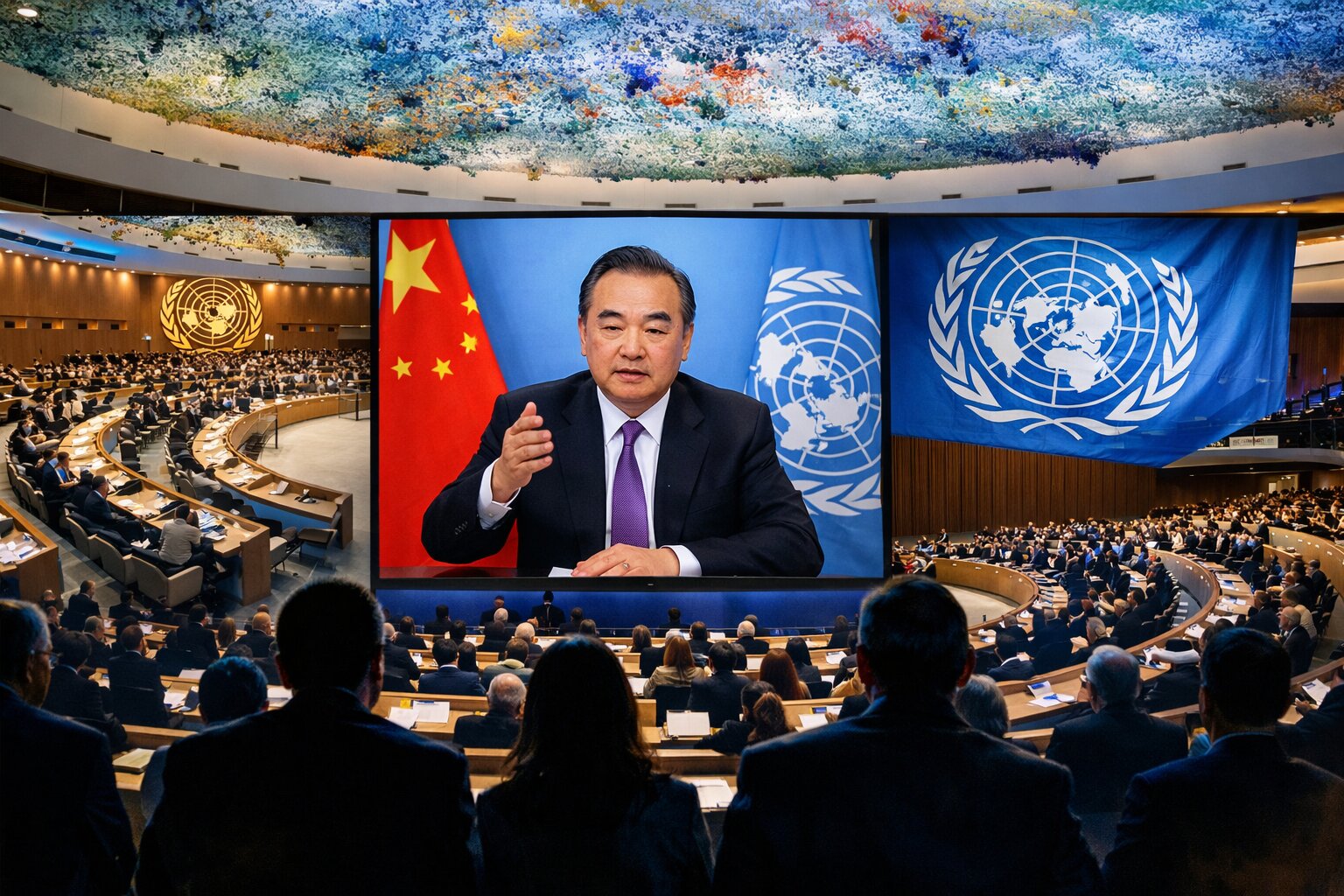
ON February 23, 2026, at the High-Level Segment of the 61st session of the United Nations Human Rights Council, Chinese Foreign Minister Wang Yi delivered a speech via video link titled “Implementing the Global Governance Initiative and Reforming and Improving Global Human Rights Governance.”
The address was not merely procedural diplomacy—it was a carefully calibrated articulation of China’s evolving worldview on sovereignty, multilateralism, and the architecture of human rights governance in a transforming global order.
1. From Universalism to Pluralism
At the heart of the speech lies a subtle but powerful reframing: human rights are universal in aspiration, yet diverse in realization.
Wang Yi’s narrative suggests that the global human rights system must shift from a single interpretative authority to a model rooted in civilizational diversity and developmental context. This approach challenges what Beijing views as selective standards or politicized applications of rights discourse.
The implication is profound:
- Human rights should not be weaponized.
- Development is the foundation of dignity.
- Dialogue replaces confrontation.
This perspective repositions rights from being solely individual-centric to being intertwined with collective stability, economic advancement, and national sovereignty.
2. The Global Governance Initiative as Strategic Doctrine
The speech situates human rights reform within China’s broader Global Governance Initiative—a framework emphasizing:
- Consultation over coercion
- Equity over hierarchy
- Shared security over bloc politics
In essence, Beijing advocates a world where governance systems are not dictated by dominant powers but shaped through inclusive multilateralism. The Human Rights Council, in this vision, becomes a platform for mutual learning rather than ideological contest.
This aligns with China’s broader diplomatic lexicon: win-win cooperation, community of shared future, and development-first human rights philosophy.
3. Reforming the Moral Infrastructure
The call to “reform and improve” global human rights governance is not a rejection of the system—but a bid to reconfigure its moral infrastructure.
Three key signals emerge:
- Depoliticization – reducing country-specific targeting.
- Developmental prioritization – framing poverty alleviation and modernization as core rights achievements.
- Institutional balance – resisting what is perceived as Western normative dominance.
The speech reflects China’s strategic patience: not dismantling the existing order, but reshaping it from within.
4. Geopolitical Undercurrents
Delivered amid intensifying global fragmentation, the message speaks beyond Geneva. It is addressed to:
- Developing nations seeking alternative governance narratives.
- Western democracies defending liberal rights frameworks.
- A Global South increasingly vocal about representation and equity.
In this sense, the speech is part of a larger contest—not over the existence of human rights—but over who defines them, who monitors them, and who holds moral authority.
5. A Contest of Philosophies
Ultimately, the address reveals a widening philosophical divide:
- One model emphasizes individual liberty, political pluralism, and oversight mechanisms.
- The other prioritizes social harmony, economic development, and sovereignty safeguards.
Neither discourse denies human dignity. The divergence lies in method, sequencing, and authority.
Conclusion: Diplomacy as Narrative Architecture
Wang Yi’s speech is less about policy details and more about narrative architecture. It seeks to reposition China not as a respondent to criticism, but as a co-author of global norms.
The emerging message is clear:
The future of human rights governance will not be defined by one voice, but negotiated among many.
And in that negotiation, China intends not merely to participate—but to shape the lexicon itself.