Ashraf AboArafe reports
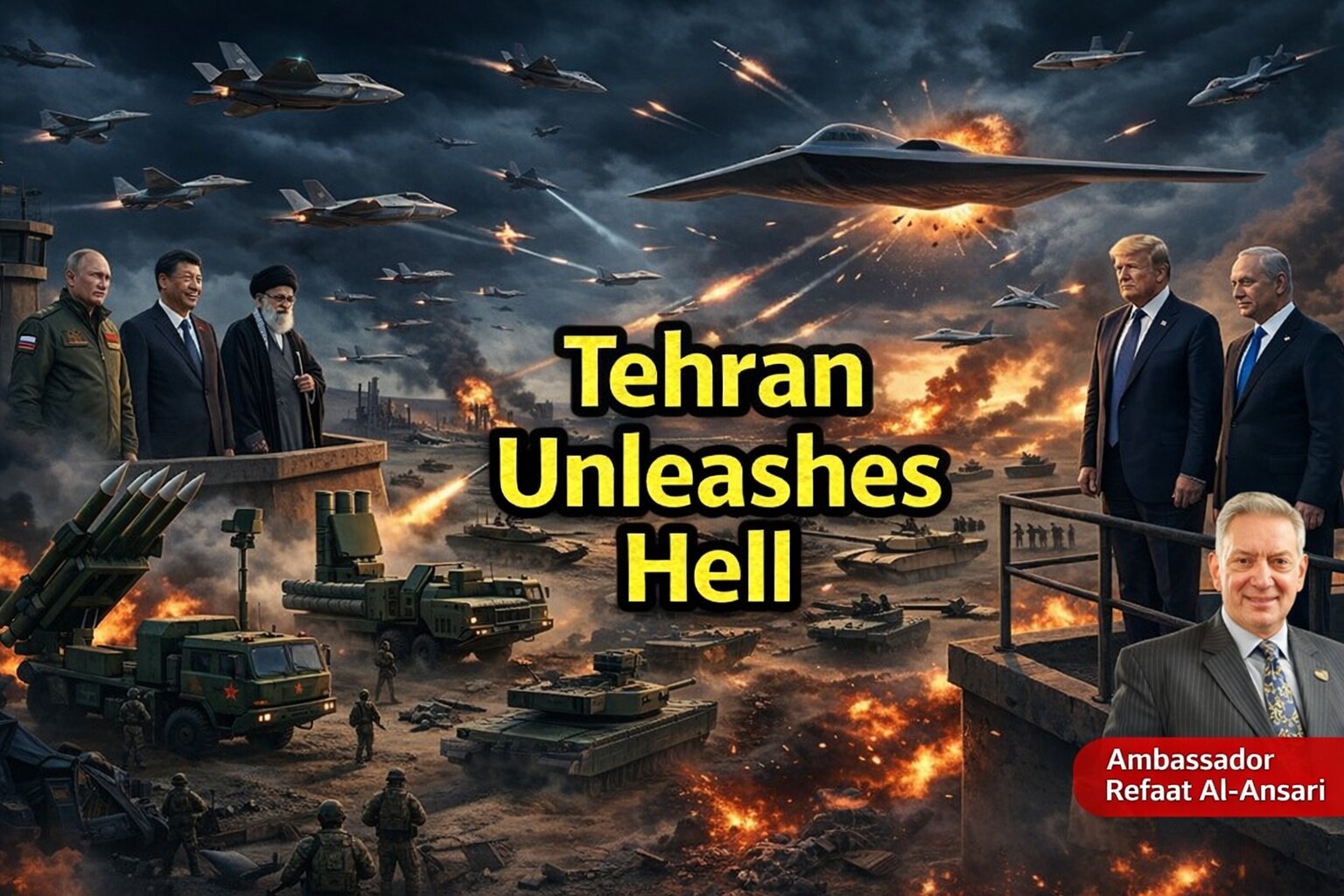
Via YouTube, Ambassador Refaat Al-Ansari delivered a stark warning: Iran is “one week away” from possessing the technical capability to assemble a nuclear weapon, should it choose to do so.
Such language is never accidental.
Statements of this magnitude compress diplomatic timelines, elevate public urgency, and signal that strategic patience may be running out. According to Al-Ansari, this threshold represents a global red line — one Washington insists cannot be crossed.
The Middle East now stands at the edge of strategic rupture.
What began as calculated rhetoric has evolved into unmistakable escalation — military deployments, naval maneuvers, intelligence positioning, and diplomatic brinkmanship converging into a moment disturbingly reminiscent of past turning points.
The central question is no longer whether tensions are rising.
It is whether the decision has already been made.
Prelude to War or Pressure Strategy?
Was the “one-week” warning a prelude to military action?
Or a calibrated escalation designed to pressure both Tehran and hesitant factions within Washington?
Some analysts interpret the language as echoing pre-Iraq urgency narratives — the framing of an imminent threat to justify intervention.
Others argue it is a strategic alarm bell intended to force rapid diplomatic closure before control over the nuclear timeline slips away.
The distinction is critical.
It may determine whether the region steps into war — or back from it.
Washington Divided
Inside Washington, consensus appears fragile.
One camp argues that delay strengthens Tehran and erodes deterrence.
Another warns that even a “limited” strike could ignite a confrontation that expands beyond initial calculations.
Options reportedly under consideration include:
- Rapid, concentrated strikes on missile infrastructure
- Disruption of command and control systems
- A short operational window followed by renewed negotiations
But such strategies rest on a dangerous assumption — that Iran would absorb a strike without escalating asymmetrically or accelerating its nuclear ambitions underground.
History suggests otherwise.
The Strategic Shift: Iran Is Not Alone
What fundamentally distinguishes this moment from previous crises is the evolving geopolitical alignment surrounding Tehran.
China’s naval intelligence presence in the Arabian Sea — alongside joint exercises involving Iran and Russia under the banner of “Security Shield 2026” — signals that Iran’s strategic isolation has narrowed.
The partial closure of the Strait of Hormuz during those drills was not symbolic.
It was declarative.
The message was unmistakable:
The Gulf is no longer an uncontested American maritime domain.
Any strike now would resonate not only in Tehran — but in Beijing and Moscow.
The confrontation is no longer bilateral.
It is triangular.
And triangular confrontations are inherently unstable.
The Narrow Diplomatic Corridor
Despite escalating rhetoric, diplomacy has not collapsed — yet.
A rapid agreement remains theoretically possible:
- Long-term nuclear freeze
- Reduced enrichment levels
- Strict inspection mechanisms
- Gradual sanctions relief
Tehran resists permanent zero enrichment.
Washington resists threshold nuclear capability.
Between these positions lies a narrowing corridor of compromise.
Time, however, is the scarcest commodity.
The Countdown
Iran has historically advanced to the edge — then recalibrated at the final hour.
But this time, the edge is crowded.
Major powers are embedded in the theater.
Energy markets are exposed.
Shipping lanes are vulnerable.
Regional alliances are brittle.
This may not be 2003.
But the echoes are impossible to ignore.
The coming days will determine whether the region witnesses:
- A negotiated recalibration of power
or - The opening phase of a confrontation that reshapes the Middle East for a generation.
The clock is no longer ticking quietly.
It is counting down.