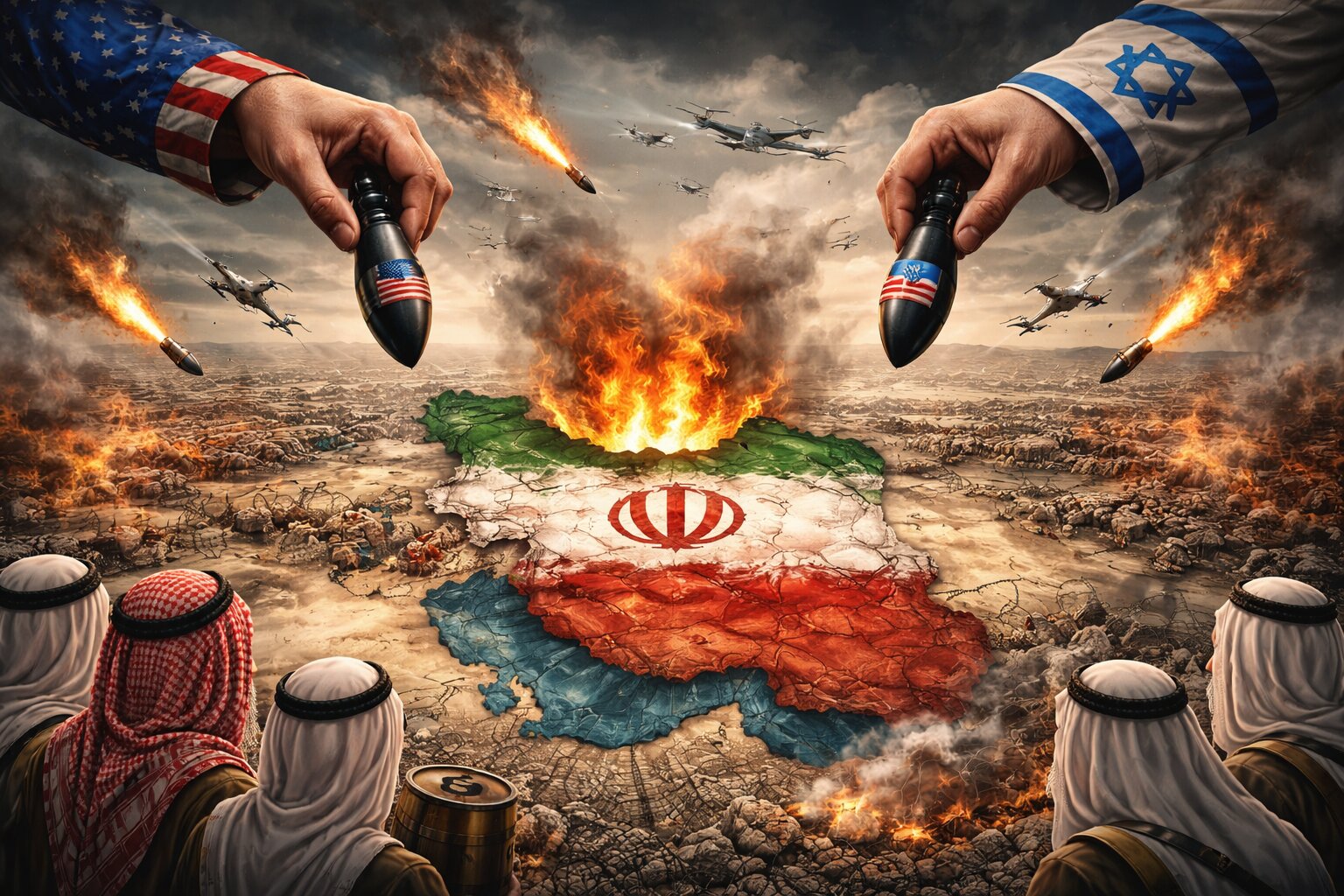
Chief editor writes
EVERY time Iran strikes targets linked to the United States or Israel, regional and international capitals rush to condemn.
But how many times have those same voices condemned a forty-seven-year economic siege?
Nuclear Logic and Structured Monopoly
- The United States holds approximately 5,244 nuclear warheads.
- Israel is estimated to possess around 90 nuclear warheads and is not a signatory to the NPT.
Iran, meanwhile, is a treaty member under international inspection.
Is this non-proliferation — or regulated monopoly?
Strategic Memory the Gulf Should Not Ignore
During the Iran–Iraq War, led by Saddam Hussein, Iran faced an existential war.
At that moment, Tehran could have pursued a broader expansionist war toward Gulf oil fields under revolutionary momentum and regional instability.
It did not.
There was no declared campaign to annex Gulf territories.
No formal project to seize oil infrastructure.
No overt territorial expansion beyond the warfront.
Official Iranian doctrine at the time emphasized — at least rhetorically — respect for state sovereignty.
This does not absolve Iran of regional influence operations.
Nor does it erase Gulf security concerns.
But it challenges the narrative that full domination of the Gulf was an inevitable or imminent objective.
If total hegemony were the goal,
was the eight-year war not the perfect opportunity?
Fear should be assessed through behavior, not assumption alone.
Humanity at Risk
The issue is not Iran alone.
Nor Israel alone.
Nor the United States alone.
The issue is a moral scale that shifts depending on the flag involved.
Humanity erodes when principles are selective.
The real question remains:
Is the problem the missile?
Or the system that normalized decades of aggression first?