Ashraf AboArafe
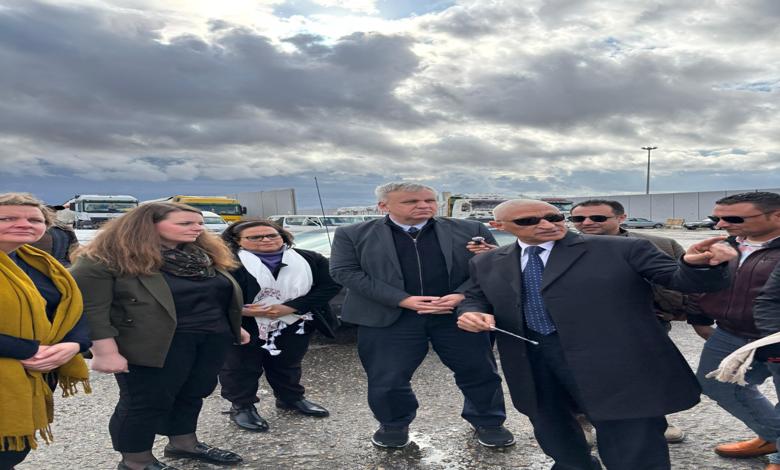
In a moment overshadowed by widening regional tensions, Jürgen Schulz, Germany’s ambassador in Cairo, journeyed to North Sinai with Annika Engels, head of the Palestinian Affairs Unit at the German Foreign Office. Their destination was Al-Arish—a frontline city where diplomacy meets urgency.
There, they met the Governor of North Sinai to assess the rapidly evolving humanitarian situation in Gaza, with particular focus on Rafah Border Crossing and the coordination of relief efforts. The visit extended to the Egyptian Red Crescent’s logistics hub in Al-Arish, a critical artery for aid flowing into Gaza.
Amid worsening access conditions since February, Schulz stressed a clear imperative: humanitarian corridors must remain open. Civilian populations in Gaza, he warned, cannot be left at the mercy of political delays or logistical constraints.
Germany has called on Israel to allow sufficient humanitarian aid into Gaza and to initiate infrastructure rehabilitation in line with the first phase of the internationally backed peace framework. Speaking from Rafah, Schulz underscored a fading global focus: “We must not forget Gaza. Amid competing crises, it risks slipping from the top of the international agenda.”
Berlin maintains that Gaza must remain a priority. While Germany welcomes the resumption of medical evacuations through Rafah, the scale remains limited. Over 18,000 individuals—many in critical condition—are still awaiting evacuation. The German government continues to press for the full reopening of the crossing to civilian movement in both directions, ensuring that the most vulnerable receive timely care.
Germany also expressed deep appreciation for Egypt’s sustained role in supporting Gaza and de-escalating regional tensions, particularly as new conflict zones emerge across the Middle East.
Rising Humanitarian Commitment
In response to escalating instability, including the broader conflict involving Iran, Germany has significantly increased its humanitarian contributions to the Near and Middle East, now totaling €188 million. These funds are directed toward key international organizations such as United Nations High Commissioner for Refugees (UNHCR), UNICEF, and the International Committee of the Red Cross, alongside various NGOs operating in the region, including in the Palestinian territories.
Since October 7, 2023, Germany has provided over €420 million in humanitarian aid to Palestinians, with approximately 90% allocated to Gaza. This positions Germany among the leading global donors, in coordination with the European Union.
Security, Ceasefire, and the Fragile Path Forward
Despite ongoing diplomatic efforts, the situation in Gaza remains volatile. Germany has urged all parties to exercise restraint and uphold the ceasefire framework outlined in the twenty-point peace plan, endorsed by United Nations Security Council Resolution 2803.
Berlin emphasizes that delays in implementing agreed measures only deepen the crisis and complicate prospects for a sustainable resolution. All actors, including Hamas, are expected to fulfill their commitments under the plan.
As regional tensions intensify, particularly with developments involving Iran, Germany reaffirms its commitment to working closely with Egyptian partners and international stakeholders. The message remains unequivocal: Gaza must not be eclipsed by other crises—its humanitarian reality demands sustained global attention and action.