M.General Mahmud Rehan
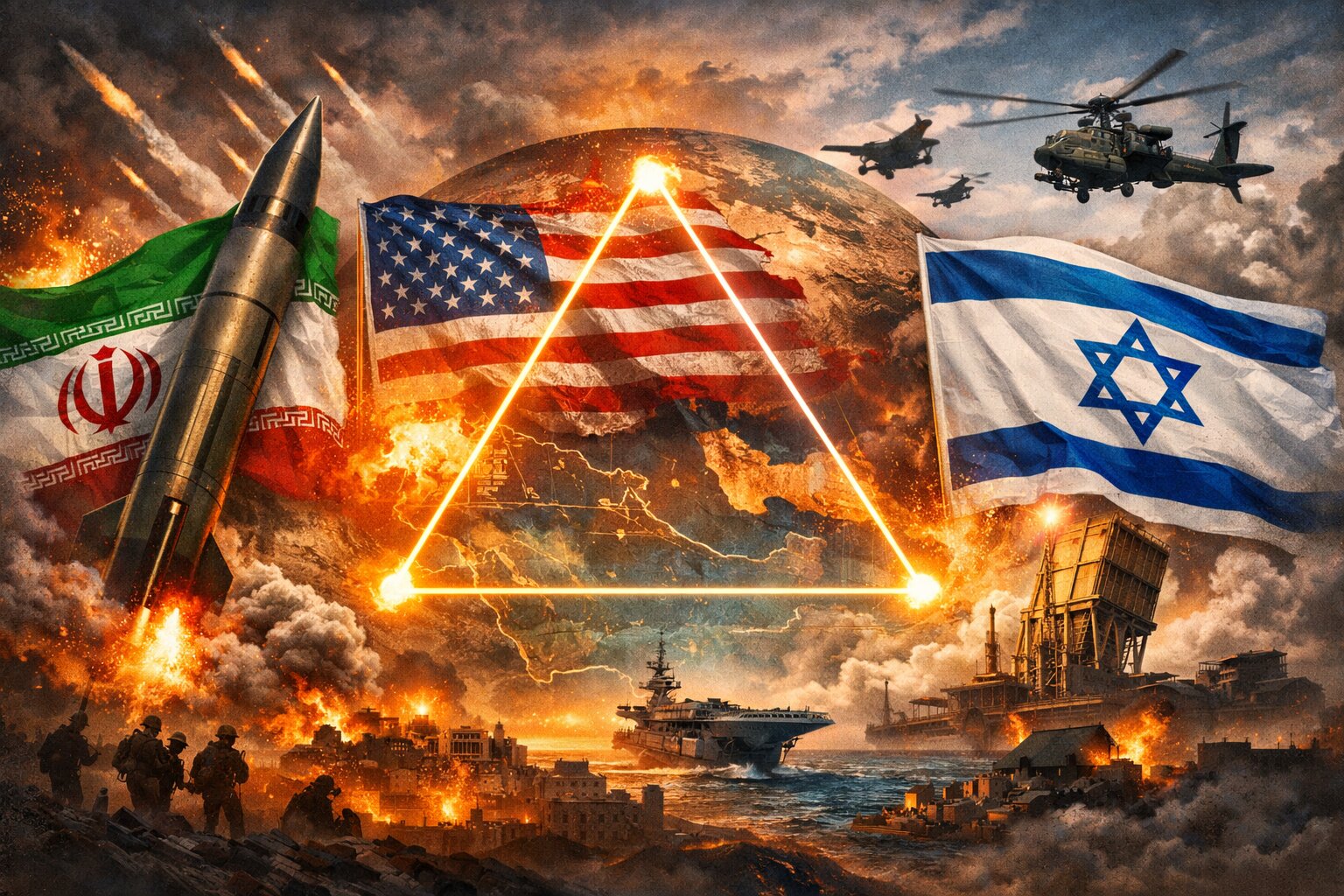
Power dynamics in the Middle East reveal a deeply complex web of strategic balances that go far beyond the surface of daily crises. At the core lies a critical triangle involving Iran, the United States, and Israel—one shaped less by direct confrontation and more by mutual deterrence and conflict management. Key historical turning points, such as the establishment of Israel in 1948 and the Iranian Revolution in 1979, have significantly reshaped this balance.
Israel relies on qualitative military superiority and a policy of nuclear ambiguity to secure its position, while Iran has developed an asymmetric deterrence model based on regional influence and advanced missile capabilities. Meanwhile, the United States plays a central role in maintaining this balance, aiming to prevent the dominance of any single power and to preserve broader international stability.
Within this intricate framework, conflict is no longer a distant possibility but an ongoing reality managed within calculated limits. Although all parties claim to pursue security, their parallel strategies continue to sustain a state of constant tension—hovering between deterrence and potential escalation.