Ashraf AboArafe ✍️
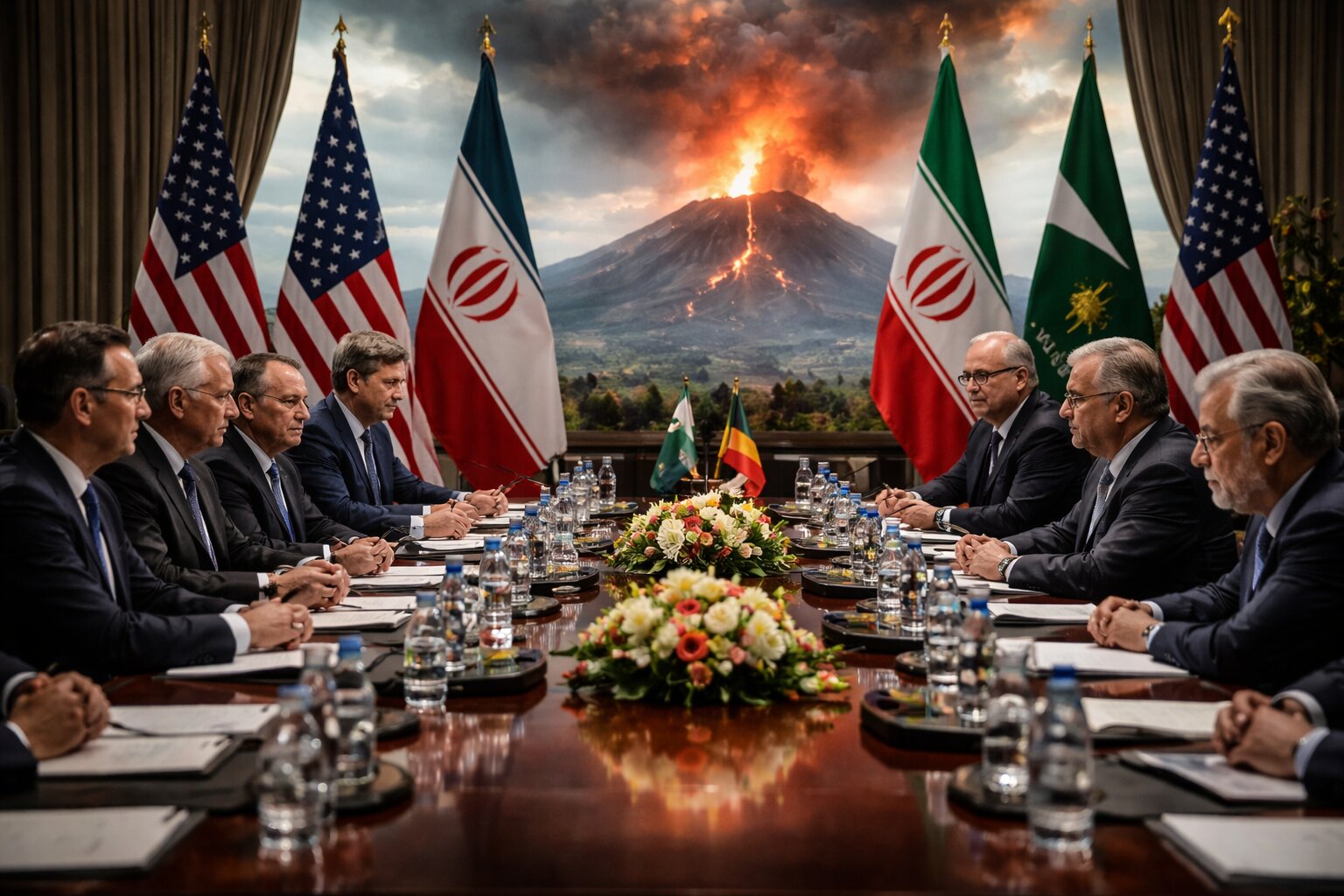
IN a moment that feels lifted from the pages of history rather than the rhythm of daily news, the United States and Iran sit face to face in Islamabad—not in pursuit of a comprehensive peace, but in a desperate attempt to prevent a war from spiraling beyond control.
These are not ordinary talks.
They are a stress test for the international system itself.
Diplomacy of Necessity, Not Conviction
What is unfolding today does not reflect a genuine shift in positions, but rather the coercion of reality.
Washington, long accustomed to negotiating from a position of dominance, now faces a far more complex strategic landscape.
Tehran, steadfast in its rhetoric of resistance, recognizes that prolonged confrontation risks turning into unsustainable internal strain.
Put simply:
Everyone is negotiating… but no one truly trusts the other.
Islamabad: The Capital That Stepped Out of the Shadows
The choice of Pakistan is far from procedural—it is deeply symbolic.
Global diplomacy is no longer monopolized by traditional Western capitals; it is increasingly shaped by emerging nodes of balance.
Islamabad today is not merely hosting talks—it is asserting itself as a strategic intermediary in a shifting order where:
- Unipolar dominance is eroding
- Regional mediators are rising
- Power is being redefined
Negotiations on a Volcanic Fault Line
The agenda itself reveals the magnitude of the challenge:
- The nuclear program: sovereignty versus deterrence
- The Strait of Hormuz: a global energy artery turned geopolitical lever
- Sanctions: economic warfare by other means
- Regional influence: competing visions of order
These are not negotiable details.
They are layered historical conflicts compressed into a single table.
Any expectation of a sweeping agreement is, at best, politically optimistic.
Between the Illusion of Victory and the Fear of Collapse
Each side enters the room armed with its own narrative:
- Washington seeks to reaffirm deterrence
- Tehran aims to consolidate resilience
Yet beneath these narratives lies a shared reality:
Both fear a war whose consequences they cannot fully control.
Here lies the central paradox:
The same power that pushed them toward confrontation is now forcing them into negotiation.
The Most Likely Outcome: Managed Tension, Not Resolution
The realistic scenario is neither triumph nor reconciliation, but:
- A partial understanding
- A temporary de-escalation
- A postponed crisis
In other words:
Crisis management, not conflict resolution
Conclusion: A World Rewritten Through Crisis
The Islamabad talks reveal something far greater than a bilateral dispute:
- The international system is being reconfigured
- Power is becoming more diffuse
- Wars are no longer the sole instruments of decision
In the end, these negotiations may not deliver lasting peace—but they are already shaping a new geopolitical reality where:
Empires no longer win outright… they negotiate to avoid losing.