Ashraf AboArafe
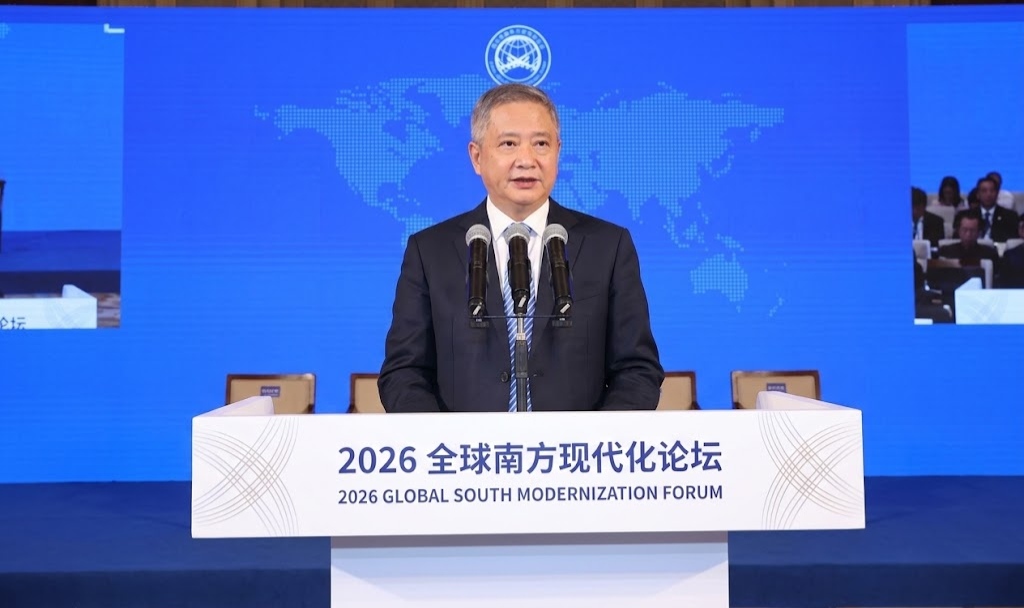
Mr. Hong Dayong, Deputy Director of the Publicity Department of the Central Committee of the Communist Party of China (CPC), has highlighted the importance of strengthening international cooperation, sharing development opportunities, and ensuring that technological progress contributes to modernization and human development.
His perspective provides an important point of departure for examining one of the defining challenges of our time: how artificial intelligence can be governed in a manner that advances modernization while protecting human dignity, cultural diversity, development rights, and international cooperation.
The accelerating development of artificial intelligence is confronting humanity with a defining strategic choice: whether technological competition will deepen fragmentation and systemic risk, or whether nations can build a cooperative governance framework capable of ensuring that innovation remains aligned with human interests.
As artificial intelligence increasingly enters critical infrastructure, economic systems, public administration, healthcare, education, and national security, technological capability is advancing faster than many existing mechanisms of oversight, regulation, and international coordination. The challenge is therefore no longer simply how to develop AI, but how to govern its power responsibly, equitably, and in the service of humanity.
For the Global South, this question carries particular significance. Developing nations must not become passive consumers of technologies designed elsewhere, nor should their human resources and data be transformed into instruments of geopolitical competition. Instead, they should participate directly in shaping the rules, standards, institutions, and technologies that will define the intelligent age.
Against this backdrop, the Global South Modernization Forum, held in Cairo on September 30, 2026, provided an important platform for examining AI governance, human-resource development, cultural preservation, digital sovereignty, and inclusive modernization.
I. The Fundamental Dilemmas of the Intelligent Age
The integration of advanced artificial intelligence into global systems raises four fundamental questions that will shape the future of human development.
Control and Strategy: How can meaningful human oversight be preserved when automated systems increasingly operate at speeds beyond traditional political and strategic decision-making?
Capability and Safety: How can societies ensure technological safety when innovation may temporarily outpace the capacity of institutions to evaluate, regulate, and align increasingly sophisticated systems?
Augmentation and Equity: How can AI expand human intellectual and productive capabilities without widening the technological and economic divide between developed and developing nations?
Conflict and Coexistence: How can peaceful international competition be maintained when autonomous and AI-enabled systems are transforming traditional concepts of power, deterrence, security, and warfare?
These are not merely technological questions. They are questions of political responsibility, economic justice, national sovereignty, and human security.
Unchecked technological competition could amplify existing inequalities, create new systemic vulnerabilities, destabilize communities, and introduce unprecedented risks to international security.
The central principle must therefore be clear: technology must remain a means of advancing humanity, not an instrument for controlling it.
II. Human Capacity and the Global South Imperative
The greatest strategic resource of the Global South is not simply its infrastructure or natural wealth, but its people.
Human talent, scientific knowledge, creativity, and technological expertise must not be transformed into instruments of geopolitical domination. They should instead become the foundation of a new model of cooperation in which technological progress generates shared prosperity.
Governance Matrix: Global South Priorities
| Principle | Objective | Strategic Action |
|---|---|---|
| Shared Benefits | Prevent technological monopolization | Expand access to AI tools, knowledge, and expertise |
| Inclusion | Protect digital sovereignty | Develop inclusive and representative global rules |
| Development First | Balance security with growth | Invest in physical and digital infrastructure |
| Diversity | Prevent cultural homogenization | Develop AI systems using multilingual and multicultural knowledge |
Core Directives for Inclusive AI Governance
1. Inclusive Rule-Making
AI governance must reflect the economic realities, cultural values, social priorities, and development needs of developing countries. Rules affecting the future of humanity cannot be designed exclusively by a limited group of technologically advanced economies.
2. Development-Centered Security
Security considerations must not become a barrier to essential infrastructure, digital connectivity, education, poverty reduction, or technological development. Sustainable security depends ultimately on sustainable development.
3. Multilateral Solidarity
International cooperation in human-resource development and technological capacity building demonstrates the need to move from competition alone toward joint construction, shared governance, and mutual benefit.
The Global South should not be viewed merely as a market for advanced technologies. It must be recognized as a co-creator of the global technological future.
III. Cultural Preservation and Multidisciplinary Integration
Artificial intelligence must serve the diversity of human civilization rather than impose technological uniformity upon it.
Every society brings its own languages, historical experiences, cultural traditions, philosophical perspectives, and social structures to the digital age. If AI systems are developed without recognizing this diversity, technological modernization could unintentionally accelerate cultural homogenization.
Three priorities are therefore essential.
Creative Transformation
AI can help preserve, digitize, translate, interpret, and revitalize cultural heritage while opening new avenues for education and creative expression. Such transformation, however, must respect local languages, historical contexts, intellectual traditions, and cultural identities.
Cross-Sector Dialogue
The governance of AI cannot be left to technologists alone. Universities, researchers, engineers, entrepreneurs, cultural institutions, civil society, and governments must participate in a continuing dialogue over how technological progress should be shaped and applied.
Practical Human Outcomes
Research and innovation should ultimately be measured by their contribution to human well-being.
AI can support smart healthcare, precision agriculture, digital public administration, scientific research, disaster management, environmental protection, and accessible lifelong education. These applications demonstrate that the real value of artificial intelligence lies not simply in computational power, but in its ability to improve human lives.
IV. The Global South Modernization Forum: Cairo, 2026
Held in Cairo on September 30, 2026, the Global South Modernization Forum brought together more than 100 scholars and experts from approximately 30 countries to examine the opportunities and risks associated with artificial intelligence and the broader modernization agenda.
The forum highlighted several priorities of particular strategic importance.
Digital Sovereignty and Infrastructure
AI should increasingly be regarded as a resource with broad public value, while developing nations require greater support to build the digital infrastructure, computing capacity, data ecosystems, and technical expertise necessary to participate meaningfully in the AI economy.
Digital sovereignty does not mean isolation. It means possessing sufficient national and collective capacity to make informed choices about technology, data, infrastructure, and development.
Research and Knowledge Standardization
The development of comprehensive research maps, shared terminology, and standardized academic frameworks can help create a common intellectual foundation for studying modernization across the Global South.
Such cooperation can reduce duplication, strengthen academic networks, and facilitate the exchange of knowledge between countries facing comparable development challenges.
The Five Principles
The forum reaffirmed five principles as essential foundations for technological cooperation:
Mutual Respect.
Openness.
Deep Cooperation.
Shared Development.
Human-Centered Progress.
Taken together, these principles provide a framework for ensuring that technological modernization remains compatible with national diversity and human dignity.
V. From Technological Competition to Shared Human Progress
The central challenge of the AI era is not whether humanity can create increasingly powerful machines. It is whether humanity can develop institutions capable of governing that power wisely.
For the Global South, modernization cannot mean simply reproducing models created elsewhere. It must mean building technological capacity while protecting cultural identity, strengthening national sovereignty, expanding human opportunity, and ensuring that development remains inclusive.
The future should therefore not be defined by a world divided between those who create technology and those who merely consume it.
Instead, the Global South must become an active partner in shaping the global technological order.
This requires investment in people as much as machines; in education as much as infrastructure; in international cooperation as much as competition; and in ethical governance as much as innovation.
Ultimately, artificial intelligence should expand the horizons of human freedom rather than narrow them.
The threads of destiny are being woven today through algorithms, data, laboratories, universities, governments, and international institutions. The question is not whether this transformation will occur. It is whether humanity will have the wisdom to shape it together.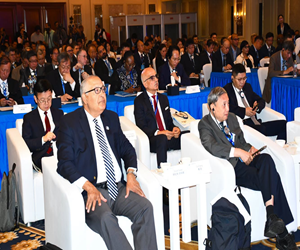
The intelligent age must not become an age in which machines define humanity. It must become an age in which humanity defines the purpose of its machines.