Ashraf AboArafe
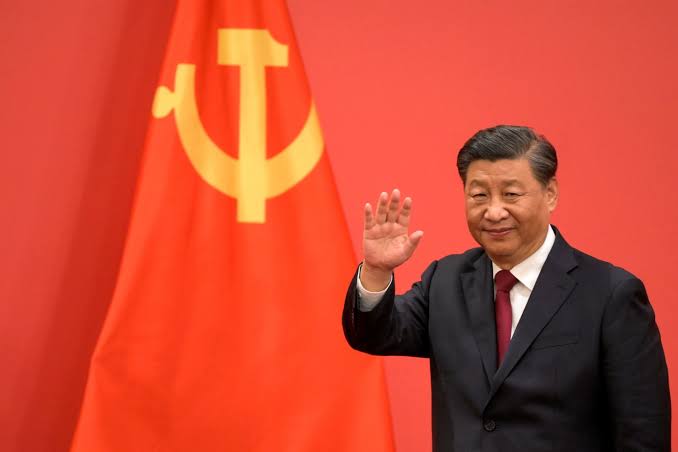
Chinese President Xi Jinping has called for renewed confidence, stronger cooperation and a shared commitment to prosperity across the Asia-Pacific, stressing that openness, innovation and mutual benefit are essential to navigating an increasingly uncertain global landscape.
Xi made the remarks on November 18, 2026, while attending the opening session of the APEC CEO Summit 2026 at the Qianhai International Conference Center in Shenzhen, where he delivered a keynote address entitled “Building Confidence, Advancing with Courage and Determination, and Working Together to Create a Bright Future for the Asia-Pacific.”
Against a backdrop of mounting international uncertainty, sluggish global economic growth, and rising unilateralism and protectionism, Xi emphasized that the world faces fundamental choices: openness or isolation, cooperation or division, reform or resistance to change.
He noted that global trade continues to demonstrate resilience despite mounting pressures, while rapid advances in emerging technologies are reshaping the global development landscape.
The Chinese president recalled that APEC was established in response to the momentum of economic globalization, enabling the Asia-Pacific region to remain at the forefront of global development. China, hosting APEC for the third time this year, stands ready to work with all parties to strengthen confidence, advance with determination and build an Asia-Pacific community characterized by shared prosperity.
Four pillars for a prosperous Asia-Pacific
Xi outlined four priorities for strengthening regional cooperation and promoting sustainable economic growth.
1. Safeguarding peace and stability
Xi stressed that stability is the foundation of security and security is indispensable to prosperity. He called for upholding the post-World War II international order and advancing an equal and orderly multipolar world and an inclusive, universally beneficial economic globalization.
He also emphasized resolving differences through dialogue and consultation, while addressing common challenges through solidarity and cooperation.
2. Building bridges of openness and cooperation
The Chinese president urged APEC economies to firmly uphold the rules-based multilateral trading system centered on the World Trade Organization, support free and open trade and investment, and safeguard the stability and smooth operation of global industrial and supply chains.
He called for steady progress toward the Free Trade Area of the Asia-Pacific, alongside stronger connectivity networks, digital trade, cross-border e-commerce, smart customs systems and international cooperation across industrial and supply chains.
3. Unlocking innovation-driven growth
Xi described innovation as a powerful force behind social and economic progress.
He called for stronger technological innovation partnerships, deeper cooperation in the digital economy and artificial intelligence, and accelerated green and low-carbon transformation.
The challenge, he stressed, is to turn innovation advantages into sustained growth momentum, strengthening the economic dynamism of the entire Asia-Pacific region.
4. Expanding mutual benefit and shared development
Xi called for removing barriers to trade and investment while promoting an open regional economy and ensuring that development remains balanced, inclusive and fair.
He emphasized a people-centered approach, arguing that the benefits of development should reach all economies and all segments of society, particularly developing economies.
Highlighting the importance of the region’s major bay areas, Xi also expressed China’s support for establishing a World Association for Cooperation among Bay Areas to strengthen exchanges and explore new models of economic cooperation.
China’s economic transformation: Opportunities for the world
Turning to China’s domestic economic outlook, Xi said the Chinese economy continues to demonstrate resilience, vitality and an improving development trajectory.
During the first three quarters of 2026, China’s economy grew by 4.6%, supported by the rapid development of new quality productive forces, progress in building a new development paradigm, and steady advances in green and low-carbon transformation.
Xi described China’s 15th Five-Year Plan as more than a blueprint for domestic development, presenting it as a new catalogue of opportunities for economic growth across the Asia-Pacific and the wider world, as well as an invitation to international business cooperation.
He outlined three major opportunities China intends to offer global businesses.
1. An enormous and increasingly open market
As the world’s second-largest consumer market, China offers substantial opportunities through its vast middle-income population and significant investment and consumption potential.
Xi highlighted emerging sectors ranging from new-energy vehicles and smart homes to the silver economy and ice-and-snow tourism.
He said China would continue expanding imports of high-quality goods and services and organizing initiatives such as “Export to China,” creating more efficient channels for international products to enter the Chinese market.
2. A vast horizon for innovation and development
Xi identified innovation-driven growth and green transformation as defining features of China’s economic future.
From industrial robots and robotic dogs in agricultural fields to autonomous driving and drone-based deliveries, advanced technologies are increasingly being tested and refined in real-world applications across China.
He said China would accelerate the development of a modern industrial system, deepen the integration of technological and industrial innovation, upgrade traditional industries, expand emerging sectors and plan ahead for future industries.
These efforts, he noted, will create fresh opportunities for technological innovation and business development worldwide.
3. A stable environment for mutually beneficial cooperation
Xi recalled that China hosted the APEC Economic Leaders’ Informal Meeting for the first time in 2001, the same year it joined the World Trade Organization.
Over the past 25 years, he said, China has fulfilled its WTO commitments while sharing development opportunities with the international community.
In response to unilateralism and protectionism, China has continued to uphold multilateralism, defend the multilateral trading system and WTO rules, and support reform of the organization.
Xi reaffirmed that China’s commitment to cooperation and mutually beneficial development will not change, regardless of fluctuations in the international situation.
He also reiterated China’s determination to pursue high-quality Belt and Road cooperation and welcomed greater participation by Asia-Pacific businesses.
China, he added, would continue expanding market access in manufacturing, gradually opening its services sector and exploring deeper reforms involving regulations, management and standards.
The objective is to provide international investors and businesses with a more stable, transparent and predictable environment.
Shenzhen: A story of reform and transformation
At the beginning of his address, Xi paid tribute to Shenzhen’s extraordinary transformation over more than four decades.
Once a small border town, Shenzhen has developed into a major international city, becoming a remarkable example of China’s reform and opening-up.
He described its experience as a source of valuable lessons, demonstrating how determination, openness and hard work can transform economic and social realities.
The choice of Shenzhen as the venue for the summit therefore carried particular significance, reflecting China’s commitment to innovation, reform and international engagement.
A shared future beyond divisions
Concluding his address, Xi described the Asia-Pacific as a region where economies should advance development together and pursue cooperation side by side.
He called on business leaders, whom he described as pioneers of the global economy, to embrace innovation, pursue excellence and expand opportunities for trade and investment.
He also welcomed continued international participation in China’s reform, opening-up and modernization process, inviting global businesses to share the opportunities generated by Chinese modernization.
His closing message underscored the central theme of the address:
“Let us work hand in hand to address development challenges through openness, build growth momentum through innovation, and achieve mutual benefit through cooperation, so that we can build an Asia-Pacific community and create a brighter future for the region!”
Regional and international participation
The summit was attended by Chilean President José Antonio Kast, Malaysian Prime Minister Anwar Ibrahim and other international leaders.
Senior Chinese officials attending included Cai Qi, Wang Yi, He Lifeng, Huang Kunming and Wang Xiaohong.
Ultimately, Xi’s address presented a vision of the Asia-Pacific in which economic integration, technological innovation and multilateral cooperation serve as bridges toward shared prosperity. At a time of growing geopolitical and economic uncertainty, the message was clear: the region’s future will depend not on building walls, but on strengthening bridges between economies, societies and people.