 Editor-in-Chief Writes
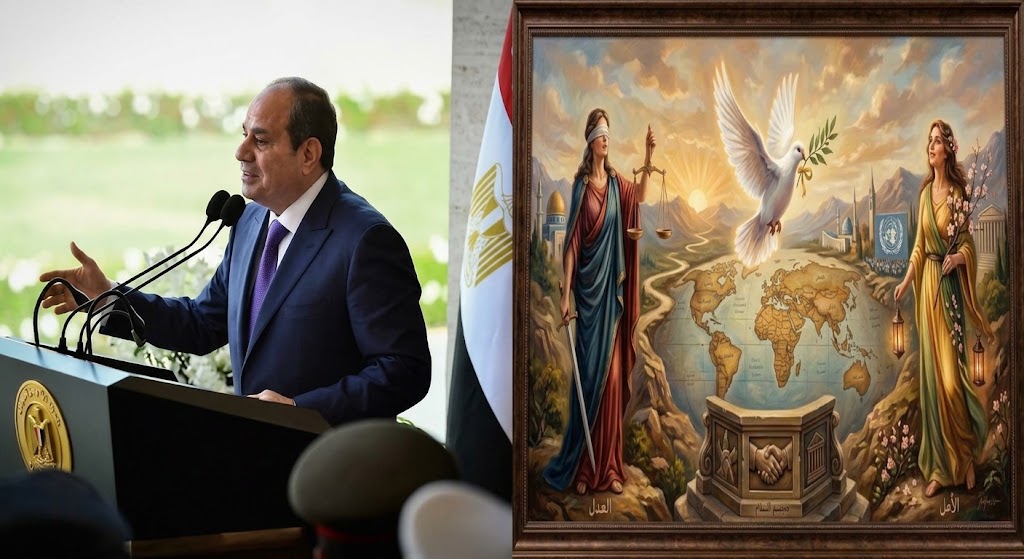
FOR more than a decade, Egyptian President Abdel Fattah El-Sisi has emphasized that wars do not create lasting stability, that expanding conflicts threaten the security of the entire region and the world, and that diplomacy, dialogue, and respect for state sovereignty remain the wisest means of preventing humanitarian and strategic catastrophes. In a region where crises overlap, international interests collide, and the danger of a wider confrontation continues to grow, Egypt’s warnings carry significance far beyond its geographical borders, reaching the very heart of international peace and security.
A reading of Egypt’s positions since 2015 reveals a vision centered on preserving the nation-state, rejecting chaos, prioritizing political solutions, and warning that once wars spiral out of control, their consequences may become impossible to contain. This does not mean that every crisis was inevitable or that a third world war has become unavoidable. Rather, the essence of the warning is to prevent the worst-case scenario before it becomes reality, particularly in a world armed with nuclear weapons capable of inflicting destruction far beyond the borders of the countries at war.
First: Eleven Years of Warnings — Anticipating Dangers Before They Explode
Since assuming office, President El-Sisi has faced a region burdened by the consequences of state collapse, armed conflicts, cross-border terrorism, foreign interventions, and successive economic and humanitarian crises. Within this context, Egypt’s political discourse has emphasized the need to protect state institutions, preserve territorial integrity, and prevent political disagreements from turning into open armed conflicts.
This vision is rooted in Egypt’s experience with regional instability. Cairo understands that the collapse of state institutions rarely remains confined within national borders. It can trigger forced migration, the spread of extremist groups, arms trafficking, economic deterioration, and growing security threats to neighboring countries.
Accordingly, Egypt’s position has consistently linked security, stability, and development, recognizing that addressing the roots of crises is more effective than merely managing their consequences, and that military solutions, whatever their immediate gains, cannot by themselves establish lasting peace.
Most importantly, warnings about the expansion of conflicts should not be interpreted as predictions that a world war is inevitable. They are calls for early action. Political wisdom is measured not only by the ability to respond after a catastrophe occurs, but also by the ability to prevent it.
Second: The Middle East — A Region of Fire That Can Bear No More Fuel
Crises continue to spread across the Middle East amid an unprecedented overlap of regional calculations and international interests. The danger lies in the fact that a war may begin with a limited decision, then expand through reciprocal retaliation, miscalculation, and the involvement of multiple parties, until the cost of retreat becomes greater than the cost of continued escalation.
In this environment, no confrontation can be viewed in isolation from its consequences for international shipping, energy markets, supply chains, food security, and economic stability, not to mention the lives of civilians who pay the heaviest price.
An expanding conflict threatens not only the countries directly involved. It may draw additional parties into the confrontation, place international institutions under severe pressure, and multiply the risks of miscalculation. If nuclear weapons enter the equation, the consequences may exceed every capacity for prediction or containment.
This is where the importance of Egypt’s warnings becomes clear: the region must not become an arena for settling international scores, and the security of its peoples must not be held hostage to escalation and reckless decisions. True strength lies not in the ability to ignite a war, but in possessing the political will to stop it before it engulfs everyone.
Third: Libya, Sudan, Yemen, Lebanon, Syria, Iraq, and Afghanistan — Lessons the World Must Not Ignore
The experiences of Libya, Sudan, Yemen, Lebanon, Syria, Iraq, and Afghanistan, alongside other conflict zones, are sufficient to sound the alarm. They demonstrate that wars do not necessarily end within the limits of their declared objectives, and that foreign interventions, internal conflicts, and the prioritization of weapons over dialogue can leave entire countries facing years of division, destruction, displacement, and the depletion of their peoples’ resources. Each of these experiences has its own circumstances and complexities, but they share one painful reality: civilians pay an enormous price when political settlements recede and calculations of power take precedence over national interests.
Libya has endured institutional division and armed conflict; Sudan is facing a devastating humanitarian catastrophe; Yemen has suffered prolonged human misery; Lebanon has been burdened by successive crises that have weakened its state and society; Syria has paid an immense price in the lives of its people and the destruction of its cities; Iraq has experienced decades of wars and instability; and Afghanistan has endured decades of conflict and foreign intervention. These experiences all demonstrate that destroying a country is far easier than rebuilding it, and that restoring national trust may take generations.
Recalling these examples does not mean reducing their diverse causes to a single factor or overlooking the responsibilities of domestic and foreign actors. Rather, it means drawing the most important lesson: no external guardianship can create sustainable peace, no weapon can resolve the roots of every dispute, and no settlement can endure if it excludes the will, rights, and meaningful participation of the people of the country concerned.
Enough bloodshed, displacement, and bereavement for the peoples of the region. Enough repetition of the same mistakes under changing slogans while the tragedy remains unchanged. The wiser path is to support national dialogue, respect state sovereignty and territorial integrity, halt interventions that fuel conflicts, coordinate humanitarian efforts, and open realistic political pathways that place human beings first.
Will the world learn from these experiences before more countries join the list of tragedies? Wisdom lies not in waiting for another collapse before acting, but in preventing collapse before it occurs. Nations are not arenas for settling scores, and peoples must not become fuel for the wars of others.
Fourth: The Shadow of a Third World War — The Nuclear Threat That Has No Victor
Discussing a third world war involving nuclear weapons is not mere rhetorical exaggeration when the purpose is to warn against the consequences of escalating tensions among major powers. However, it should not become an assertion that such a war is imminent or inevitable without specific evidence.
Nuclear weapons are unlike conventional instruments of war. Their use could cause catastrophic loss of life, widespread destruction of infrastructure, radioactive contamination, and economic and environmental disruption extending across borders and generations. An exchange of nuclear strikes could also trigger an escalation that becomes difficult to stop, even for parties that initially believe they can control its course.
In a nuclear war, military superiority does not guarantee survival, and the largest arsenal offers no immunity from catastrophe. Destruction recognizes no alliances; radiation distinguishes no nationality; and hunger, displacement, and economic collapse do not stop at the front lines.
The responsibility of nuclear powers is therefore immense. Military and political communication channels, mechanisms to prevent accidental confrontation, adherence to international law, and renewed arms-control agreements are necessities, not diplomatic luxuries.
Preventing nuclear war must be a shared interest that takes precedence over electoral calculations and narrow geopolitical gains, because the losses resulting from such a confrontation could exceed any victory that its participants might claim.
Fifth: Egyptian Diplomacy — The Voice of Reason Amid the Noise of Weapons
At its declared core, Egypt’s foreign policy maintains that dialogue, negotiation, and mediation are not signs of weakness, but instruments for protecting national interests and avoiding the human and strategic costs of war. This vision recognizes that military force may impose temporary realities, but cannot alone establish political legitimacy or build lasting trust.
Against this background, Egypt’s efforts to support ceasefires, facilitate humanitarian aid, contain escalation, reopen negotiations, and coordinate positions with regional and international partners are particularly important. Effective diplomacy does not merely express concern; it identifies common ground, establishes channels of communication, and proposes practical steps.
This role becomes even more valuable when conflicting parties are trapped by hardline rhetoric, domestic pressures, or calculations that make public compromise difficult. In such circumstances, mediation that preserves dignity and offers mutual assurances can provide a practical way out of escalation.
Calling for diplomacy does not mean ignoring peoples’ rights or tolerating aggression. It means combining the protection of rights with respect for international law, an end to bloodshed, and efforts to prevent conflicts from spreading. Negotiations that disregard justice may not endure, while justice without a viable political path may remain hostage to continuing conflict.
Sixth: Palestine and Gaza — A Test of the World’s Conscience and the Credibility of the International Order
The Palestinian cause remains one of the most significant tests of the international community’s ability to translate declared principles into reality. The war in Gaza has demonstrated the scale of the humanitarian catastrophe that can result from continued military operations, obstructed aid, the destruction of homes and essential facilities, and threats to civilian lives.
Egypt has been at the forefront of efforts to end the war, facilitate humanitarian assistance, reject the forced displacement of Palestinians from their land, and affirm that the Palestinian question cannot be resolved by erasing the Palestinian people’s presence or uprooting them from their homeland. It requires a political process that guarantees their legitimate rights.
The Sharm El-Sheikh Peace Summit in October 2025 also highlighted the importance of bringing parties and international partners together around a process intended to end the war and strengthen prospects for stability. Yet the value of any summit cannot be measured by photographs and declarations alone. It must be measured by enforceable commitments, civilian protection, the delivery of humanitarian assistance, and meaningful progress toward a just settlement.
Peace that fails to protect civilians, prevent forced displacement, and establish a clear political horizon remains incomplete and vulnerable to collapse. The international community must therefore do more than manage the crisis: it must address its political and humanitarian roots, including ending the occupation and achieving a two-state solution in accordance with relevant international frameworks.
Seventh: Respect for Internal Affairs — State Sovereignty Is Neither a License for Chaos nor a Pretext for Intervention
Egypt consistently emphasizes the importance of respecting state sovereignty, refraining from interference in internal affairs, and relying on dialogue, understanding, and peaceful settlement of disputes. Countries are not open arenas for experiments imposed by others, and their peoples must not become instruments in struggles for influence. Imposing solutions from abroad may deepen crises rather than resolve them.
Respect for sovereignty, territorial integrity, and political independence is a fundamental pillar of the international order. However, sovereignty must not become a selective slogan invoked when convenient and ignored when it conflicts with powerful interests. Similarly, human rights must not be used as a pretext for wars or sanctions that increase civilian suffering or undermine prospects for a settlement.
What is needed is a balanced commitment to international law: rejecting aggression and unlawful intervention while affirming human dignity and fundamental rights, and giving mediation and dialogue a genuine opportunity before confrontation becomes unavoidable.
Wisdom does not mean allowing crises to deteriorate, nor does it mean intervening by force. It means respecting the will of peoples, supporting solutions rooted in their needs, and helping countries overcome disagreements without destroying their institutions or sacrificing the lives of their citizens.
Eighth: The Sanctity of Human Life — Beyond Differences of Religion, Language, and Color
If politics pursues interests, humanity must establish a moral boundary that cannot be crossed: the sanctity of human life, human dignity, and every person’s right to live in safety.
This calls for recalling the profound moral meaning expressed in the saying that demolishing the Kaaba is less grave than unlawfully shedding human blood. It should be understood as an ethical expression of the inviolability of human life, rather than presented as a verbatim prophetic hadith without verifying its wording and source.
No person’s religion, language, color, or origin should become a justification for taking their life or violating their dignity. Every human being is a human being first, whether Muslim, Christian, Jewish, secular, or a follower of another belief or worldview. Religious, intellectual, and cultural differences must never become excuses for hatred, exclusion, or killing.
The blood of innocent people is not merely a statistic in a news bulletin. Children who lose their families and homes must not become fleeting images on the world’s screens. Civilians, regardless of identity, deserve protection and justice, and their families deserve support—not the exploitation of their suffering for political or propaganda purposes.
There can be no genuine peace amid double standards, no justice when victims are selected according to identity, and no complete humanity when the world mourns some lives while ignoring others. The proper standard must be law, justice, and respect for life—not the identity of the victim or the perpetrator.
Ninth: Religious Leaders at the Dialogue Table — Appealing to the Conscience of Those Who Make War
In conflicts sometimes fueled by extremism, hate speech, and the political exploitation of religion, a humanitarian initiative deserves to become a practical course of action: enabling trusted religious scholars, ethical thinkers, and spiritual leaders from different religions and belief systems to engage directly with the leaders of states and parties involved in conflicts.
The objective is not to replace diplomats with religious leaders, nor to substitute sermons for political agreements. It is to make these efforts complementary. Diplomacy negotiates ceasefires, guarantees, and solutions, while religious and ethical leaders remind decision-makers that every decision affects human lives, families, children, and a shared human future.
Egypt, given its Arab and regional weight and its religious and cultural standing, could help launch an International Forum for Interfaith Dialogue for Peace, bringing together respected figures from Islam, Christianity, Judaism, and other traditions and belief systems, alongside experts in international law, mediation, and conflict resolution.
Such a forum should go beyond symbolic statements. It could develop practical principles for protecting civilians, countering religious incitement, rejecting the justification of violence in the name of faith, supporting mediation, and encouraging direct communication between spiritual leaders and political decision-makers.
A sincere word may open a door that political calculations have closed, and a living conscience may remind leaders that victory built on the ruins of societies is not sustainable victory. The success of this initiative, however, depends on its independence, credibility, respect for diversity, and refusal to exploit religion for political agendas or the exclusion of any party.
Tenth: Those Living in Conflict Zones Know Their Own Realities Best — Peoples Must Lead the Making of Peace
The people living in conflict zones know their own realities best and are best placed to express their suffering, aspirations, and priorities. They must therefore stand at the forefront of every dialogue intended to extinguish the fires of war and build peace, free from external guardianship or imposed solutions.
No lasting settlement can be built without listening to the people concerned, understanding their fears, respecting their rights, and involving their genuine representatives in shaping their future. Ignoring their voices or reducing them to parties competing for influence can turn any agreement into a fragile truce that collapses at the first serious test.
The role of all other parties—states, institutions, religious figures, and intellectuals—is to serve as bridges of support and reconciliation and partners in achieving security, prosperity, and human dignity throughout the world, across religions, beliefs, and cultures: Muslims, Christians, Jews, secular people, and others.
A dignified life is a right for everyone, and peace is a shared human responsibility. It belongs to no single faith, is confined by no borders, and should not be obstructed by political disagreements or competing interests.
True peace is not imposed on the people whose lives are at stake; it is built with them. It can only endure when supporting powers become partners in de-escalation rather than parties to polarization, and bridges for dialogue rather than instruments for fueling conflict.
The principle is clear: helping peoples does not mean taking away their right to decide; supporting them does not mean speaking in their place; and solidarity is incomplete unless it respects their will, rights, and dignity.
Eleventh: From Alliances of Interest to an Alliance for Peace — An Arab and Islamic Responsibility
The scale of current dangers requires Arab and Islamic countries to move beyond internal divisions and replace fragmented reactions with collective diplomatic action that places the protection of human life and the prevention of war at the top of its priorities.
This vision could take shape through a proposed political initiative called the “Mecca Alliance for Peace.” It would be a proposal requiring Arab and Islamic consultation and consensus, not an announcement of an existing organization. Its objectives could include coordinating diplomatic efforts, supporting mediation, pressing for ceasefires, ensuring humanitarian access, rejecting forced displacement, and strengthening respect for international law.
Such an alliance should not be based on religious polarization or confrontation with other peoples. Instead, it should advance a universal message: protecting sacred places cannot be separated from protecting human beings; defending the oppressed must never mean oppressing others; and unity cannot endure without justice and responsibility.
This initiative could draw on the political, economic, and religious influence of participating countries to engage major powers, coordinate positions at the United Nations, support efforts to reduce nuclear dangers and prevent the proliferation of devastating weapons, and restore political solutions to the center of international action.
The world does not merely need new alliances to manage rivalries. It needs alliances capable of preventing war, protecting civilians, and opening windows of hope when the doors of negotiation appear closed.
Twelfth: What Can Egyptian Diplomacy Do?
The current moment demands that calls for peace be translated into specific actions that Egypt could advance in cooperation with regional and international partners:
- Expand diplomatic communication and mediation between conflicting parties, maintaining confidentiality when it helps build trust.
- Press for ceasefires and civilian protection, while ensuring the unhindered delivery of humanitarian assistance in accordance with international law.
- Revive negotiations on the Palestinian question and pursue a just settlement that guarantees the legitimate rights of the Palestinian people.
- Support mechanisms to prevent escalation among major powers, and encourage renewed dialogue on nuclear arms control and the prevention of miscalculation.
- Strengthen Arab and Islamic coordination around shared interests and respect for state sovereignty, avoiding polarization that deepens crises.
- Promote responsible religious and ethical dialogue to confront incitement and hatred and affirm the sanctity of human life regardless of religion or identity.
- Involve affected communities in shaping solutions, preventing mediation from becoming a series of top-down arrangements that disregard those most directly concerned.
- Link peace with development and reconstruction, because stability cannot endure without economic and social prospects that preserve dignity and give younger generations a genuine chance at life.
These steps cannot guarantee the automatic resolution of every conflict. They can, however, provide a practical framework for moving from warnings to action and from crisis management to reducing the causes of conflict.
Thirteenth: The United Nations — From a Platform for Speeches to an Arena for Action
The dangers of major wars cannot be confronted without improving the performance of the international system and strengthening the United Nations’ ability to fulfill its responsibilities for maintaining international peace and security. When institutions are paralyzed by competing interests among major powers, or rules are applied selectively, international confidence erodes and hardline actors gain greater room to impose facts on the ground.
The credibility of the international order begins with applying the law to everyone, not with a country’s power or position in the balance of influence. Civilian protection must not be subjected to political bargaining, and decisions to stop wars and deliver humanitarian assistance must be translated into tangible action.
There remains an urgent need to strengthen preventive diplomacy, develop mediation tools, support disarmament and risk-reduction efforts, and ensure accountability for serious violations through the appropriate legal frameworks.
The United Nations must not limit its role to documenting tragedies after they occur. It must demonstrate the will and capacity to act before crises become catastrophes that are difficult to contain.
Conclusion: El-Sisi Warns — The World Faces a Test of Wisdom
After eleven years of regional and international challenges, the central message that can be drawn from Egypt’s position is that peace is not a slogan for political consumption. It is a responsibility requiring wise leadership, courageous decisions, respect for law, and the prioritization of human life over calculations of power.
Warnings about a third world war involving nuclear weapons must serve as a catalyst for action, not as a reason to surrender to fear. However great the danger, it is not inevitable as long as channels of dialogue remain open, mediation is pursued, and decision-makers accept their responsibilities.
Egypt, with its strategic geographical position, political weight, and diplomatic experience, can continue advocating de-escalation, building consensus, defending the Palestinian cause, supporting joint Arab action, and encouraging dialogue among religions and cultures.
But the success of this message requires collective effort, an end to double standards, and recognition that global security cannot be built on the fear or destruction of other peoples.
The people living through conflict are entitled to shape their own future. Supporting countries must stand beside them, not rule over them. Religious leaders must appeal to consciences rather than inflame divisions. Major powers bear a responsibility to prevent the world from sliding into a nuclear confrontation in which there can be no true winner.
Human life has equal sanctity, peace without justice has little value, and a world that places weapons above dialogue has no secure future.
This is a defining test of human wisdom: either diplomacy prevails before the guns speak, or everyone pays the price for decisions whose consequences were never fully considered.
The message that must rise above all others is clear: respect for state sovereignty, the dignity of peoples, the sanctity of human life, and the opening of doors to dialogue offer the surest path to protecting the Middle East and the world from the abyss of a war whose end no one can predict.