 Editor-in-chief writes
QAZAQSTAN stands at a pivotal moment in its national journey. As the country marks 35 years of independence and implements its new Constitution, which entered into force on 1 July 2026, President Kassym-Jomart Tokayev has outlined an ambitious vision for the country’s next stage of development.
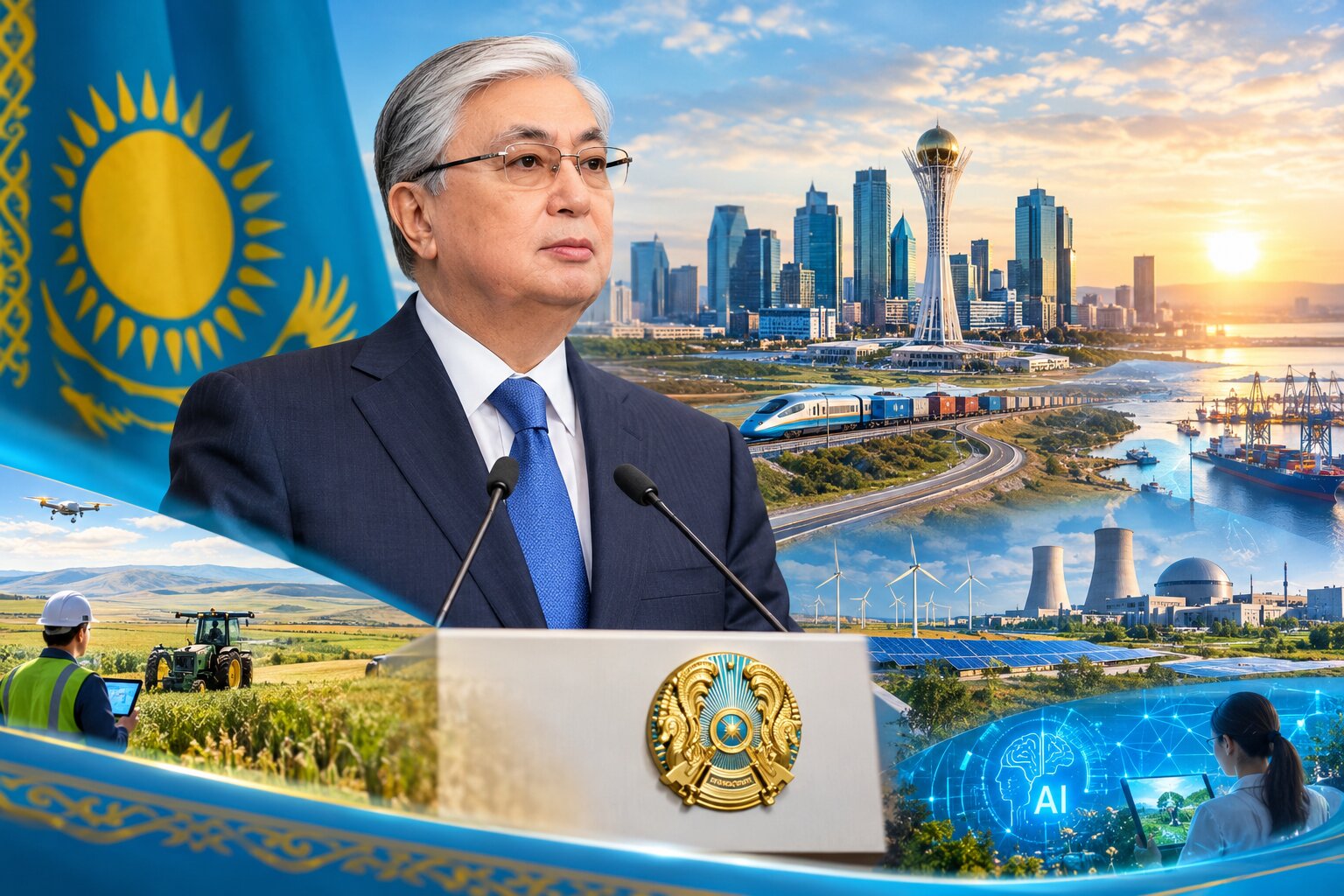
In his State of the Nation Address, delivered on 28 October 2026 under the title “Kazakhstan’s Current Priorities in a New Historical Cycle,” Tokayev connected economic strength, modern infrastructure, digital transformation, energy security and social wellbeing within a comprehensive national agenda.
The address was more than a presentation of government projects and economic indicators. It articulated a vision of a country seeking to transform its geographical position, natural resources and human capabilities into a more diversified industrial, technological and economic force across Eurasia.
The central question is how Qazaqstan can move beyond possessing resources and potential to generating greater value, expanding employment, improving citizens’ lives and strengthening economic independence.
1. From National Wealth to Social Progress
At the heart of Tokayev’s programme is Halyqtyq Qurylys, or “People’s Construction,” a nationwide initiative designed to modernise infrastructure across Qazaqstan’s regions.
The programme envisages allocating approximately 6.5 trillion tenge from the National Fund through the end of 2029, equivalent to about US$14.27 billion according to the figures provided in the address summary. Planned investments cover healthcare, education, housing, transport, utilities, water supply and social facilities. Tokayev has also proposed designating 2027 the Year of Nationwide Large-Scale Construction.
The significance of this initiative lies in its attempt to transform national financial reserves into productive assets and practical improvements in public services.
Development cannot be measured by gross domestic product alone. It must also be assessed through access to modern hospitals and schools, reliable drinking water, efficient transport and energy networks, and meaningful employment opportunities.
The true value of public investment lies not in the amount allocated, but in the lasting benefits it delivers to citizens and the wider economy.
Success, however, will depend on transparent procurement, careful project selection, rigorous spending oversight and high construction standards. Major projects cannot achieve their objectives simply by being announced; they must deliver measurable economic and social returns.
2. Economic Independence Begins with Industry
Tokayev highlighted economic indicators that point to Qazaqstan’s growing potential. According to the address, the country’s gross domestic product is expected to approach US$400 billion in 2026, while GDP per capita is projected to exceed US$19,000.
Manufacturing now accounts for more than 14% of GDP, while combined gold and foreign-exchange reserves and National Fund assets exceed US$130 billion.
These figures raise a fundamental question: how can Qazaqstan transform its financial and natural wealth into a diversified economy capable of producing, innovating and competing internationally?
One answer lies in expanding manufacturing and increasing domestic production of construction materials, metal structures, engineering equipment and agricultural machinery.
Tokayev stressed that National Fund resources should not be used to finance imports. The underlying objective is to direct investment towards domestic production, strengthen national supply chains and expand the economic benefits generated within Qazaqstan.
Small and medium-sized enterprises are essential to this strategy. By participating in infrastructure projects, they could expand their operations, create jobs and stimulate regional development.
Achieving these goals will require long-term financing, modern technology, vocational training and fair competition.
True economic independence does not come from possessing natural resources alone. It comes from processing them, adding value and developing the technology needed to use them productively.
3. The New Silk Road: Turning Geography into Economic Power
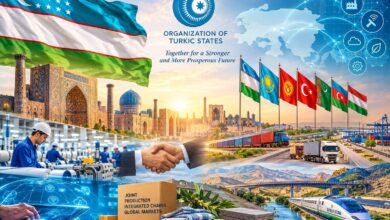
Transport infrastructure and international trade corridors are central to Tokayev’s vision of Qazaqstan as a major logistics hub connecting China and Central Asia with Europe and international markets.
One of the flagship projects is the Bakhty–Ayagoz railway, expected to enter service in 2027 and increase freight capacity between Qazaqstan and China by approximately 20 million tonnes.
Meanwhile, construction of the Aral–Caspian corridor began in August 2026. The project aims to shorten the Trans-Caspian route by approximately 1,000 kilometres and reduce delivery times by up to three days.
These initiatives complement plans to modernise airports, roads and border crossings while fully digitalising freight documentation and logistics procedures.
The importance of these investments extends beyond facilitating the movement of goods. They could change Qazaqstan’s economic role within Eurasia.
There is a fundamental difference between a country through which trade merely passes and one that develops an integrated network of logistics services, distribution centres, storage facilities and manufacturing operations.
Qazaqstan’s ambition is to evolve from a transit territory into a centre that generates added value from international trade.
Such a transformation could attract investment, create employment and improve the competitiveness of domestic businesses.
Its success will depend on reliable infrastructure, efficient customs procedures, competitive transport costs and sustained cooperation with regional and international partners.
The new Silk Road is built not only with railways and highways, but also with economic trust, diplomatic cooperation and reliable services.
4. Energy Security: Powering Industrial and Technological Progress
Tokayev recognises that Qazaqstan’s industrial and digital ambitions depend on reliable and sufficient electricity supplies.
The country generates approximately 123 billion kilowatt-hours of electricity annually, yet the address acknowledges continuing supply shortages. The President has set the objective of achieving a sustained electricity surplus by 2029.
The proposed response combines power-plant modernisation, improved transmission infrastructure, renewable energy development, cleaner coal-generation technologies and nuclear power.
Tokayev said construction of the Balkhash nuclear power plant could begin in 2027. He also called for a comprehensive cooperation agreement to launch the proposed Moyynkum nuclear power plant, emphasising technology transfer and the training of Kazakh specialists.
The President additionally proposed considering a strategic uranium reserve to secure nuclear fuel supplies over the long term.
These priorities reflect the close relationship between energy security and economic competitiveness. Industrial facilities, data centres and artificial-intelligence systems all require dependable electricity at sustainable costs.
Nuclear expansion, however, requires substantial investment, specialised expertise, rigorous safety standards and responsible radioactive-waste management. A balanced energy strategy must also consider environmental effects, costs and supply reliability.
The objective is not simply to generate more electricity, but to establish a secure and sustainable energy system capable of supporting Qazaqstan’s future economy.
International partnerships will be most valuable when they strengthen domestic expertise, research and industrial capacity rather than merely supplying equipment and ready-made technology.
5. Artificial Intelligence: From Digital Services to Building the Future
Digital transformation occupies a prominent place in Tokayev’s agenda. The President is calling for a transition from isolated automation projects towards an AI-powered economy that applies technology to production, public services and administration.
According to the address summary, two supercomputers have entered service under the Digital Qazaqstan strategy, with a third planned before the end of 2026. The fibre-optic link across the Caspian seabed has also been completed, while new data centres are being developed.
This infrastructure could support scientific research, industrial innovation, business expansion and more efficient resource management.
One particularly important priority is the application of artificial intelligence in agriculture. Tokayev has called for digital platforms that help rural producers market their products and connect with financing, transport and distribution services.
Such systems could improve agricultural productivity, reduce water consumption and waste, and give producers more direct access to consumers.
Artificial intelligence could also support urban management, identify inefficient public expenditure and help authorities develop digital models of infrastructure.
These opportunities come with important challenges, including data protection, cybersecurity, reliable electricity, digital literacy and workforce training. Ensuring that rural communities and smaller businesses benefit from technological progress will also be essential.
Digital success should not be measured by the number of supercomputers or data centres, but by technology’s ability to create opportunities, improve people’s lives and raise economic productivity.
6. Critical Minerals: From Natural Resources to Advanced Industry
Qazaqstan’s mineral wealth offers opportunities to participate in advanced manufacturing and international supply chains, particularly in technology, energy and engineering.
Tokayev called for modern geological exploration, transparent access to geological data and greater private investment in identifying and developing mineral deposits.
He also proposed a national framework for managing critical mineral reserves, supported by long-term financing mechanisms and strategic partnerships with developed economies.
The significance of this agenda lies in the distinction between extracting resources and creating value from them. Mining and exporting minerals represent only one stage of the economic process. Domestic processing, manufacturing, engineering and research can create additional employment, strengthen expertise and support local enterprises.
Achieving these objectives will require responsible resource management, environmental safeguards, transparent investment rules and realistic assessments of global demand.
Natural resources create an opportunity, but industry and knowledge turn that opportunity into sustainable economic strength.
7. Social Justice: Ensuring Growth Reaches Citizens
Economic development is incomplete unless its benefits translate into improved living standards and public services.
Tokayev instructed the Government to increase the monthly minimum wage from 85,000 to 110,000 tenge from 1 January 2027. The measure is expected to benefit approximately 1.8 million people, including more than 370,000 public-sector employees.
He also called for increases of up to 40% in remuneration for primary healthcare specialists, depending on continuous length of service, alongside plans to expand modern perinatal centres, children’s hospitals and specialised medical facilities.
In education, the address emphasised improved support for children requiring inclusive education, additional specialist staff and reduced administrative burdens on teachers.
These proposals recognise the importance of human capital. Modern factories and advanced digital infrastructure require a healthy, educated and skilled population capable of participating in economic development.
However, increases in nominal wages do not automatically translate into greater purchasing power. Their real impact will depend on inflation and the costs of food, housing and essential services.
Similarly, new hospitals and schools will deliver lasting benefits only if they are adequately staffed, equipped, maintained and funded.
The true measure of social justice is whether people experience higher living standards, better access to essential services and fairer opportunities to participate in the country’s future.
8. Institutional Reform: The Real Test of Promises
Tokayev’s address links economic development with institutional reform, modern legislation and an improved investment climate.
The proposed measures include a comprehensive public-administration reform plan due by 1 June 2027, a new Civil Code adapted to a technology-driven economy, stronger controls on public expenditure and the use of artificial intelligence in budgeting and financial oversight.
The President also called for better coordination of investment promotion, reduced regulatory burdens on businesses and discussion of a three-year moratorium on inspections of micro and small enterprises beginning on 1 January 2027.
Another proposal is the establishment of an Investment Court in Alatau City, using an English common-law model for commercial disputes under the city’s proposed special legal framework.
The effectiveness of such arrangements will depend on clear jurisdiction, judicial independence, enforceable decisions and consistency with Qazaqstan’s wider legal system.
Reducing bureaucracy must not mean weakening legitimate oversight. Rather, the objective should be to balance business freedom with the protection of rights and the public interest.
A modern state is measured not merely by the laws it announces or projects it launches, but by its ability to apply rules fairly, spend public resources responsibly and guarantee equal opportunities.
9. Qazaqstan at the Heart of Eurasian Transformation
Tokayev’s vision extends beyond domestic development to Qazaqstan’s position within the international economic system.
Trade corridors, energy supplies, critical minerals and digital infrastructure increasingly shape relations between countries. Qazaqstan’s geographical position offers opportunities to deepen cooperation with China, Europe, Central Asia and other international partners.
Yet geography alone does not guarantee influence. Realising its potential requires sustained investment, competitive logistics services, reliable partnerships and diversified markets, financing sources and technology suppliers.
This is where economic diplomacy becomes especially important. It can facilitate market access, attract productive investment and encourage technology transfer while protecting national interests.
Qazaqstan’s strategic challenge is to transform its position between major powers and markets from a geographical advantage into greater economic autonomy and resilience.
Achieving that goal requires balanced international engagement, mutually beneficial partnerships and a reduced dependence on any single market or external supplier.
Conclusion: Tokayev Charts the Course; Implementation Will Write History
President Kassym-Jomart Tokayev’s State of the Nation Address of 28 October 2026 presents an extensive vision for Qazaqstan’s future, connecting infrastructure development with industrial modernisation, energy security, international trade corridors, artificial intelligence, social welfare and institutional reform.
These priorities reinforce one another. Infrastructure supports industry; reliable energy enables digital expansion; education develops skilled workers; transport corridors connect businesses with markets; and effective institutions improve the use of national resources.
However, success will depend on the Government’s ability to control spending, address inflation, attract productive investment, protect the environment, expand employment and translate legal reforms into measurable outcomes.
As Qazaqstan marks 35 years of independence, the coming period will test its ability to move from potential to productive achievement, from announced initiatives to effective institutions, and from economic growth to broader social prosperity.
Nations are not built with concrete and steel alone. They are built through knowledge, equal opportunity, effective institutions and trust between the state and society.
Tokayev’s vision charts a path from infrastructure to artificial intelligence, from natural resources to advanced manufacturing, and from geographical advantage to greater economic influence.
The ultimate test will be whether this vision becomes a reality that citizens can experience in their incomes, public services, employment opportunities and ability to participate in shaping their country’s future.