Ashraf AboArafe
Egypt and Lebanon Reaffirm the Power of Academic Diplomacy at Beirut Arab University
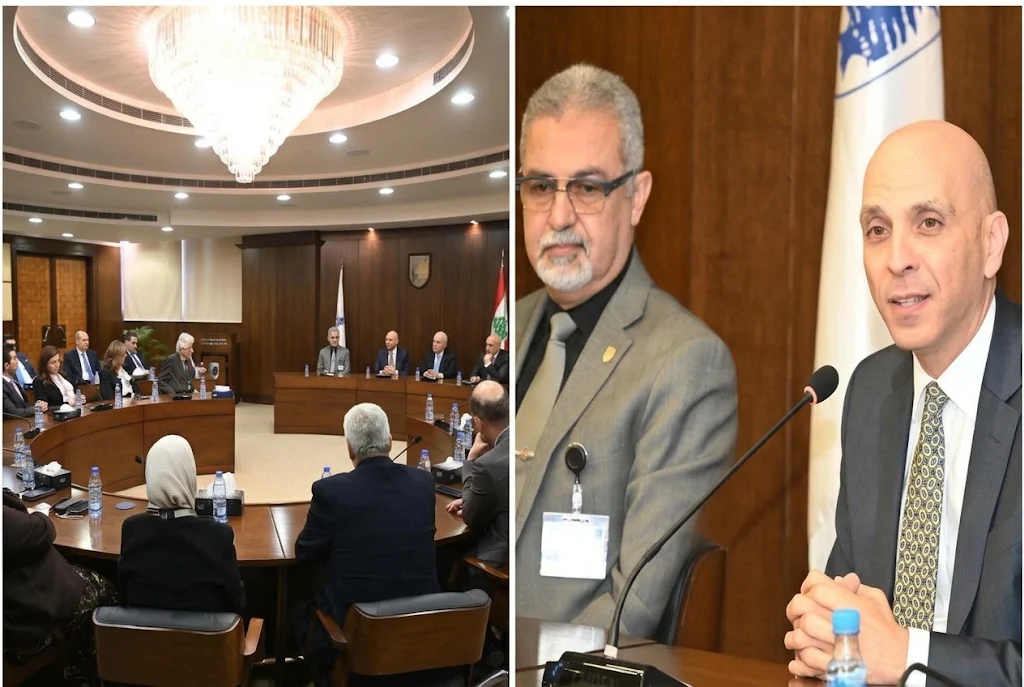
The visit of Egyptian Ambassador to Lebanon Tamim Khallaf to Beirut Arab University on Friday, November 20, 2026, was more than a traditional diplomatic engagement. It was a reaffirmation of the enduring historical, intellectual and cultural bonds between Egypt and Lebanon, highlighting the vital role of education as a bridge connecting nations and shaping their shared future.
Received by Dr. Ammar Houry, Chairman of the University’s Board of Trustees; Dr. Wael Abdel Salam, University President; and Dr. Omar Houry, Secretary-General, Ambassador Khallaf held discussions with members of the Board of Trustees, faculty deans and their deputies, administrative directors, and academic staff.
The discussions explored the university’s academic journey, its institutional development, and its contribution to strengthening educational and cultural cooperation between the two countries.
A Historic Egyptian Legacy in Lebanon
One of the most significant messages of the visit was Ambassador Khallaf’s emphasis on Egypt’s pride in the historic relationship between Beirut Arab University and Alexandria University.
This relationship is not merely an institutional partnership; it represents a lasting expression of Egypt’s intellectual and cultural presence in the Arab world and a living symbol of the historic solidarity between the Egyptian and Lebanese peoples.
Founded in 1960 with the support of the late Egyptian President Gamal Abdel Nasser, Beirut Arab University stands as an important chapter in the history of Arab educational cooperation. Its establishment reflected a vision that education, knowledge and human development should transcend geographical borders and serve the aspirations of the entire Arab nation.
For more than six decades, the university has contributed to preparing generations of scientists, professionals and specialists across diverse disciplines, while playing an important role in Lebanese society and its development.
Academic Diplomacy: Beyond Protocol and Political Relations
Ambassador Khallaf’s remarks also underscored the importance of strengthening cooperation between Beirut Arab University and Egyptian universities and research institutions.
His appreciation of the efforts made by the Board of Trustees, university administration and faculty members reflects Egypt’s recognition of the importance of maintaining academic excellence, advancing educational and research programs, and preserving the institution’s distinguished scientific standing.
However, the broader significance of this engagement lies in the opportunities it can generate.
Egyptian-Lebanese academic cooperation has considerable potential to move beyond historical connections towards practical partnerships in scientific research, innovation, student and faculty exchanges, joint academic programs, and the transfer of expertise.
Egypt, with its extensive network of universities and research institutions, can contribute significantly to expanding these horizons, while Lebanon’s established academic tradition offers valuable opportunities for complementary cooperation.
The Egyptian Embassy’s expressed readiness to continue supporting these partnerships is therefore an important diplomatic commitment that deserves to be translated into concrete initiatives.
Universities as Bridges Between Nations
During his visit, Ambassador Khallaf toured several university faculties, educational facilities and academic departments, gaining first-hand insight into their capabilities and activities. He praised the university’s pioneering role since its establishment and its continuing contributions to Lebanese society.
This visit carries a message that extends beyond the walls of a university campus: the strength of relations between nations cannot be measured solely by political agreements, diplomatic meetings or economic figures. It is also measured by the knowledge they exchange, the generations they educate, and the human bridges they build.
In a region facing profound political, economic and social challenges, investment in education and scientific cooperation is not a secondary priority. It is a strategic necessity and a foundation for sustainable development.
From the Nile to Beirut, the relationship between Egypt and Lebanon has always drawn strength from a shared history, cultural affinity and human solidarity. Beirut Arab University embodies this connection, carrying forward a legacy that began with an Egyptian vision and evolved into an enduring Lebanese academic institution with a distinctly Arab dimension.
Ultimately, Ambassador Tamim Khallaf’s visit offers an opportunity to renew this historic commitment and give it fresh momentum.
For nations may differ in circumstances and challenges, but knowledge knows no borders. And when universities become bridges between peoples, history does not simply remain a memory; it becomes a promise for the future.