Chief Editor Writes ✍️
In a recent press conference held by German Ambassador to Cairo, Frank Hartmann (or Jürgen Schulz), the intricacies of German policy in the region were laid bare—marked by commendation for Egypt’s stabilizing role, yet mired in questions over Europe’s double standards, especially when comparing responses to Gaza versus Ukraine.
Egypt: The Anchor of Regional Stability
Ambassador Schulz praised Egypt as “the voice of reason and an anchor of stability”, recognizing its responsible diplomacy amid crises in Gaza, Sudan, Libya, and the Red Sea.
“We highly value Egypt’s balanced foreign policy and its diplomatic efforts,” he stated, acknowledging Egypt as one of the most influential regional peace brokers.
But an urgent question arises:
How would Germany have reacted if Gaza were in Ukraine’s place—and vice versa?
Would Berlin adopt the same “balanced” stance if the victims were European, not Palestinian?
Germany, Ukraine, and Palestine: A Tale of Double Standards?
Ambassador Schulz reiterated Germany’s unwavering support for Ukraine, citing “historical responsibility”, yet this reveals a stark contradiction:
- Ukraine is not a NATO member, yet receives massive support.
- Gaza is facing genocide, yet receives cautious rhetoric and limited action.
Is humanity now governed by geography and identity?
While Germany insists it opposes forced displacement, occupation, and siege, it continues supplying Israel with weapons—including internationally banned arms—while humanitarian aid fails to reach Gazans under fire.
Israel: Above International Law?
The ambassador reaffirmed support for a two-state solution but failed to address the core issue:
Who obstructs its implementation?
Key UN resolutions—242 and the Oslo Accords—remain unenforced.
Backed by the US and Europe, Israel has risen above international law.
If Russia is sanctioned and condemned for invading Ukraine, why is Israel not held accountable for decades of occupation and war crimes?
Recently, Israel launched new airstrikes just hours after the release of hostage Alexander Eid—raising serious doubts about the logic behind demanding hostage release as a prerequisite for a ceasefire.
A Bold Question: Should NATO Intervene to Restrain Israel?
With international law paralyzed, a bold question surfaces:
If Israel defies UN resolutions, should NATO intervene—just as it did in the Balkans—to enforce peace?
While Israel may enjoy “unofficial” status within Western alliances, the parallel with Ukraine is undeniable.
Ukraine wasn’t a NATO member either—yet Germany and Europe gave it full support.
Why not the same for the Palestinian people?
Germany’s Role in Securing EU Compensation for Egypt
Germany also has a role to play in European policy towards Egypt.
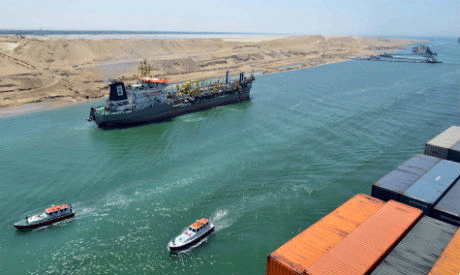
Cairo is awaiting a 4.4 billion euro compensation package from the EU to cover Suez Canal losses caused by Houthi attacks—retaliation linked to the Gaza war.
Germany’s influence could be pivotal in expediting this compensation, especially since the West compensates Ukraine swiftly and generously.
Why not Egypt, a regional cornerstone bearing enormous economic and geopolitical burdens?
Egypt–Germany Relations: A Pillar of Strategic Cooperation
Despite divergent regional views, bilateral relations between Egypt and Germany are thriving, expanding across political, economic, educational, and cultural spheres.
Strategic Political Partnership
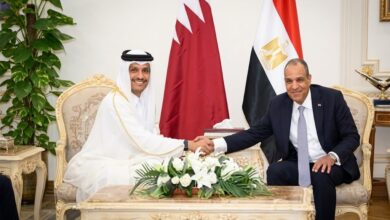
The two countries share deep political dialogue based on trust and mutual interest, evidenced by high-level visits and coordinated diplomacy, including meetings between Ambassador Badr Abdel Aaty and Germany’s Foreign Minister.
Robust Economic Ties
Germany is Egypt’s fifth-largest trading partner, with trade exceeding €5.5 billion last year.
Key German companies—notably Siemens—have driven major infrastructure projects, including:
- Three massive gas-powered power plants
- The high-speed electric train connecting Egypt’s north, south, east, and west.
Over €1 Billion in Development Investments
Germany invests heavily in:
- Renewable energy projects
- Water treatment and reuse
- Technical and vocational education aligned with labor market needs
Cultural and Educational Collaboration
Germany and Egypt celebrate decades of educational exchange, including:
- 120 years of the German Evangelical School in Cairo
- 100 years of Saint Charles Borromeo School
- The German University in Cairo, now with over 18,000 students
Germany also launched a bold plan to establish 100 German schools across Egypt, based on a joint scientific and educational framework.
Organized Migration and Skilled Labor Exchange
Germany is working closely with Egypt to facilitate legal migration and attract skilled Egyptian workers—benefiting both economies.
Conclusion: A Moral Crossroads
If Germany is truly committed to international law and human rights, then integrity demands:
- Genuine condemnation of war crimes in Gaza
- Balanced support for both Israeli and Palestinian rights
- Swift compensation for Egypt’s economic losses due to regional turmoil
The question remains:
Is Germany a beacon of justice—or a hostage to geopolitical alliances?