 Chief editor wonders 🤔
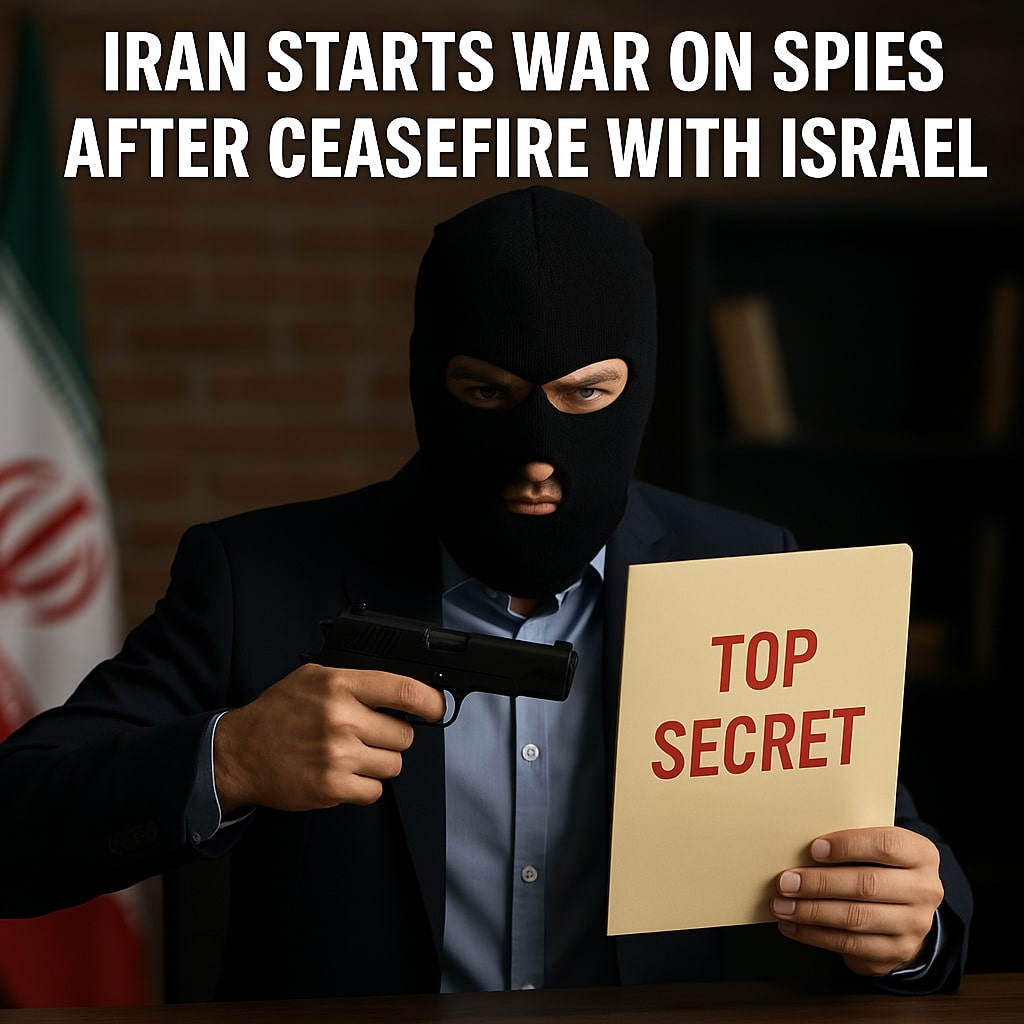
In the aftermath of the ceasefire between Iran and the Zionist entity, the real battle has only just begun—and this time, it’s within Iran’s own borders. Beneath the surface of military calm, Tehran has launched a sweeping counter-intelligence operation to hunt down suspected infiltrators and foreign operatives long embedded in the country’s social and ethnic mosaic.
A significant part of this operation reportedly targets Afghan refugees living in Iran, some of whom are now suspected of cooperating with hostile intelligence networks. At the same time, Iraqi Kurds not aligned with nationalist causes have come under scrutiny for possible espionage-related activities. In essence, Iran’s internal front has been activated in full force.
The Strike on Qatar, Not UAE or Saudi Arabia
Notably, Iran’s choice to strike a U.S. military base in Qatar, rather than in the UAE or Saudi Arabia, speaks volumes. Despite the larger American presence in the latter two, Qatar’s complex yet functional relationship with Tehran may have influenced the calculated nature of Iran’s response. The strike was measured—strong enough to send a message, but tactful enough to maintain the subtle lines of dialogue that have long existed between Doha and Tehran.
Ceasefire Brokered by Qatar: A Diplomatic Undercurrent
The ceasefire itself was brokered with direct Qatari mediation, reinforcing Doha’s increasingly central role in regional diplomacy. Over the past decade, Qatar has emerged as a key player capable of bridging divides between adversaries—including Iran and the United States.
Beyond diplomacy, Qatar and Iran have found common ground in their support for the Palestinian cause, opposing the brutal escalation by the Israeli occupation. This shared stance has earned Qatar widespread respect both at the official and popular level, globally and regionally.
But in light of recent events, a hard question now arises:
Will Qatar reconsider the American military presence on its soil—particularly the Al-Udeid Air Base—now that it has been directly targeted by Iran?
And more broadly, will other Gulf states, such as Saudi Arabia, Kuwait, Bahrain, and even Oman, which hosts a British base, begin to reassess their strategic reliance on foreign military infrastructure?
Arab Silence, Tunisian Clarity—and Egypt’s Consistency
As Iran absorbed the Israeli attack, the Arab world responded with silence—except for Tunisia, whose clear condemnation stood in contrast to the muted or evasive positions of other capitals. Across the Islamic world, condemnation came reluctantly and in whispers.
However, Egypt distinguished itself once again. Through constant diplomatic communication between the two countries’ foreign ministers, Cairo reaffirmed its principled stance—one rooted not in alliances, but in respect for sovereignty and regional stability. Egypt’s reaction, steady and consistent, was both discreet and significant.
Iran’s Nuclear Program Intact—The Strike Was Symbolic
Despite the noise, Iran’s nuclear facilities remain completely intact, according to multiple sources. The Israeli strikes, though dramatic, were largely symbolic—designed more for psychological and political impact than actual strategic disruption.
In fact, it is widely understood that Iran’s role is indispensable to America’s presence in the Middle East. Tehran is not the enemy—it is the raison d’être for America’s continued military footprint in the region.
The Gulf Pays—And Washington Profits
Every crisis serves to reinvigorate U.S. defense contracts and sustain the financial pipeline from Gulf states to Washington. The motto “America First” is still in play—even if Trump is no longer in office. The region’s tensions continue to funnel billions into the American defense economy, a cycle that benefits the U.S. regardless of who wins or loses.
NATO Under Pressure, and Trump Lashes Out
Leaked sources suggest that Donald Trump harshly criticized NATO leadership, accusing them of failing to act decisively on Iran. In his view, neutrality or delay is a strategic weakness—one that endangers American credibility globally.
A Secret Offer: Compensation for Peace
Behind closed doors, the U.S. and certain Gulf allies reportedly offered Tehran compensation for losses incurred during the Israeli assault—on the condition that Iran accept the ceasefire and refrain from further escalation. It’s not the first time Washington has bought time and silence. But this time, the offer was clearer—and more desperate.
Conclusion: The Quiet War Is Just Beginning
Iran’s real response is not in the form of missiles, but in the purge now underway within its own borders.
The external silence—whether diplomatic, cowardly, or transactional—has exposed the fault lines of the region.
And as America walks away richer and more entrenched, Iran braces for the deeper, more dangerous battle within.