Ashraf AboArafe
UN Secretary-General: The Financing for Development Conference Seeks to Change Course and Restore Justice and Equity for All
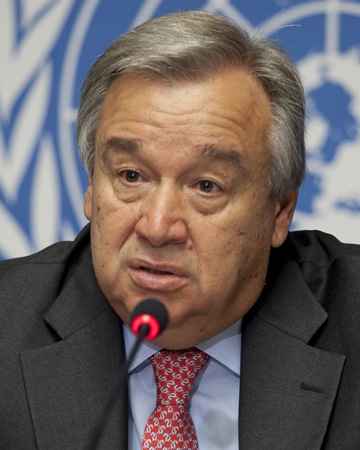
At the opening of the Fourth International Conference on Financing for Development in Seville, Spain, United Nations Secretary-General António Guterres emphasized the urgent need to change course in order to achieve the Sustainable Development Goals (SDGs).
Guterres warned that two-thirds of the SDGs are off track, highlighting that financing— the engine of development— is faltering. He stressed that the 2030 Agenda for Sustainable Development, the world’s collective promise for a fairer and better future, is now at risk.
He stated that achieving the SDGs requires investments exceeding $4 trillion annually, and that the Seville Conference aims to “change course”—to repair and reignite the engine of development, accelerate investment at the necessary scale and pace, and restore a sense of justice and equity for all.
The Secretary-General also highlighted the clear link between peace and development, noting that nine out of the ten countries with the lowest Human Development Index are currently in conflict. He added that development—and its main driver, international cooperation—is facing strong headwinds amid a world of declining trust, mounting pressure on multilateralism, economic slowdown, growing trade tensions, collapsing aid budgets, deepening inequalities, climate chaos, and intensifying conflicts.
Guterres described the “Seville Commitment”, agreed upon by Member States on June 17 ahead of the conference, as a global pledge to reform how the international community supports countries on their path to development.
He outlined three key areas for action:
- Rapid resource mobilization, including domestic resource generation and investment in high-impact sectors such as education, healthcare, social protection, decent work, and renewable energy.
- Reform of the global debt system, which Guterres called “unsustainable, unjust, and inaccessible”. He pointed out that with $1.4 trillion in annual debt service, countries need—and deserve—a framework that lowers borrowing costs, enables timely and fair debt restructuring, and prevents future debt crises.
- Greater participation of developing countries in global financial institutions. Guterres urged major stakeholders to acknowledge the need to correct injustices and adapt to a changing world. A new Borrowers’ Forum, he said, would empower developing countries, foster fairer debt settlements, increase transparency, enable experience sharing, and improve coordination in debt management.
The Secretary-General concluded by stating that this conference is not about charity, but about restoring justice and enabling dignified living. “It is not about money, but about investing in the future we want to build—together,” he said.
The city of Seville is hosting the Fourth International Conference on Financing for Development beginning June 30, bringing together key stakeholders to advance solutions for the financing challenges threatening sustainable development.
More than 70 heads of state and government, along with leaders of international financial institutions, civil society, philanthropic foundations, and the private sector—including representatives from the energy, food systems, and digital industries—are participating in the event.
According to UN Deputy Secretary-General Amina Mohammed, the Seville Commitment specifically addresses the debt crisis affecting developing countries, many of which spend more on interest payments than on essential services, severely constraining their ability to achieve sustainable development.