M.General Mohamed Hussein ✍️
senior under-secretary at SIS
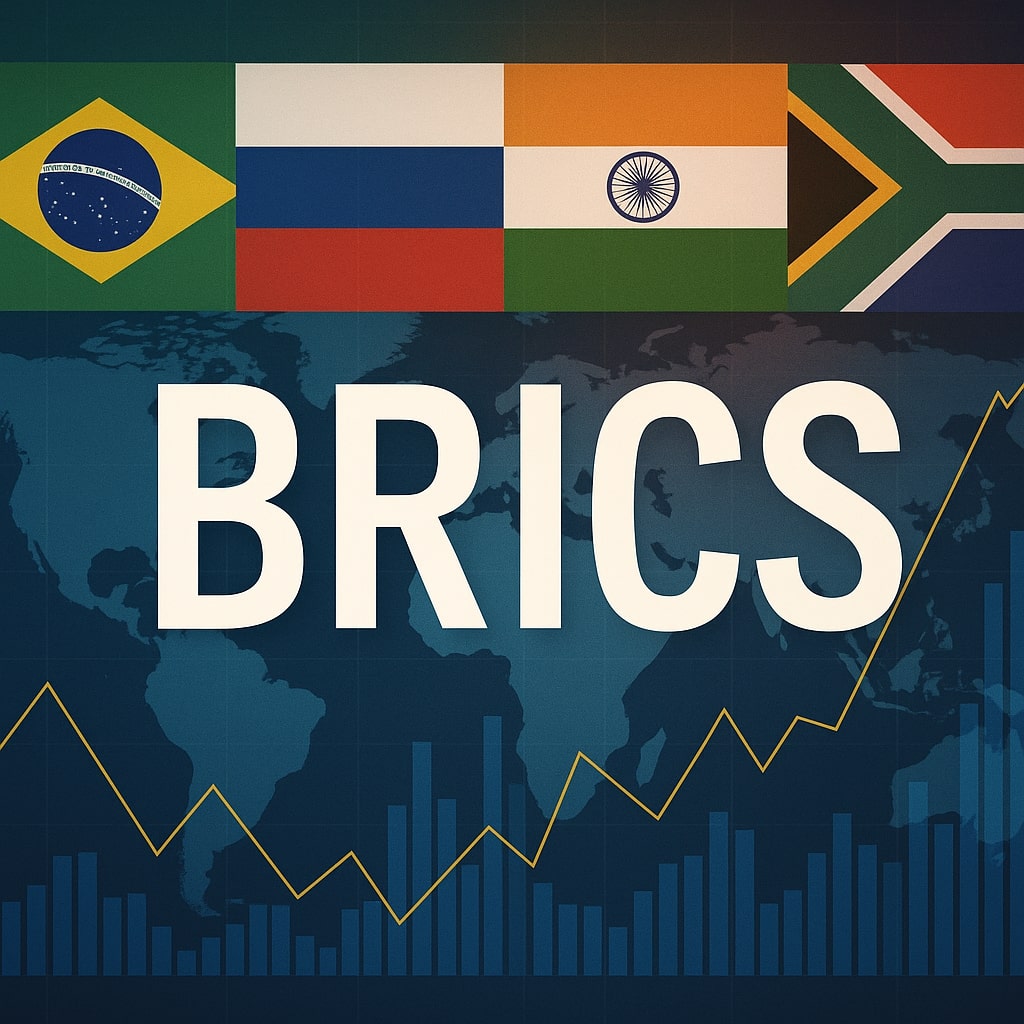
Since its establishment in 2009 by Russia, China, Brazil, and India—and later joined by South Africa in 2010—BRICS has positioned itself as a platform to strengthen economic and financial cooperation across what is known as the “Global South”. The group expanded in 2024 to include Egypt, Saudi Arabia, the UAE, Iran, and Ethiopia. Despite mounting Western pressure and internal differences, BRICS remains a promising bloc capable of shifting the balance of the global economic order.
I. Major Challenges Facing BRICS
1. Economic Disparities Among Members
One of BRICS’ most persistent obstacles is the wide economic gap between its members. China, the world’s second-largest economy, dominates intra-BRICS trade, accounting for 18% of exports and 15% of imports. In contrast, countries like Ethiopia suffer from trade deficits and heavy reliance on foreign loans, while Brazil faces similar economic strains.
2. Geopolitical Tensions
Internal geopolitical rivalries—such as the ongoing border disputes between China and India—pose serious threats to the group’s cohesion. China’s strategic stance toward Pakistan further complicates the dynamic, as India attempts to position itself as a U.S.-aligned counterweight to Chinese influence.
Additionally, tensions in Southeast Asia—like the dispute between Thailand and Cambodia over the Preah Vihear temple—add pressure. China, with strong ties to Cambodia, and India, taking a neutral stance, reflect diverging regional interests.
3. Divergent Views on Expansion
China advocates for greater openness and expansion of the group, while India and Brazil express reservations. This divergence reflects broader differences in strategic priorities and visions for BRICS’ future.
4. Competition with the G7
BRICS now contributes around 36% of global GDP based on purchasing power parity (PPP), surpassing the G7’s 29%. Yet, the bloc faces ongoing pressure from Western institutions—such as the IMF and World Bank—which seek to maintain control over global financial governance.
5. Limited Financial Integration
Despite economic potential, the use of local currencies in intra-BRICS trade remains limited, and the group has yet to implement an effective alternative to the U.S. dollar. The absence of a unified financial agenda also weakens BRICS’ ability to exert significant influence on the global monetary system.
II. Strategic Opportunities for BRICS
1. Demographic and Economic Strength
BRICS nations represent more than 45% of the global population and cover 30% of the world’s landmass. They hold over 40% of global foreign currency reserves and contribute approximately 42% of global oil and gas production, granting them substantial leverage in energy markets.
2. Foreign Direct Investment (FDI) Magnet
BRICS countries—particularly China—remain attractive destinations for FDI. China alone receives nearly $180 billion annually, thanks to its vast market and sustained economic growth, reinforcing BRICS as a competitive investment bloc.
3. Massive Foreign Reserves
China maintains the world’s largest foreign currency reserve—over $3 trillion—followed by India with $600 billion and Russia with $460 billion. These reserves provide a buffer against economic instability and a foundation for future financial independence from Western institutions.
Analytical Summary
Despite significant structural and geopolitical challenges, BRICS holds considerable potential as a global economic and political force. According to Bloomberg, BRICS has already outpaced the G7 in GDP growth. Goldman Sachs further predicts that BRICS economies, led by China, could surpass the size of the European market within two years—and possibly even the U.S.—as American debt burdens grow.
For BRICS to fulfill its promise, it must move beyond internal divisions and develop a unified strategic vision capable of reshaping the international order toward greater balance and equity.