Ashraf AboArafe
- Pakistan warns of “exceptionally high” flood risk in Punjab
- India opens gates of Thein Dam; also signals spillage from Madhopur Dam
- Punjab’s breadbasket faces grave risk; 150,000 already displaced
- Authorities warn: “Next 48 hours will be critical”
- Climate change intensifying rainfall in eastern rivers
- India bypasses Indus Waters Treaty mechanism, informs through diplomatic channels instead
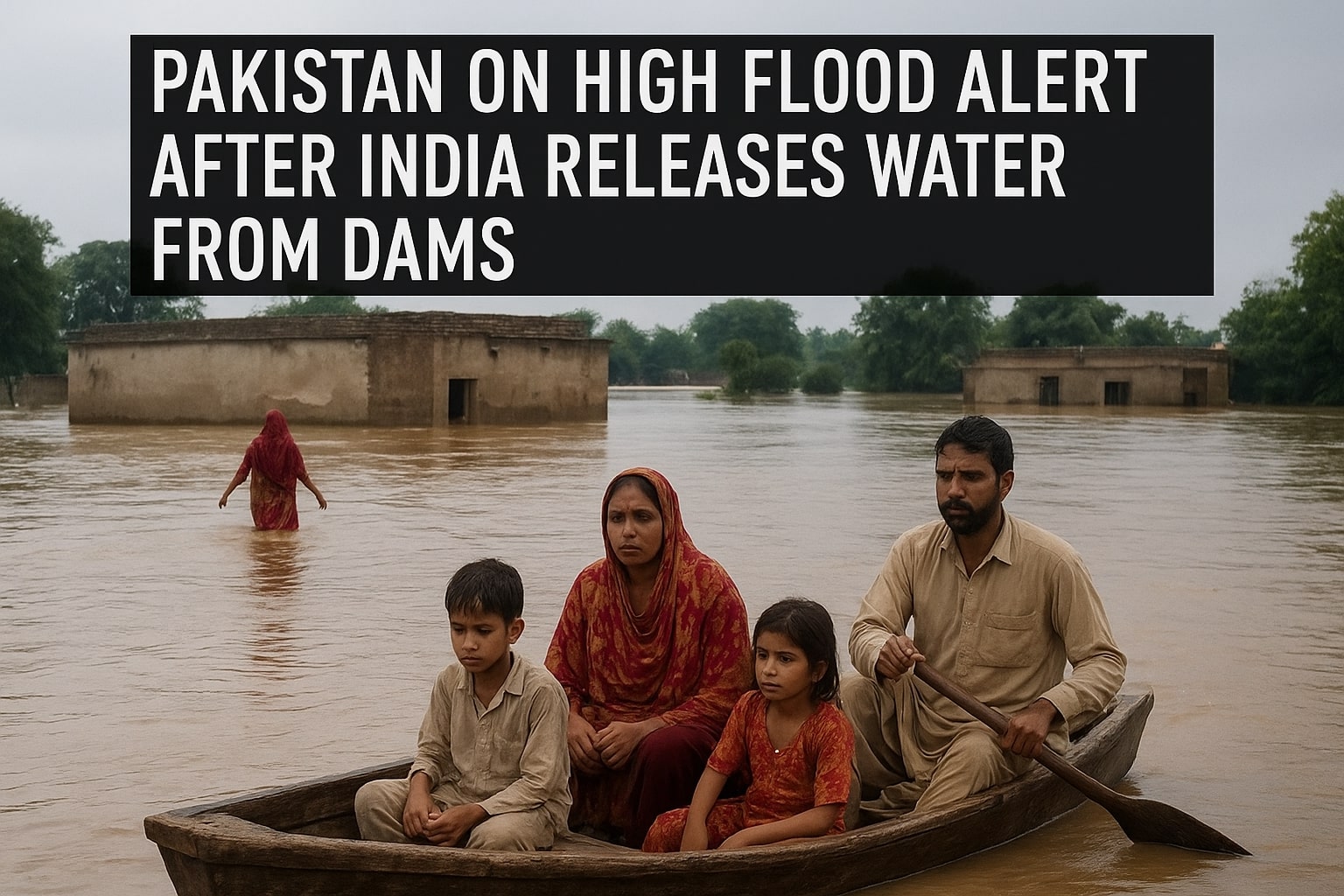
Pakistan has raised its flood warning to “very high to exceptionally high” for its Punjab province, including Lahore, after India released water from two major dams amid intense monsoon rains.
The move threatens to inundate Pakistan’s agricultural heartland, home to nearly half of the country’s 240 million people. Authorities say the next 48 hours will determine the scale of the disaster.
Tensions are already heightened between the nuclear-armed neighbors following a brief but deadly border clash in May. Any flooding linked to Indian dam releases risks worsening relations.
The Punjab Provincial Disaster Management Authority confirmed late Tuesday that India had opened all gates of the Thein Dam on the Ravi River. A day earlier, India had also warned of spillage from the Madhopur Dam, also located on the Ravi.
“The flood situation is grave. The next 48 hours will be critical,” said Irfan Ali Kathia, an authority official.
Satellite imagery shows the Thein Dam nearly 97% full, sparking fears of sudden, large-scale discharge.
While India routinely releases excess water when dams near capacity, Pakistan has criticized the manner of communication. This week, India notified Islamabad through diplomatic channels instead of using the official Indus Waters Treaty Commission mechanism, which governs river-sharing between the two countries since 1960.
“Once again, the Indus Waters Treaty framework has been disregarded,” a Pakistani official noted.
Evacuations Underway
Forced evacuations have begun across Punjab province. Over 150,000 people have already fled flood-prone areas, including 35,000 who left voluntarily after early warnings issued since mid-August.
Troops are assisting in the evacuation of villages along three rivers – the Ravi, Sutlej, and Chenab. Relief camps are providing food, medical care, and sanitation facilities.
Sixteen villages are immediately at risk of submersion, said Deputy Commissioner Saba Asghar Ali after inspecting Pasrur city near the Indian border.
“Due to climate change, eastern rivers are receiving far heavier rainfall compared to the past,” said Punjab’s Irrigation Minister Kazim Raza Pirzada.
Rising Toll
Since the monsoon season began in late June, at least 802 people in Pakistan have been killed by floods – half of them in August alone. In Indian-administered Kashmir, 68 people have died this month, including eight on Tuesday.
Northern Pakistan’s Gilgit Baltistan has been hit by accelerated glacial melt, while Karachi in the south was partly submerged last week.
As both countries reel from the monsoon’s fury, the dispute over dam releases risks transforming a natural disaster into a diplomatic crisis.