Ashraf AboArafe
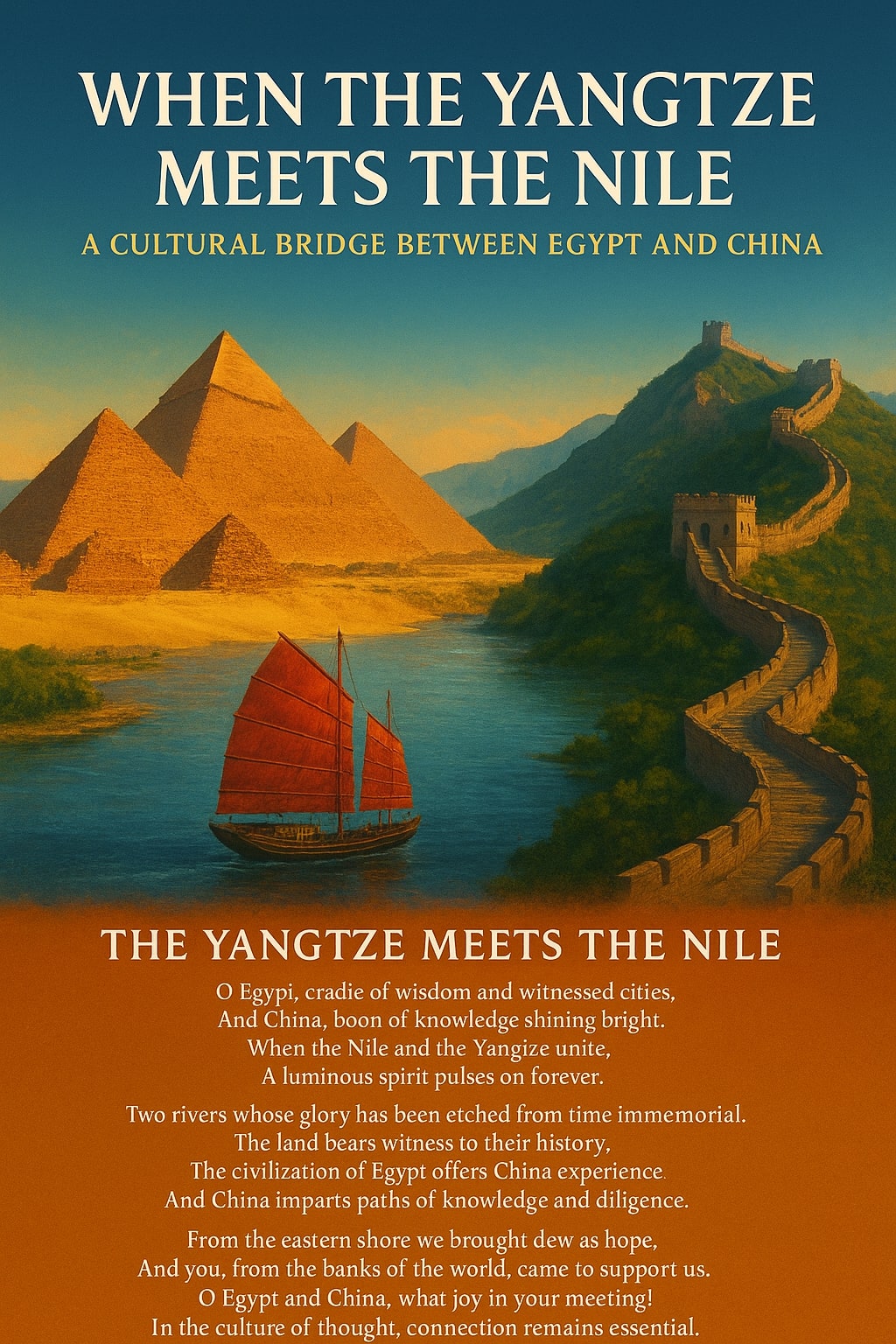
The National Museum of Egyptian Civilization, in collaboration with the Municipality of Chongqing, hosted on Tuesday an international event titled “When the Yangtze Meets the Nile.” The gathering served as a vivid window into the deep historical and cultural ties uniting Egypt and China.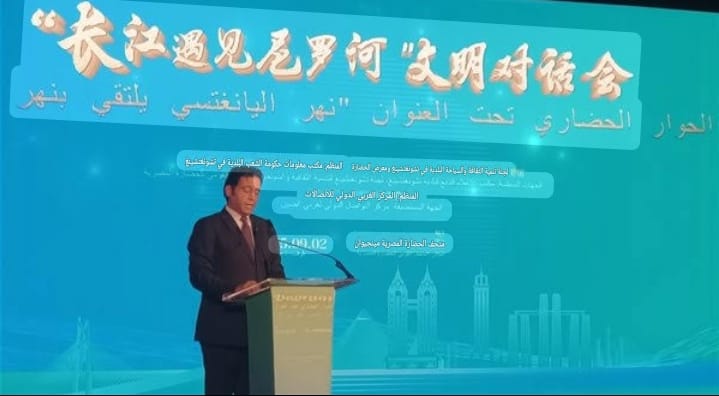
Dr. El-Tayeb Abbas, Executive Director of the NMEC in Fustat, emphasized that the event comes at a pivotal moment to highlight the shared heritage linking the eternal Nile with the Yangtze River—one of the world’s longest waterways. He noted that culture remains the most powerful bridge between nations: through art and dialogue, people can better understand one another, strengthen mutual respect, and build a future rooted in peace and cooperation.
Dr. Ahmed Rahima, Assistant Minister of Tourism and Antiquities, drew parallels between the two great rivers—the Nile, the longest in the world, and the Yangtze, the third-longest. His remarks, which highlighted the grandeur of the Pyramids of Giza and the Great Wall of China, were met with warm applause, underscoring the timeless legacies of the two civilizations.
Representing the State Information Service (SIS), Major General Mohamed Hussein addressed the audience with a welcoming speech that celebrated the renewed cultural bridges between Egypt and China as follows:
In the Name of God, the Most Gracious, the Most Merciful
Distinguished guests, ladies and gentlemen,
Peace, mercy, and blessings of God be upon you.
It is a great honor to welcome you all, and to extend special greetings to the representatives of the Western China International Communication Organization (WCICO), our esteemed guests, gathered here at the National Museum of Egyptian Civilization for this exceptional cultural encounter entitled:
“When the Yangtze Meets the Nile… Cultural Bridges Renewed Between Egypt and China.”
This conference reflects the depth of historical and human ties between Egypt and China, and embodies what the State Information Service of Egypt aspires to achieve in further strengthening bilateral cooperation across diverse fields—particularly cultural dialogue and civilizational exchange.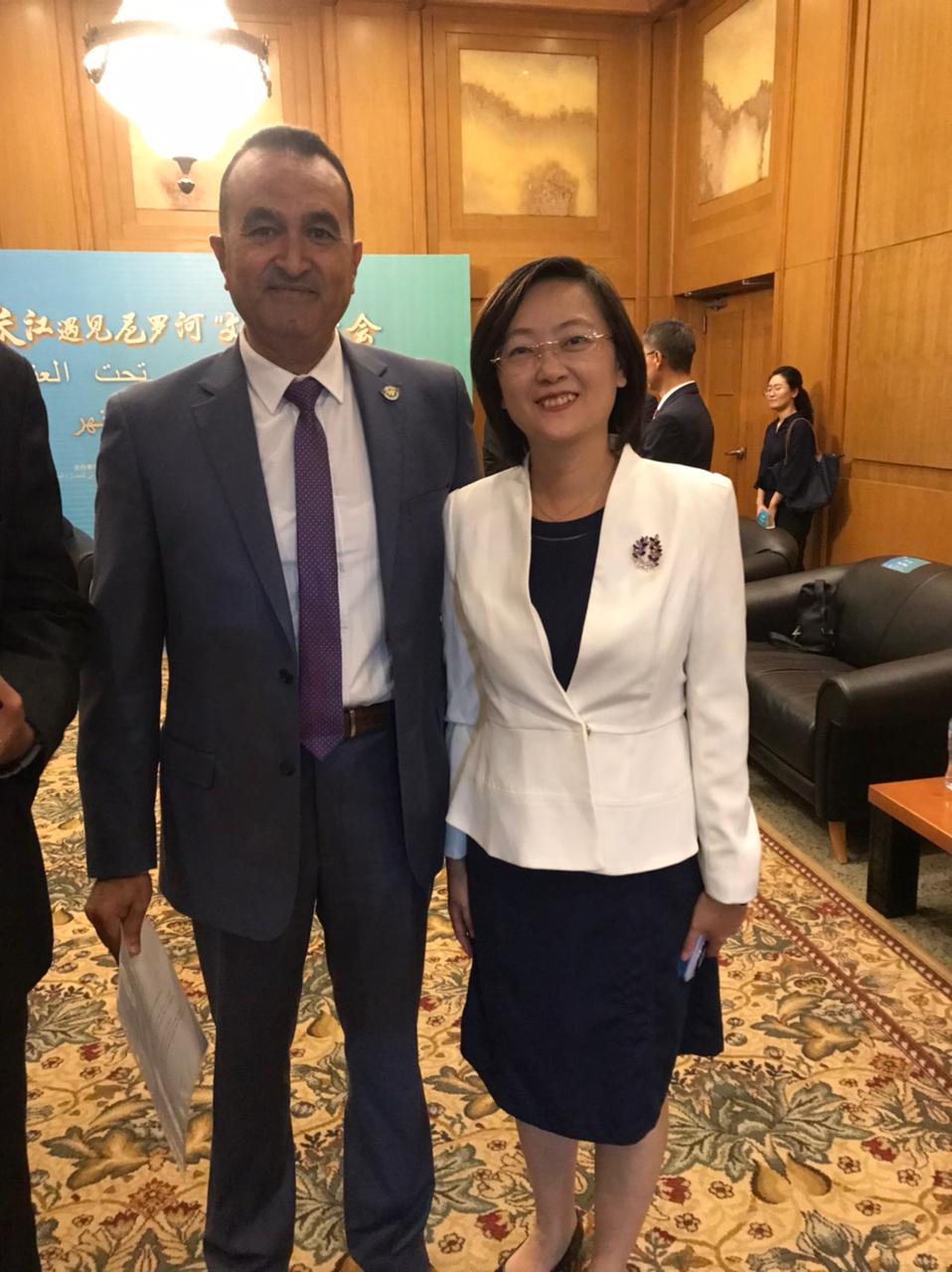
And because poetry is the voice of nations and the guardian of their memory, let us allow the measured word to give expression to this timeless moment:
When the Yangtze Meets the Nile
O Egypt, cradle of wisdom, of cities that bore witness,
And O China, keeper of knowledge, radiant in the lands.
When the Nile and the Yangtze meet, united,
A single eternal light flows through the soul.
Two rivers, since ancient time, inscribed their glory
Upon the earth, where history has testified.
Egypt, with her civilization, offers enduring lessons,
While China gifts the pathways of knowledge and endeavor.
From the banks of the East we came with hope as dew,
And from distant shores you arrived, a steadfast support.
Egypt and China—how beautiful your encounter,
In the realm of thought, where bonds remain secure.
The spirit stretches between Nile and Yangtze,
A bridge of friendship, unshaken and unbroken.
From the desert of Giza, our lights were kindled,
In the hearts of China, their echo answered the call.
This fraternity is the key, since dawn has risen,
Of two civilizations, radiant with nations and tomorrow.
May this festivity remain in everlasting memory,
That the world may celebrate the gift it has found.
Ladies and gentlemen,
We are confident that this conference will add a new cornerstone to Egyptian–Chinese cooperation, and will deepen the cultural and civilizational bridges that unite our two friendly nations.
May the meeting of the Yangtze and the Nile remain an ever-renewed symbol of shared human spirit and a shining beacon for the future.
Peace, mercy, and blessings of God be upon you.
Dr. Sayed Abou El-Fadl, Director of the Museum Display at NMEC, added that the event included a high-level dialogue session bringing together Egyptian and Chinese experts to explore ways of safeguarding river heritage and sharing experiences in environmental and water conservation. This, he noted, reflects a shared awareness of the vital role rivers play as sources of life and culture.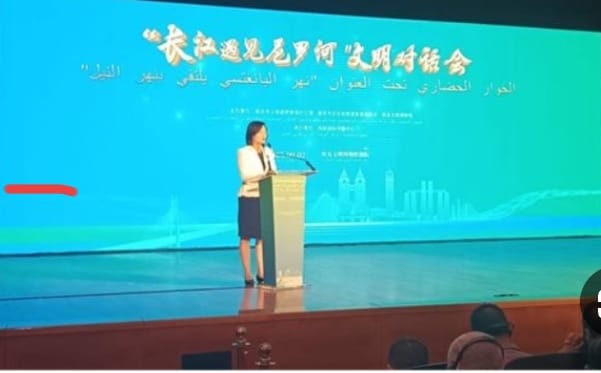
Beyond official dialogues, the event offered interactive experiences for the public, including traditional Chinese craft workshops and captivating artistic performances from Chongqing. Visitors could immerse themselves in cultural exchanges that blended joy, learning, and discovery.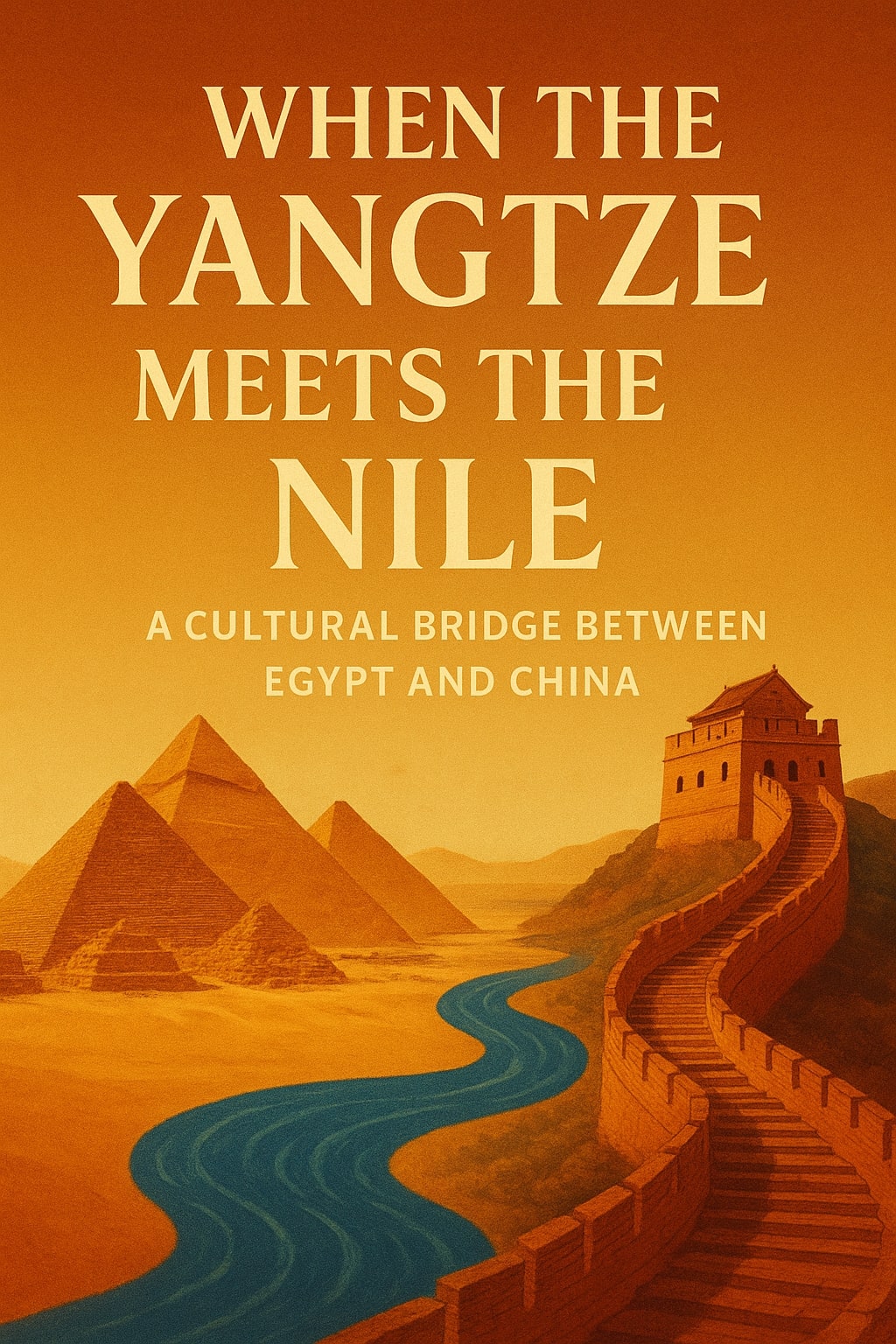
A cultural and artistic exhibition accompanying the event will remain open at the NMEC until September 8, 2025. Featuring digital installations, photography, and traditional crafts, the exhibition narrates stories of civilizational exchange, highlighting the similarities and differences between the two cultures while celebrating the values that bind them together.