 Chief editor writes ✍️
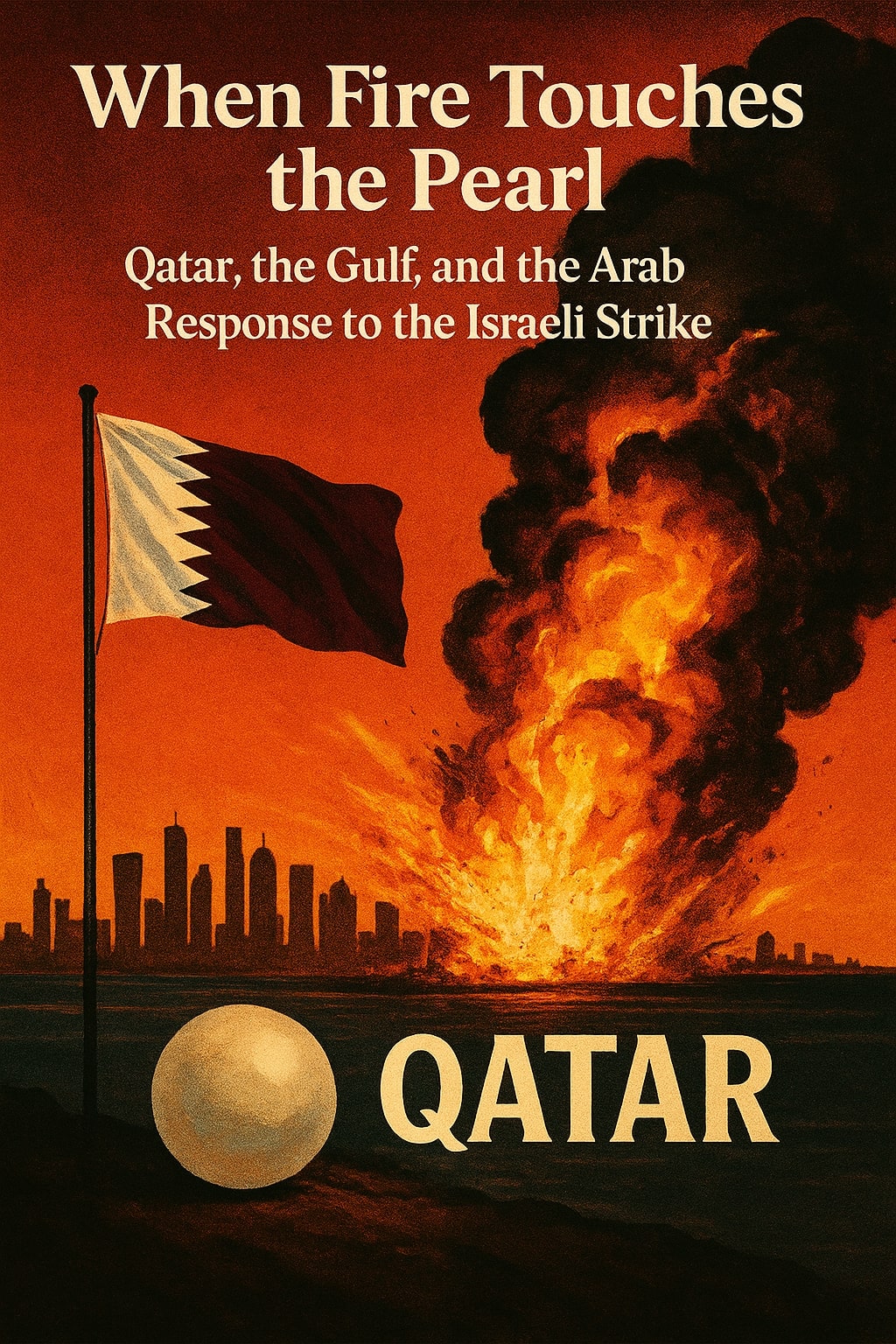
The attack on Doha was not merely an air raid; it was an earthquake that shook the delicate balance of the Gulf and reverberated across Arab capitals. Qatar — long the pearl of mediation and a bridge between adversaries — found itself transformed from host to dialogue into target of fire. What unfolds now is a story of sovereignty, solidarity, and the hard choices between diplomacy and confrontation.
1. Qatar and the Shadow of the Bases
Qatar hosts Al-Udeid Air Base, the largest U.S. military facility in the region. Expelling it would be a thunderclap in global geopolitics — yet Doha is unlikely to make such a sudden rupture. Instead, the path most probable is:
- Immediate protests and legal pursuit at the UN and ICJ.
- Demanding tighter U.S. guarantees of non-repetition.
- Recalibrating security protocols without dismantling the backbone of its defense.
The paradox remains: the very base that secures Qatar from regional foes did not shield it from the missiles of Israel.
2. The Gulf Stands Together
From Riyadh to Muscat, from Kuwait City to Manama, the chorus was clear: solidarity with Doha. The Gulf Cooperation Council denounced the strike as cowardly and pledged support. While no Gulf capital is eager for open war, expect:
- Unified diplomacy in the UN and Arab League.
- Legal and financial support for Qatar’s litigation.
- Possible airspace or commercial restrictions on Israel.
The GCC, divided at times in the past, may rediscover unity under the fire that touched one of its own.
3. The Wider Arab World: Words, Oil, and War
The great questions echo:
- Will Arab states go beyond words?
- Will oil again become a weapon, as in 1973?
- Will armies march?
History suggests restraint. The costs of war with Israel in 2025 would be staggering, and oil embargoes would wound Arab economies as much as the West. Instead, expect a constellation of measures:
- Diplomatic expulsions and ambassador recalls.
- Temporary airspace closures for Israeli aircraft.
- Economic penalties, targeted sanctions, and symbolic suspensions of trade.
- A stronger push for international accountability — but not a regional war.
4. Egypt’s Voice of Condemnation
Cairo, guardian of Arab diplomacy, called the strike cowardly. Egypt, itself a mediator in the Palestinian file, will likely spearhead Arab League initiatives — channeling outrage into resolutions, conferences, and perhaps joint Arab-EU legal campaigns.
5. Timeline of Reactions
- Day 1: Israeli strike hits Doha; casualties reported.
- Hours later: Qatar condemns and summons its legal team.
- Same day: GCC Secretary-General declares “full solidarity.”
- Next 24 hours: Egypt, Jordan, Kuwait, and Oman denounce, using words like “cowardly” and “flagrant violation.”
- International: UN, EU, and several capitals express alarm; Washington offers muted statements, pressed by Doha for clarity.
6. Possible Legal and Diplomatic Fronts
Qatar may advance its cause by:
- Filing a case at the ICJ for violation of sovereignty.
- Requesting an emergency UN Security Council session.
- Leveraging its mediation role to argue that Israel is sabotaging peace tracks.
- Seeking compensation and accountability through international law and human rights bodies.
7. A Voice Imagined: Draft of a Joint Arab Statement
“We, the nations of the Arab League, stand with Qatar in the face of cowardly aggression that violates every norm of sovereignty and humanity. We affirm that Arab land will not be a theatre for foreign raids without consequence. The Arab world reserves all options — diplomatic, economic, and legal — to confront this affront. Our oil, our skies, our diplomacy: all remain tools in defense of our dignity.”
Epilogue: The Pearl and the Fire
This strike has bound the Gulf closer, rekindled Arab indignation, and forced Doha to reimagine its delicate dance between hosting America’s might and enduring Israel’s wrath. Whether the response stops at words, or grows into action that shifts markets and alliances, will decide if the fire that touched the pearl remains a scar — or becomes the spark of a new Arab reckoning.