 chief editor writes
AT a time when facts are increasingly overshadowed by prefabricated narratives—and when media itself becomes a battlefield rather than a mere observer—the significance of political discourse that speaks directly to the conscience of European journalism cannot be overstated.
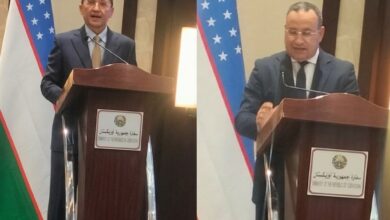
The address delivered by Ambassador Majid Nili, ostensibly to members of the Iranian community in Germany, transcends its immediate audience to pose deeper questions about the role of European media in moments of global crisis: Does it echo the voice of power, or does it activate its critical memory and the values upon which it was founded—international law and the rights of peoples?
From this perspective, the ambassador’s speech should not be read as a reactive statement, but as a strategic attempt to recalibrate Europe’s lens on Iran and the wider region—by invoking law, memory, and the principle of national sovereignty—placing European newsrooms before a defining professional and ethical test.
1) Economic Grievances: Withdrawing the Pretext
The speech opens by firmly establishing the legitimacy of economic demands as a natural and legal right. This directly challenges a recurring trope in European coverage that conflates social hardship with external political authorization.
Message to European editors:
Economic suffering does not confer legitimacy on sanctions, does not justify intervention, and does not nullify sovereignty.
2) Sanctions and Frozen Assets: Europe’s Credibility on Trial
The address shifts from defense to legal–moral indictment, characterizing sweeping sanctions and asset freezes as collective punishment and clear violations of international commitments.
Here, the appeal is not only to governments but to the media’s watchdog role: Will European journalism merely relay official positions, or will it scrutinize policies that contradict the very legal norms Europe claims to champion?
3) Memory Against Double Standards
By referencing statements from Israeli leadership—most notably Prime Minister Benjamin Netanyahu—alongside American war rhetoric and their amplification in German media, the speech activates political memory as a strategic tool.
The message is stark:
Those who moralize today largely remained silent or complicit during earlier unlawful wars—exposing double standards not as an accident, but as a recurring policy pattern.
4) Critique of Regional and International Silence: A War of Existence, Not Borders
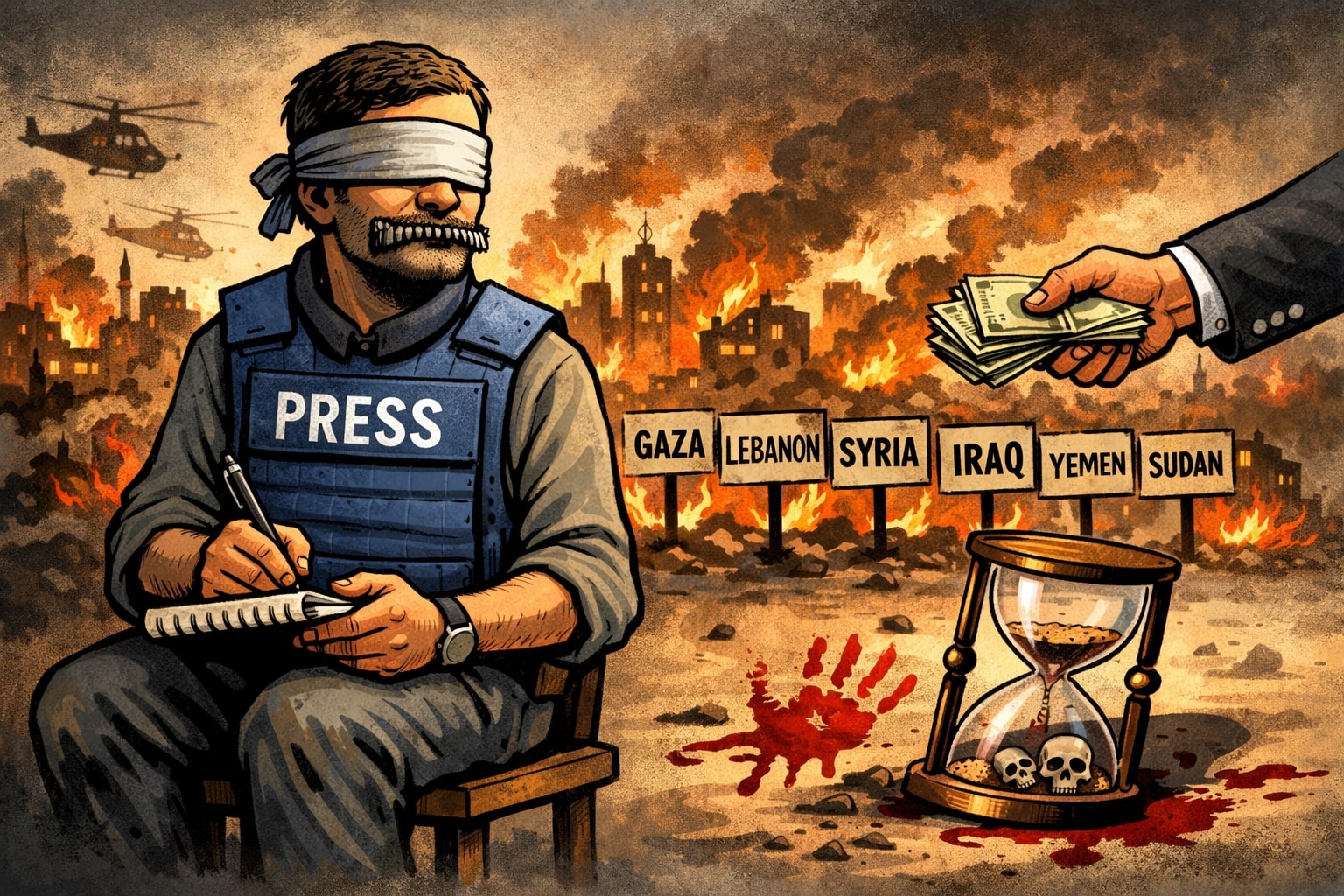
The analysis reaches its core by framing current conflicts as criminal wars of existence rather than disputes over borders—wars sustained by silence at times and by overt collusion at others, according to a hidden yet well-known timeline.
Experience shows a recurring trajectory of destabilization—tools may vary, objectives do not:
- Gaza and Venezuela stand as stark examples of siege and coercion aimed at breaking collective will.
- The pattern extends to Lebanon, Syria, and Iraq.
- Then to Afghanistan, Yemen, and Libya.
- Reaching Sudan and Somalia—with others likely to follow.
To European media:
Silence here is not neutrality; it is an active stance that reproduces violence by fragmenting contexts, isolating events, and obscuring a discernible pattern of systemic targeting.
5) Sovereignty: An Appeal to Europe’s Intellectual Tradition
The speech concludes with a declarative affirmation:
We are peoples who stand on our own feet.
This is not defiance for its own sake, but a rejection of tutelage, conditional “support,” and the instrumentalization of human rights. Simultaneously, it extends a reassurance: what is sought is not endorsement, but a fair space for narrative and scrutiny.
Executive Takeaway for European Editors
This address—and the analysis it invites—is not a call for escalation, but an early warning against the normalization of:
- Silence as policy
- Sanctions as default
- Single narratives as journalism
True neutrality does not lie in silence, but in asking the questions that unsettle allies as much as adversaries.
When war becomes a war on existence, silence ceases to be passive—it becomes complicity. And memory, then, is the last line of defense for truth.