SPECIAL | When the State Speaks in the Language of Calm Power..An Interview with Amb.of Iran to Cairo

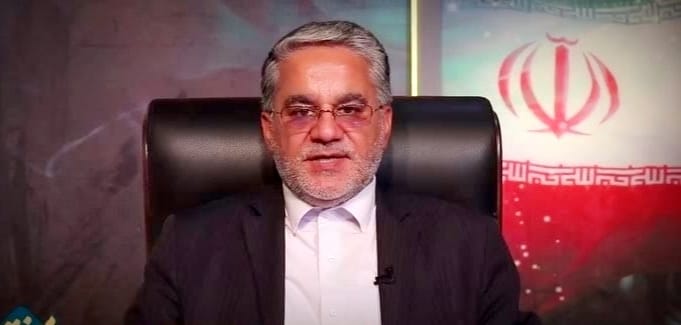
Interviewef by: Ashraf AboArafe
IN this exclusive interview, Mojtaba Afaroudsi, Ambassador of the Islamic Republic of Iran to Cairo, offers a measured and strategic reading of a set of sensitive regional and international issues, responding to questions from AldiploMasy in its Arabic and English editions.
Question 1:
Your Excellency, how do you assess the current situation of protests inside Iran? What is their scale in terms of spread, intensity, and casualties?
Ambassador Mojtaba Afaroudsi:
What is being circulated by some foreign media outlets under the label of “widespread protests” is, to a large extent, far removed from the realities on the ground in the Islamic Republic of Iran. Like any society, Iran naturally witnesses, from time to time, limited and temporary sectoral demands or expressions of discontent. Iran is no exception in this regard.
However, the overwhelming majority of the Iranian people remain firmly committed to stability and security, and to pursuing their demands through legal and institutional channels. The limited incidents of unrest—some of which were linked to external incitement and organization—were addressed by the competent authorities. The inflation of figures and the fabrication of casualty numbers fall squarely within the framework of psychological warfare and targeted media operations against the Iranian people.
Question 2:
In your view, where is the trajectory of these protests heading? Could they develop into widespread unrest or a crisis within Iran’s governing system?
Ambassador Mojtaba Afaroudsi:
The experience of more than four decades demonstrates that the Islamic Republic of Iran enjoys a solid popular base, strong institutional cohesion, and legal capacities capable of managing various challenges.
What Iran’s adversaries seek is to project an image of inefficiency and to manufacture a rift between the people and the system. Yet the enduring reality is that the structure of governance in the Islamic Republic is built on popular participation, elections, and stable institutions. Consequently, such scenarios are destined to fail, regardless of the intensity or persistence of external promotion.
Question 3:
In light of the recent visit of the Israeli Prime Minister to the United States, as well as the U.S. attack on Venezuela, does the Iranian government believe that the United States and Israel are on the verge of military action against Iran? Under what circumstances might such an attack become likely?
Ambassador Mojtaba Afaroudsi:
The Islamic Republic of Iran maintains continuous and comprehensive monitoring of the political, security, and military movements of the United States and the Israeli entity. We harbor no illusions or naïveté regarding their records, intentions, or threatening approaches.
That said, our precise assessments indicate that a significant portion of recent moves—including meetings, visits, and public statements—falls, more than anything else, within the framework of psychological warfare, media deterrence, and attempts to exert political and regional pressure, rather than reflecting a concrete decision to enter into direct military confrontation.
At the same time, the Islamic Republic of Iran states unequivocally that any military action or aggressive adventure against Iran would constitute a blatant violation of international law and the UN Charter, and would be met with a decisive, proportionate, and deterrent response. The repercussions of such an act would be far-reaching, extremely costly, and unpredictable—an undeniable fact that is always taken into account within the strategic calculations of the opposing side.
Question 4:
In the event of hostile action, what tactics do you expect the United States and Israel to employ? And what military preparations and arrangements has the Islamic Republic of Iran made?
Ambassador Mojtaba Afaroudsi:
The experiences of recent years show that the threats facing the Islamic Republic of Iran are not confined to conventional military confrontation alone. They encompass a broad spectrum of complex, multi-layered measures, including cyber warfare, intelligence and psychological operations, economic pressure and sanctions, and attempts to destabilize the country by provoking internal unrest.
Based on a clear understanding of these realities, the Islamic Republic of Iran has adopted a comprehensive and well-considered approach to confronting threats. In accordance with our declared defensive doctrine, Iran has never been the initiator of wars or conflicts—and it will not be so. However, in defending its national sovereignty, territorial integrity, security, and the interests of its people, Iran possesses firm resolve and effective deterrent capabilities.
The readiness of Iran’s armed forces, relying on their indigenous capabilities and comprehensive preparedness, ensures that any hostile action or miscalculation by adversaries would be met with a proportionate, effective, and costly response—rendering such adventures irrational and high-risk for anyone contemplating them.
Closing Note:
Between the calmness of tone and the firmness of substance, this interview reflects an Iranian perspective that views internal stability as a cornerstone, balanced deterrence as a safeguard, and media noise as an element external to the calculations of the state—yet central to the battle over perception.