Ashraf AboArafe
THE exchange triggered by remarks from Donald Trump at World Economic Forum reveals far more than a dispute over wind turbines—it exposes a deeper contest over narrative authority in the global energy transition.
By questioning whether China truly deploys the wind power equipment it manufactures, and by framing its exports as transactions with the “naïve,” Trump’s comments leaned heavily on symbolism rather than substantiated observation. The implication was not merely technical skepticism, but a broader attempt to cast doubt on China’s credibility as a green power leader—an argument aimed as much at global audiences as at domestic political discourse.
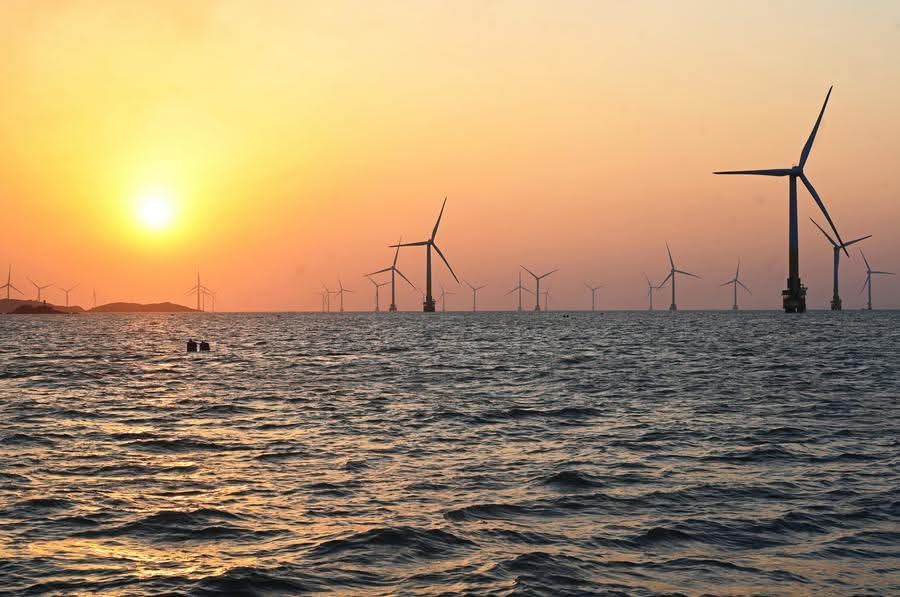
China’s response, delivered by Guo Jiakun, was notably data-driven and strategic. Rather than engaging in rhetorical sparring, Beijing anchored its rebuttal in measurable outcomes: fifteen consecutive years as the world’s top country in installed wind power capacity; more than 600 million kilowatts by late 2025; and an estimated 4.1 billion tons of carbon emissions avoided globally through Chinese exports of wind and solar technologies during the 14th Five-Year Plan period.
This contrast in styles is telling. Where the critique relied on anecdote and provocation, the response leaned on infrastructure, policy architecture, and cumulative global impact. It reflects China’s broader diplomatic posture on climate issues: positioning itself not as a mere manufacturer, but as a systemic driver of the green transition—particularly for developing countries that lack the capital or technology to scale renewables independently.
At a deeper level, the episode underscores how renewable energy has become a theater of geopolitical competition. Wind farms and solar panels are no longer just tools of decarbonization; they are instruments of influence, symbols of developmental models, and markers of leadership in a post-fossil-fuel world. Discrediting a rival’s green credentials is, in this sense, a way of contesting future norms and markets.
Ultimately, the “wind” in this exchange is not only literal. It is the force of shifting power balances, where environmental performance, technological scale, and global public goods increasingly define legitimacy. In answering back with numbers and outcomes, China is signaling that in the era of climate politics, credibility is built less on rhetoric—and more on what is visibly turning, on the ground, across the landscape.