Across the Brussels–Cairo Bridge: An Arab–European Dialogue in Search of Strategic Rhythm

Ashraf AboArafe
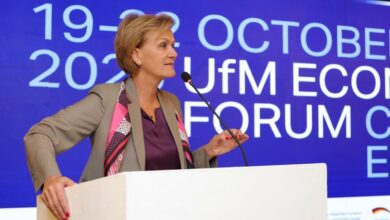
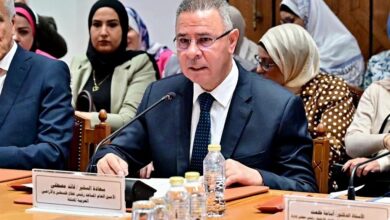
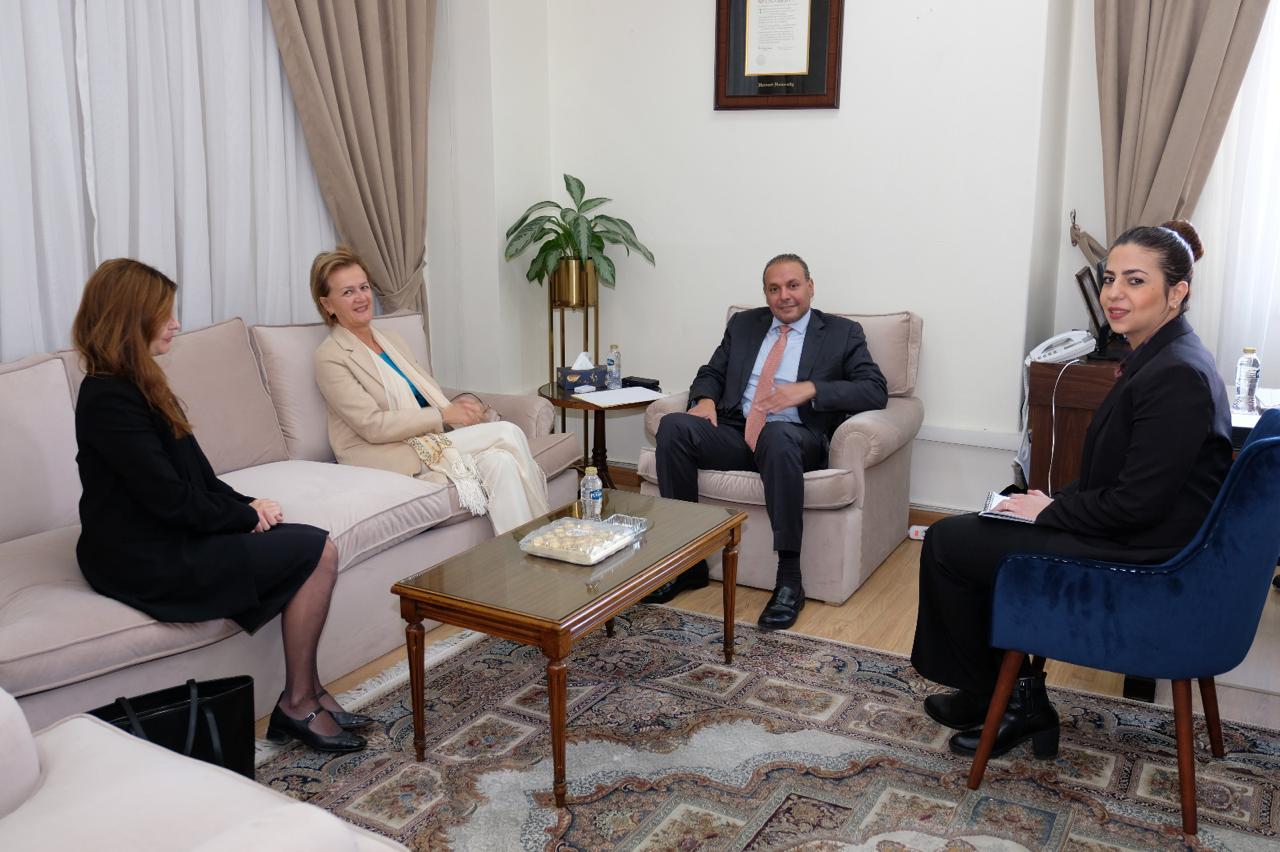
AT a time when regional crises are multiplying and global calculations are increasingly intertwined, the meeting between Dr. Khaled bin Mohammed Manzalawi, Assistant Secretary-General for International Political Affairs at the Arab League, and Ambassador Angelina Eichhorst, Head of the European Union Delegation to Egypt and the League of Arab States, underscored a clear message: Arab–European channels of dialogue remain not only open, but steadily institutionalized.
Institutional Dialogue as Strategic Infrastructure
The two sides commended the outcomes of the tenth meeting between Permanent Representatives to the League of Arab States and ambassadors of the Political and Security Committee of the European Union, held in Brussels last November.
This was more than diplomatic courtesy. It reflected mutual recognition that today’s security and political challenges cannot be managed through fragmented approaches. The “constructive and fruitful exchange” signals a shift from simple consultations to more coordinated positioning—particularly on files where interests converge:
- Regional stability
- Energy security
- Irregular migration
- Counterterrorism
- The spillover effects of protracted conflicts
From Crisis Management to Structured Partnership
Discussing current Arab and international developments was not merely an exercise in situational review; it was a shared reading of a rapidly reconfigured global order.
Europe increasingly seeks a structured and cohesive Arab interlocutor capable of engaging collectively on regional crises. Meanwhile, Arab states look to Europe for a partnership more attuned to their security priorities and development needs.
Institutionalized dialogue between the two blocs therefore provides:
- Europe with a regional gateway through a collective Arab platform.
- Arab states with greater negotiating weight vis-à-vis a unified European bloc.
Cairo as a Diplomatic Anchor
Holding the meeting at the headquarters of the Arab League in Cairo reinforces the Egyptian capital’s role as a diplomatic anchor between Europe and the Arab world. Geographically and politically, Egypt remains a pivotal bridge linking the Mediterranean, the Middle East, and Africa.
As regional tensions intensify—from the Eastern Mediterranean to the Horn of Africa—Arab–European coordination is no longer optional. It is a structural necessity, especially in areas spanning reconstruction, energy transition, maritime security, and crisis containment.
Analytical Conclusion
This meeting was not a routine protocol engagement, but a step within a broader recalibration of Arab–European relations. In an era defined by blocs and strategic alignments, influence increasingly belongs to those who build durable bridges.
Between Brussels and Cairo, a quiet but deliberate diplomatic rhythm is taking shape—one that may not immediately transform the geopolitical landscape, but steadily reinforces a fundamental principle: regional stability is a shared responsibility, and measured diplomacy often speaks louder than declaratory rhetoric.