Ashraf AboArafe
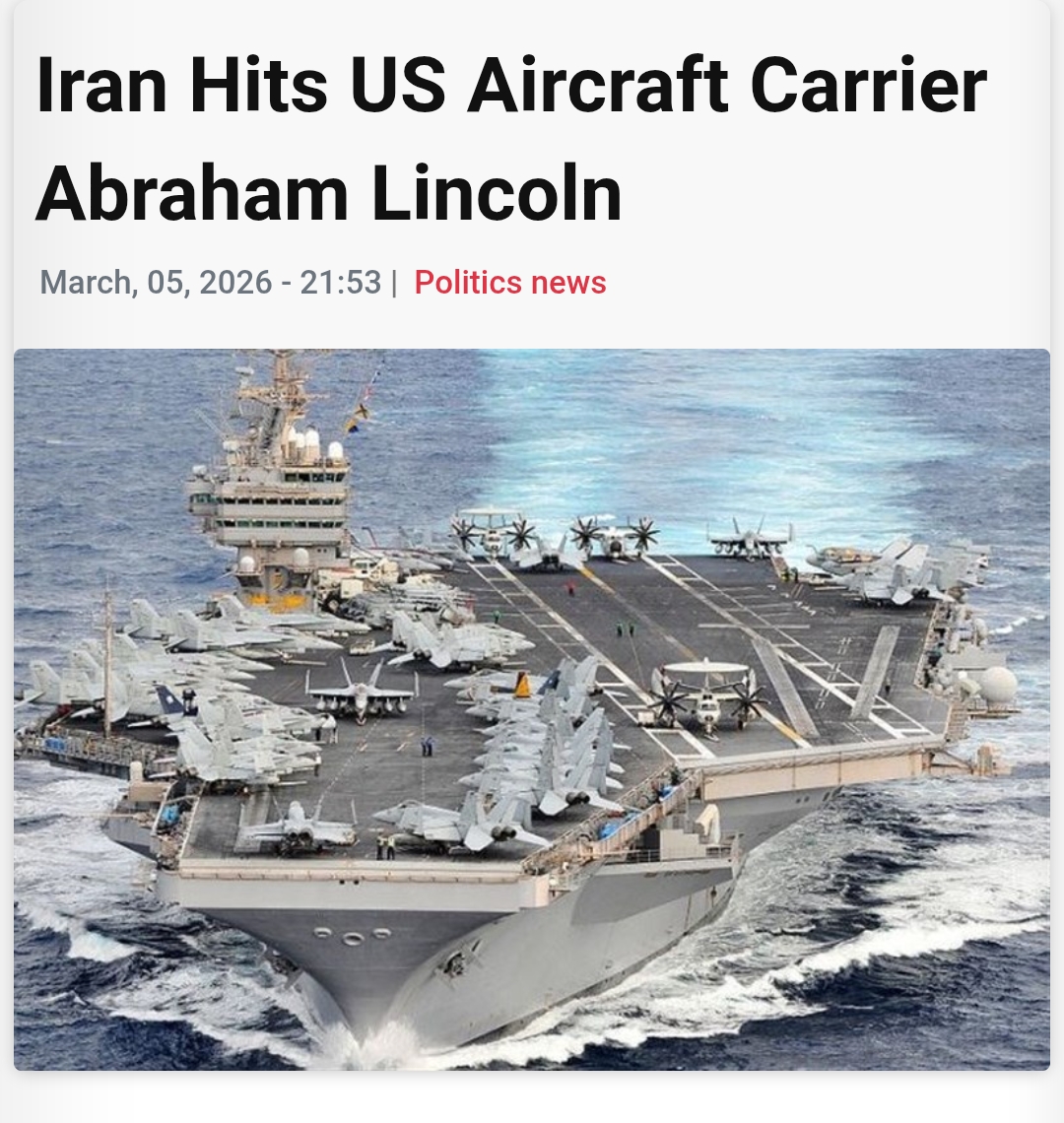
In a scene that symbolizes the growing volatility of the Middle East, dramatic imagery circulating online depicts the U.S. aircraft carrier USS Abraham Lincoln under attack by armed drones over the waters of the Strait of Hormuz—a strategic maritime corridor through which a significant portion of the world’s oil supply passes.
The image shows flames and smoke rising from the massive carrier while multiple drones launch missiles from above, suggesting a coordinated strike against one of the most powerful symbols of American naval dominance. Whether symbolic or hypothetical, the scene captures a growing fear in global strategic circles: that the era of untouchable aircraft carriers may be rapidly fading.
The USS Abraham Lincoln, a Nimitz-class nuclear-powered aircraft carrier, represents a cornerstone of U.S. military power projection. For decades, carriers like it have embodied Washington’s ability to enforce maritime security and deterrence across the world’s oceans.
An attack on such a vessel—if it were to occur—would represent far more than a tactical strike. It would signal a profound shift in the balance of military power at sea. Modern warfare is increasingly shaped by asymmetric technologies, particularly drones and precision-guided missiles capable of threatening even the most sophisticated naval platforms.
The Strait of Hormuz, meanwhile, remains one of the most strategically sensitive chokepoints on Earth. Roughly one-fifth of global oil trade passes through this narrow waterway. Any major military confrontation there would send shockwaves through global energy markets, shipping routes, and geopolitical stability.
Tensions between Iran and the United States have repeatedly raised fears of escalation in the Gulf. In such an environment, even a limited incident involving a major naval asset could spiral into a broader regional conflict involving multiple powers.
It is important to note that the circulated image bears markings indicating it is an AI-generated illustration, meaning it is not necessarily documentation of an actual event. However, the symbolism embedded in the image reflects a real and growing debate within military strategy circles: whether traditional naval dominance can withstand the rapid evolution of drone warfare and missile technology.
In an era where relatively inexpensive unmanned systems can threaten billion-dollar warships, the message is stark.
If the Strait of Hormuz ever ignites, the consequences will not remain confined to the Gulf—the entire world will feel the flames.