… archive
Ashraf AboArafe
IN the wide geography of Central Asia—where glaciers crown distant mountains and rivers carry the lifeblood of entire civilizations—the announcement of the Regional Ecological Summit 2026 in Astana represents more than a diplomatic gathering. It signals the emergence of the region as a strategic ecological theater, where climate security, development, and geopolitical cooperation converge.
Hosted by the government of Kazakhstan, the summit seeks to transform environmental vulnerability into collective regional agency. By convening policymakers, scientists, financial institutions, and international organizations under the theme “A Shared Vision for a Sustainable Future,” the event frames environmental challenges not merely as ecological concerns but as drivers of economic stability and human security.
1. Astana as a Diplomatic Green Hub
The summit reinforces Kazakhstan’s growing role as a bridge between continents and agendas—linking Asia, Europe, and global institutions.
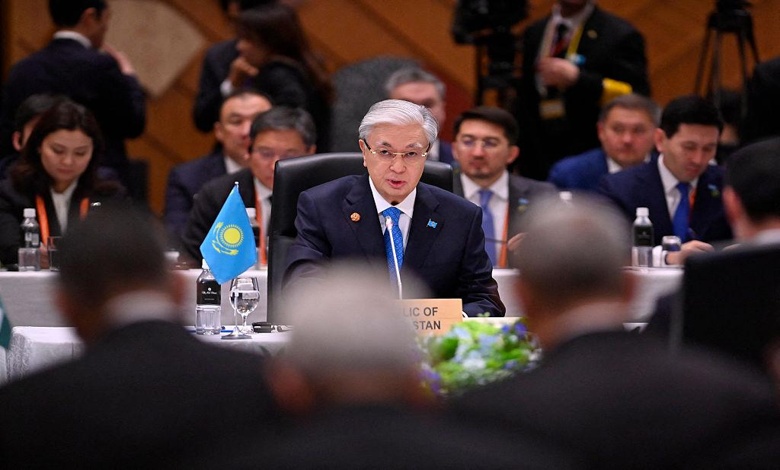
Under the leadership of Kassym-Jomart Tokayev, Astana has increasingly positioned itself as a venue for international dialogue—whether on security, diplomacy, or now environmental governance. Hosting RES 2026 reflects a strategic ambition:
- To make Kazakhstan a regional climate diplomacy hub.
- To strengthen Central Asian cooperation on environmental risks.
- To attract international climate finance and technological partnerships.
This aligns with the broader diplomatic style of Tokayev’s administration: pragmatic multilateralism anchored in regional stability.
2. Climate Risks as Regional Security Issues
Central Asia faces some of the world’s most acute environmental pressures. The summit agenda highlights interconnected challenges such as:
- Water scarcity across transboundary rivers
- Glacier retreat in the Tien Shan and Pamir mountains
- Land degradation and desertification
- Biodiversity loss and ecosystem stress
These issues are not merely environmental—they are strategic risks affecting agriculture, migration, energy production, and regional stability.
The participation of leaders such as Shavkat Mirziyoyev of Uzbekistan and Emomali Rahmon of Tajikistan underscores the shared understanding that water and climate policy increasingly shape geopolitical relations in Central Asia.
3. Global Institutions Enter the Regional Climate Arena
The summit’s speaker list reflects the intersection between environmental governance and global policy frameworks.
Figures such as:
- Tedros Adhanom Ghebreyesus of the World Health Organization
- Celeste Saulo of the World Meteorological Organization
- Doreen Bogdan-Martin of the International Telecommunication Union
illustrate how climate change intersects with public health, early-warning systems, digital infrastructure, and global governance.
This reflects a modern understanding of environmental crises: climate change is no longer an isolated ecological issue but a systemic global challenge.
4. From Dialogue to Action: The Eight Pillars
The structure of the summit—organized around eight thematic pillars—suggests a deliberate effort to move beyond declarations toward practical implementation.
Among the most significant themes:
- The green transition from ambition to action
- Climate resilience for vulnerable economies
- The water–land–food nexus, often described as the region’s “resource equation”
- Technological and digital solutions for sustainability
- Inclusive transitions ensuring social fairness
By combining policy coordination with investment mechanisms, the summit aims to transform environmental awareness into bankable projects and cross-border cooperation.
5. A Regional Summit with Global Implications
Although rooted in Central Asia, the themes resonate far beyond the region. Landlocked and climate-sensitive areas—from Sub-Saharan Africa to South Asia’s glacial river basins—face similar ecological constraints.
In this sense, RES 2026 could evolve into a model platform for environmental cooperation among developing and landlocked regions, where climate change intersects with development challenges.
Conclusion
The Regional Ecological Summit 2026 is not merely a conference—it is an attempt to redefine Central Asia’s ecological destiny.
If successful, the gathering in Astana may achieve three lasting outcomes:
- Transform the region into a cooperative climate governance zone.
- Mobilize international investment for green infrastructure.
- Position Central Asia as a global voice for climate resilience in vulnerable regions.
And perhaps the deeper symbolism lies in geography itself:
on the vast Kazakh steppe—where the horizon stretches endlessly—the region now seeks to extend that horizon toward a shared planetary future.