Ashraf AboArafe
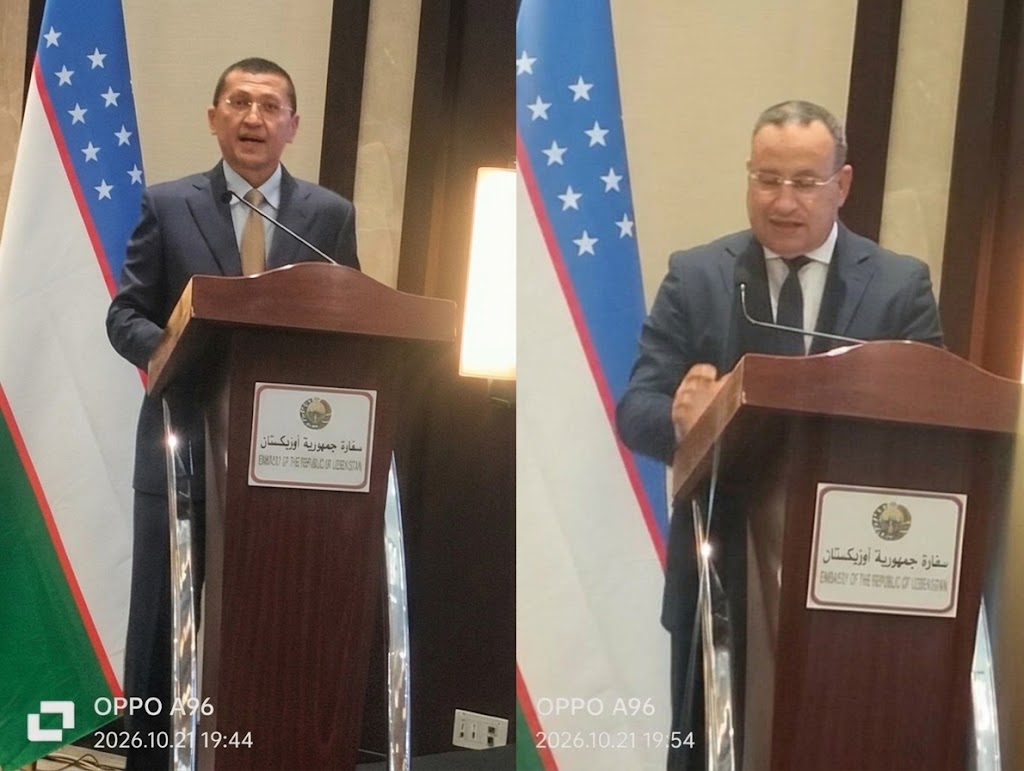
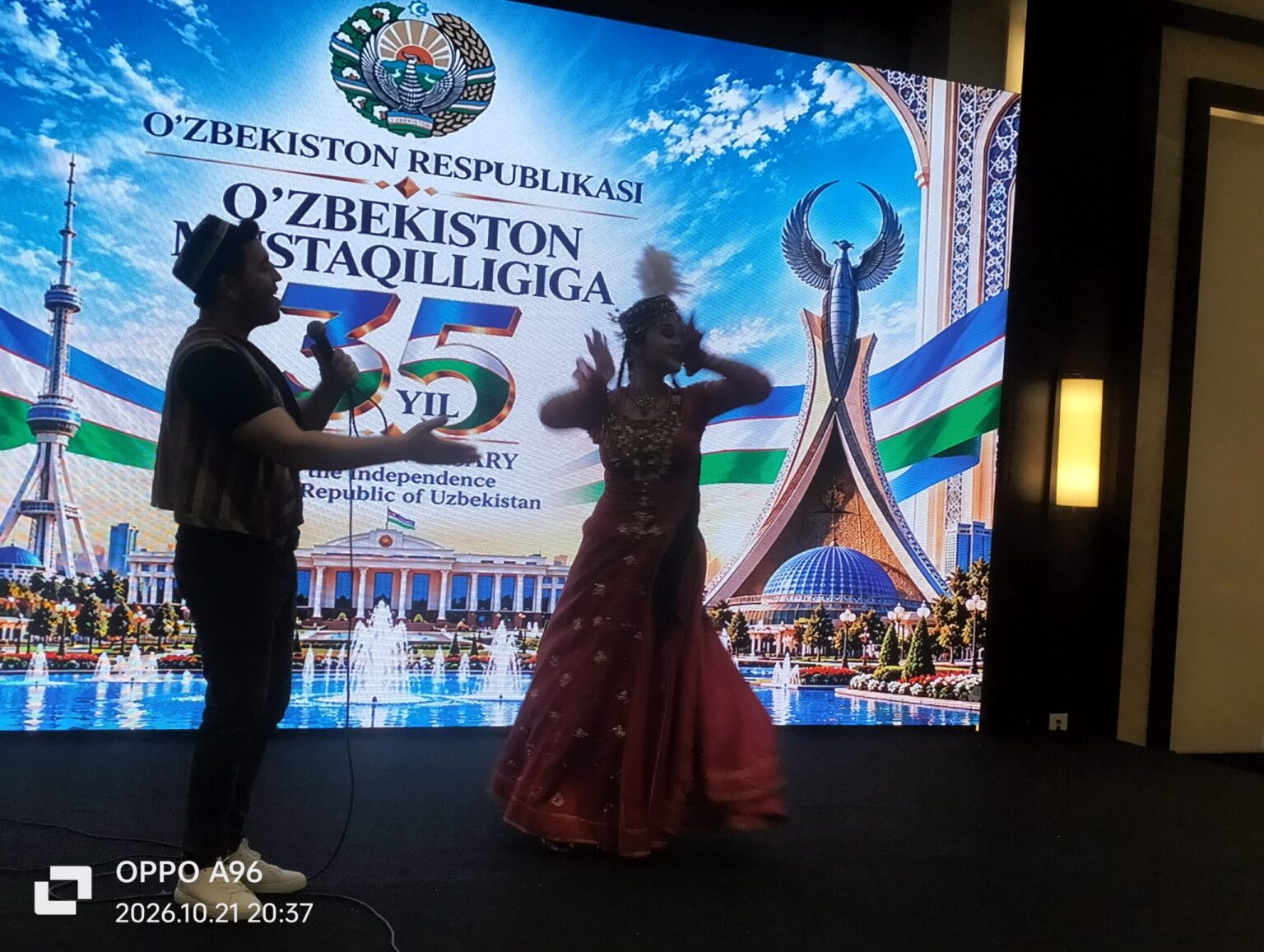
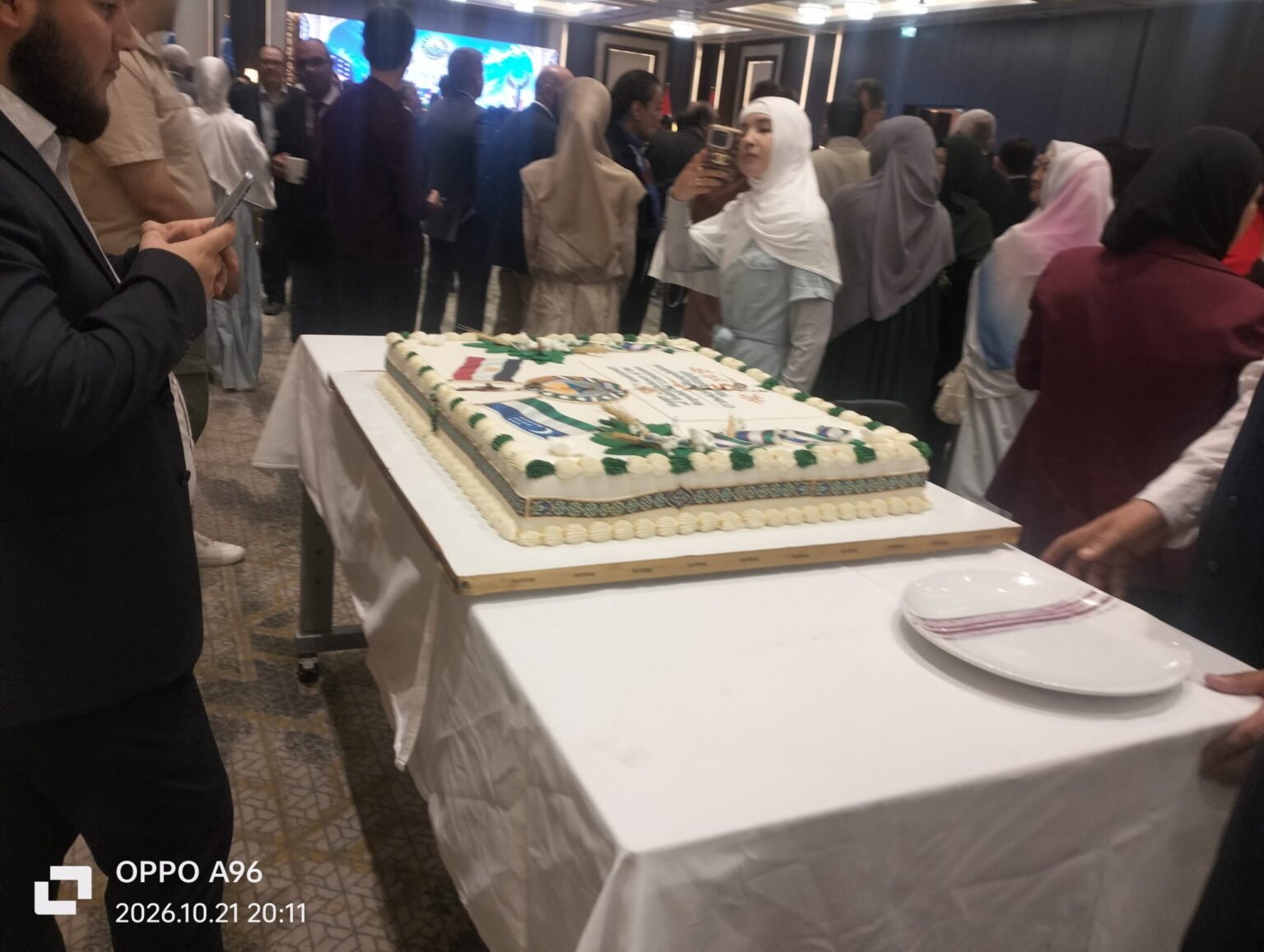
CAIRO, Egypt — Against the timeless backdrop of the Nile, H.E. Ambassador Mansurbek Kilichev, Ambassador of the Republic of Uzbekistan to Egypt, hosted a diplomatic reception in Cairo to mark the 35th anniversary of Uzbekistan’s independence, bringing together senior Egyptian officials, foreign diplomats, and distinguished guests to celebrate this historic national milestone and reaffirm the enduring bonds of friendship between Uzbekistan and Egypt.
The occasion highlighted the shared commitment of both countries to strengthening bilateral cooperation, particularly in higher education, scientific research, cultural exchange, tourism, and people-to-people relations.
Egypt and Uzbekistan: A Bridge Between Civilizations
The reception underscored the historical and cultural connections linking the peoples of Central Asia and the Arab world. With the Nile flowing through the heart of Cairo, the celebration offered a fitting setting for reflecting on the longstanding civilizational ties that connect Egypt and Uzbekistan, two nations whose rich histories continue to shape their modern aspirations.
Ambassador Mansurbek Kilichev’s hosting of the event reflected Uzbekistan’s commitment to expanding its international partnerships and deepening its engagement with Egypt, a key regional partner and a gateway to broader cooperation across Africa and the Arab world.
Al-Farghani: The Uzbek Genius Who Left His Mark on the Nile
In his remarks, Ambassador Mansurbek Kilichev highlighted the remarkable historical contribution of the Uzbek-born astronomer and engineer Ahmad ibn Kathir al-Farghani, known in the West as Alfraganus, to Egypt’s scientific and architectural heritage.
Al-Farghani is credited with designing or supervising the engineering of the historic Nilometer on Rawda Island in Cairo, an extraordinary scientific monument created to measure the annual fluctuations of the Nile. Its surviving structure, constructed in 861 AD during the Abbasid era, features a carefully calibrated measuring column that enabled the monitoring of the river’s water levels.
For centuries, accurate measurements of the Nile flood were essential to Egyptian agriculture, irrigation management, and economic life. The Nilometer therefore represents not merely an engineering achievement, but also the close relationship between scientific knowledge and the development of Egyptian civilization.
The legacy of Al-Farghani offers a powerful historical bridge between Uzbekistan and Egypt. His contribution illustrates how the intellectual achievements of Central Asian scholars became an integral part of Egypt’s heritage, transcending geographical boundaries and enriching the shared scientific legacy of the Islamic world.
The Nilometer remains a compelling symbol of this enduring connection: a monument on Egyptian soil that recalls the achievements of a distinguished scholar whose origins lay in the historic region of Farghana.
Egypt Reaffirms Its Commitment to Educational and Scientific Cooperation
A highlight of the reception was the participation of H.E. Prof. Dr. Abdelaziz Konsowa, Egypt’s Minister of Higher Education and Scientific Research, who delivered congratulatory remarks on behalf of the host country.
His participation underscored the importance both nations attach to academic cooperation, scientific research, university partnerships, and the exchange of knowledge and expertise. These areas offer significant opportunities to strengthen bilateral relations and build lasting connections between younger generations.
Education and scientific research remain vital instruments of international cooperation, enabling countries to address shared challenges, promote innovation, and advance sustainable development.
The historical example of Al-Farghani further reinforces the significance of this partnership. His legacy demonstrates that scientific collaboration and the exchange of knowledge have deep roots in the relationship between Central Asia and Egypt, offering a meaningful foundation for renewed cooperation between their universities, research institutions, and scientific communities.
A Message of Peace, Solidarity, and Mutual Understanding
The remarks delivered during the gathering also reflected on the importance of dialogue, peace, and solidarity among nations, including references to the wider Islamic community and historical experiences of global conflict.
Expressions such as “Peace be upon you” and “Long live the Islamic nation” conveyed a spirit of fellowship and shared cultural belonging. Historical references to the Second World War and developments beyond the immediate region further emphasized the importance of understanding international affairs through a broader historical and geopolitical perspective.
At a time of mounting international tensions, the message of peaceful coexistence and mutual understanding remains especially relevant. Diplomatic engagement, cultural exchange, and cooperation among nations are essential to reducing divisions and creating opportunities for stability and prosperity.
Looking Ahead: A Stronger Uzbekistan–Egypt Partnership
Uzbekistan’s 35th independence anniversary provided an opportunity not only to celebrate the country’s national journey but also to look toward the future of its international partnerships.
For Egypt and Uzbekistan, the priorities include expanding educational and scientific cooperation, strengthening cultural and tourism exchanges, encouraging economic partnerships, and creating new opportunities for cooperation between institutions and peoples.
The story of Al-Farghani adds a distinctive historical dimension to these ambitions. His scientific legacy on the banks of the Nile demonstrates that the relationship between the two nations extends beyond contemporary diplomacy, reaching back to a shared history of scholarship, engineering, and intellectual exchange.
As the Nile continues its timeless journey through Egypt, it offers a powerful metaphor for the enduring value of friendship between civilizations. The Cairo reception reaffirmed the potential for Uzbekistan and Egypt to build an even stronger bridge between Central Asia and the Arab world—one founded on mutual respect, shared historical achievements, scientific cooperation, and a common commitment to peace and progress.