Ashraf AboArafe
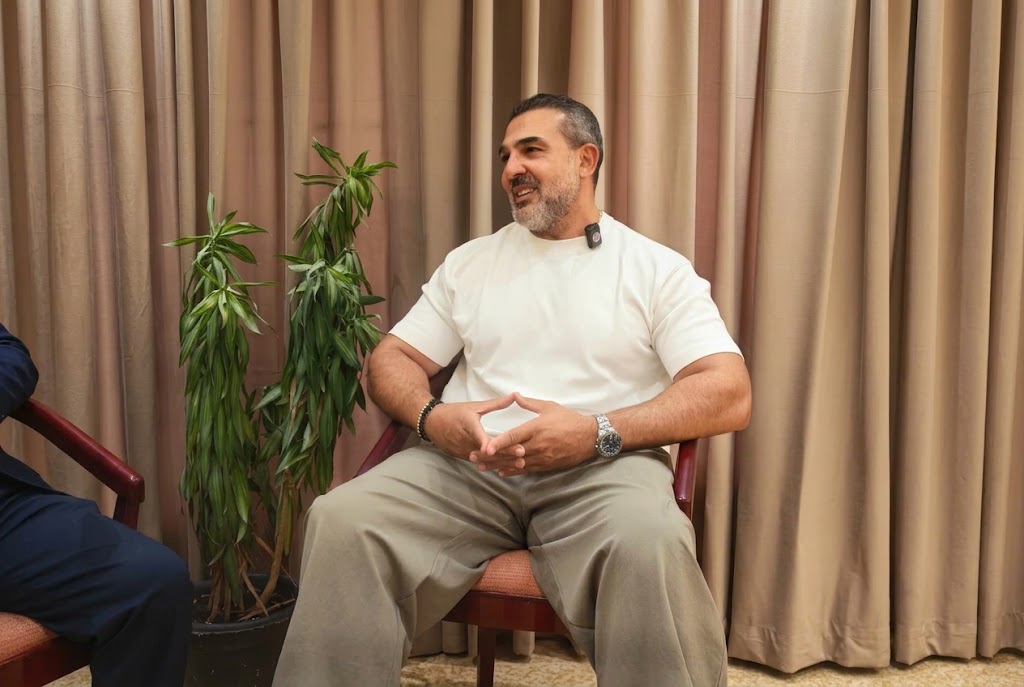
COMMENTING on a report titled “Cinema Helps Build Bridges of Cultural Exchange Between China and Egypt” by Xinhua, this special interview with Egyptian actor Sherif Subhi offers a profound dynamic insight into how cinematic storytelling transcends borders to build authentic cultural bridges.
The Human Core Behind Tragic Transformation
At the center of Subhi’s narrative is his portrayal of Zaid in the Chinese anti-war film Welcome to the Dragon Restaurant. The actor explicitly avoids reducing Zaid to a conventional, static villain. Instead, the narrative dissects the mechanics of human collapse under the weight of unbearable grief. Zaid begins as an ordinary, affectionate father and peaceful business owner whose life shatters after losing his wife and child to a bomb explosion.
Subhi’s approach relies on non-verbal performance—subtle facial nuances and vacant gazes—to depict a man operating like an emotionless mechanism. The profound reception from Chinese audiences on social media validates this artistic choice; viewers looked past his violent descent to empathize with the tragedy that broke him, proving that human loss speaks a universal language.
Culinary Symbolism as Cultural Dialogue
The setting of a restaurant functions as a powerful metaphor for cross-cultural intersection. Initially, Zaid’s criticism of the Chinese chef’s salty rice reflects a subtle assertion of authority and cultural boundary. As the story unfolds, food ceases to be merely regional sustenance and becomes a shared medium.
The report highlights how culinary traditions, despite their differences, ultimately converge around a shared experience: the universal bitterness left by war and conflict. The restaurant evolves from a simple backdrop into a micro-society where disparate worlds negotiate empathy, understanding, and shared humanity.
Professional Convergence in Film Production
The collaborative process between Subhi and the Chinese film crew illustrates the practical mechanics of cross-border artistic exchanges. Subhi underscores the meticulous technical discipline of Chinese cinema—where hours are dedicated to perfecting a single shot and directors employ immersive auditory cues, such as playing soundtrack music on set, to guide actors into precise emotional states. This alignment reveals how artistic rigor bridges linguistic and operational divides, creating a shared workflow centered on technical perfection.
A Universal Plea for Peace
Living in a region historically impacted by enduring geopolitical tension, Subhi frames the film’s message through the lens of Middle Eastern reality. The core message transcends cinema: despite differing nationalities, languages, or traditions, the fundamental human aspiration remains unchanged—the desire to live in safety and preserve one’s family from loss.
Subhi’s participation and the Chinese public’s empathetic reaction demonstrate that film serves as more than passive entertainment; it acts as an active diplomatic vector that fosters genuine mutual understanding between China and the Arab world.