Ashraf AboArafe
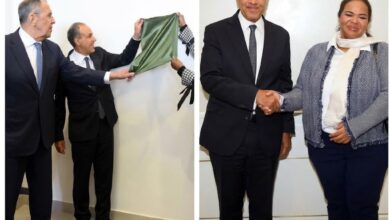
AT the FEZ Summit for Dignity, Amr Moussa presented a political vision that went beyond describing today’s crises to explore how politics can reclaim its role in managing an increasingly turbulent and divided world. He stressed the need to renew the multilateral system, restore respect for international law, and expand the space for civil society and youth to act.
Moussa addressed several flashpoints shaping the international and regional landscape, foremost among them Africa, the Middle East, the Palestinian issue, and the conflict with Iran, alongside the crises of the international system and the inability of its institutions to respond effectively to many conflicts.
Africa… Sovereignty Challenging the Return of Intervention
Moussa highlighted the seriousness of the situation in Africa amid accumulated crises and international interventions that, in his view, increasingly resemble older patterns of colonial interference.
His vision emphasized that protecting African sovereignty and preserving independent national decision-making should occupy a prominent place on the international agenda, particularly amid the rapid transformations taking place across the continent.
The Middle East… From Palestine to the Red Sea
In West Asia, Moussa addressed the interconnected crises of the region, foremost among them the Palestinian question, the Israeli occupation, and the conflict with Iran, warning that the absence of genuine political solutions could expand instability toward the Red Sea and the Mediterranean.
Against this backdrop, his vision highlighted the importance of coordination among Saudi Arabia, Egypt, and Türkiye as a diplomatic avenue that could contribute to regional stability, alongside efforts to address the Palestinian issue and the question of nuclear proliferation.
Middle Powers… Influence Is Not Enough to Forge Settlements
Moussa also examined the limitations facing regional and middle powers when attempting to intervene in crises involving the competing interests of major powers.
He noted that major countries such as China and India themselves face domestic considerations and strategic divergences that can limit their ability to act as neutral mediators in certain disputes. Afghanistan, meanwhile, illustrates the difficulty of filling the political vacuums left by the withdrawal of major powers.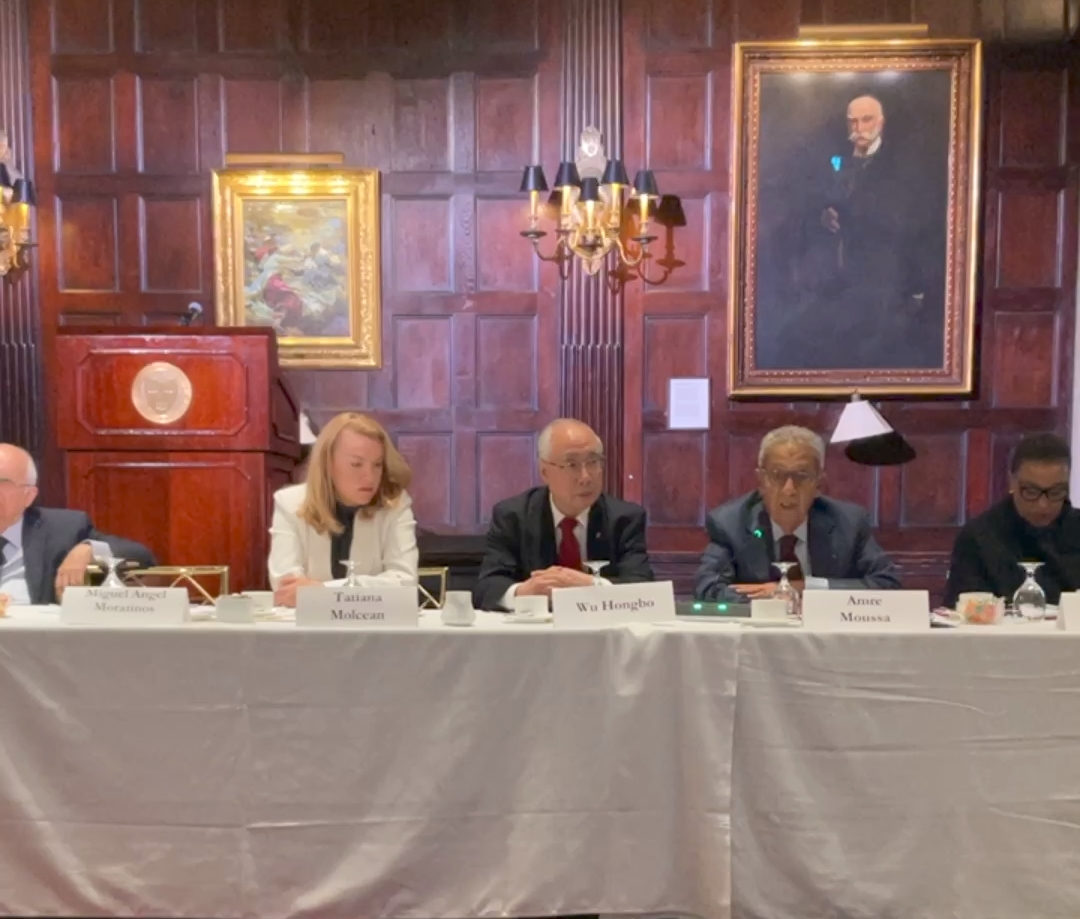
North and South… A Multipolar World
In his reading of international transformations, Moussa explained that the Global South is gaining an increasingly significant voice on questions of security, peace, sovereignty, and territorial integrity, while emphasizing that it does not constitute a single, homogeneous political bloc.
The Global North, in turn, also contains divergent powers and interests, ranging from Western Europe and North America to Russia and the major Asian powers, foremost among them China.
Thus, the emerging world is too complex to be reduced to a simple North–South divide.
The Multilateral System… Reform, Not Destruction
In addressing the future of the international order, Moussa distinguished between the multilateral system as a whole and the international peace and security architecture in particular.
The multilateral system, in his assessment, represents a historical experience that has delivered important gains for developing countries. The task, therefore, is to renew it and reform its functional shortcomings.
The peace and security architecture, by contrast, has demonstrated major failures in enforcing international law, protecting human rights, and implementing the United Nations Charter, requiring its structures and role to be revitalized, particularly within the Security Council.
The message is not to destroy the international system, but to renew its purpose and reform it from within.
Civil Society and Youth… A Voice Beyond Governments
Given the limited ability of middle powers to directly influence conflicts involving major powers, Moussa attaches particular importance to the role of civil society, non-governmental organizations, and international peace movements.
He also calls for building humanitarian and political bridges between Arabs and Jews, pointing to positions taken by younger generations of American Jews protesting violations in Gaza as an example of the ability of civil society to break through political and cultural barriers.
From FEZ… A Call for Politics to Return
At its core, Amr Moussa’s vision in Fez raises a question that extends beyond regional crises: How can the world restore politics before conflicts exhaust the international system’s capacity to contain them?
Between African sovereignty, Palestine, Middle Eastern security, Security Council reform, the rise of the Global South, and the role of youth and civil society, a central message emerges: the world needs not only a redistribution of power, but also the restoration of politics as a bridge for dialogue, an instrument of negotiation, and a pathway toward peace and human dignity.