
 Editor-in-Chief Writes
IMAGINE this scene—if it were not so painfully real, it might make a wonderful political comedy.
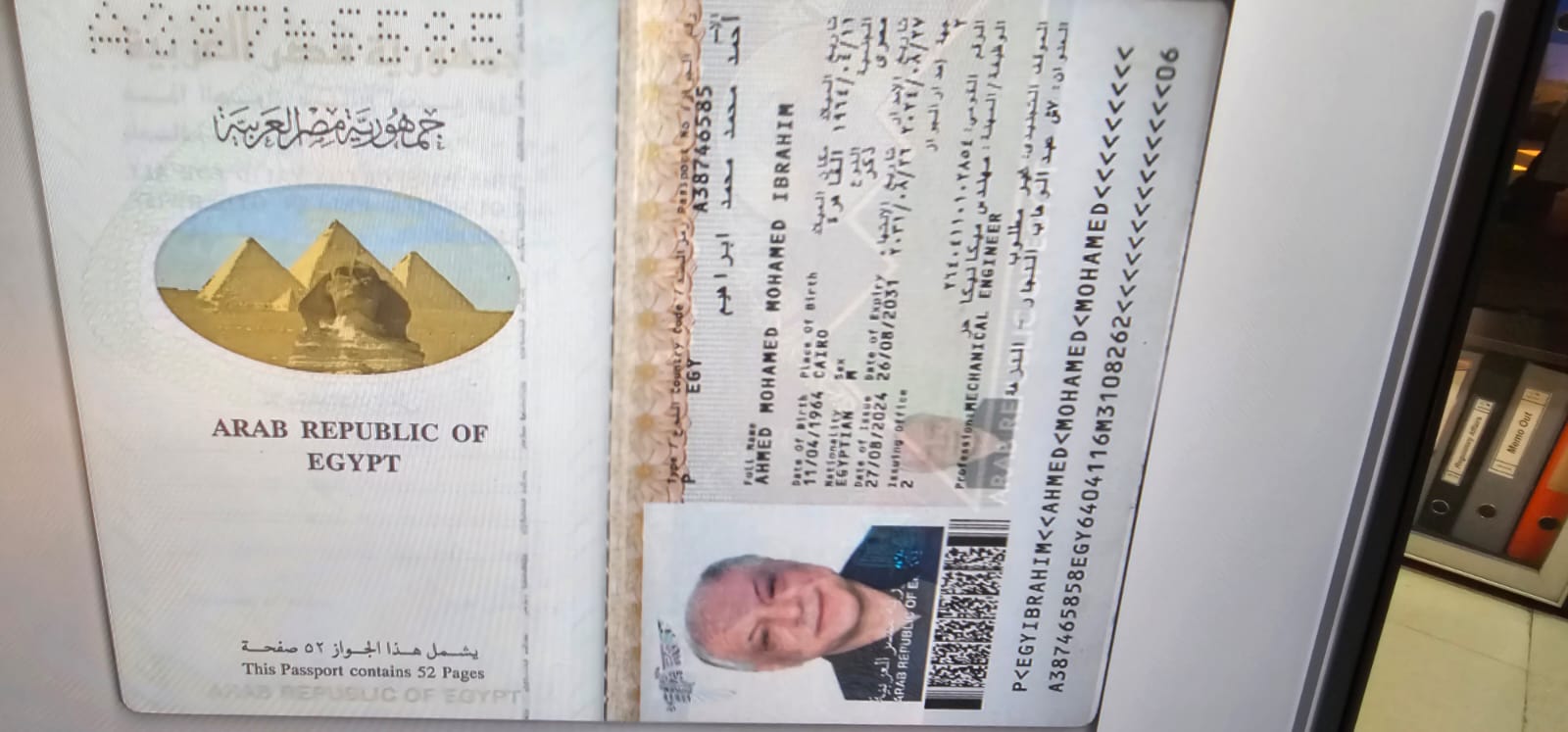
An Egyptian engineer, Mr. Ahmed Mohamed Ibrahim, receives an official invitation to attend a professional conference in Milan, Italy, on October 6, 2026.
He does what any responsible traveler would do.
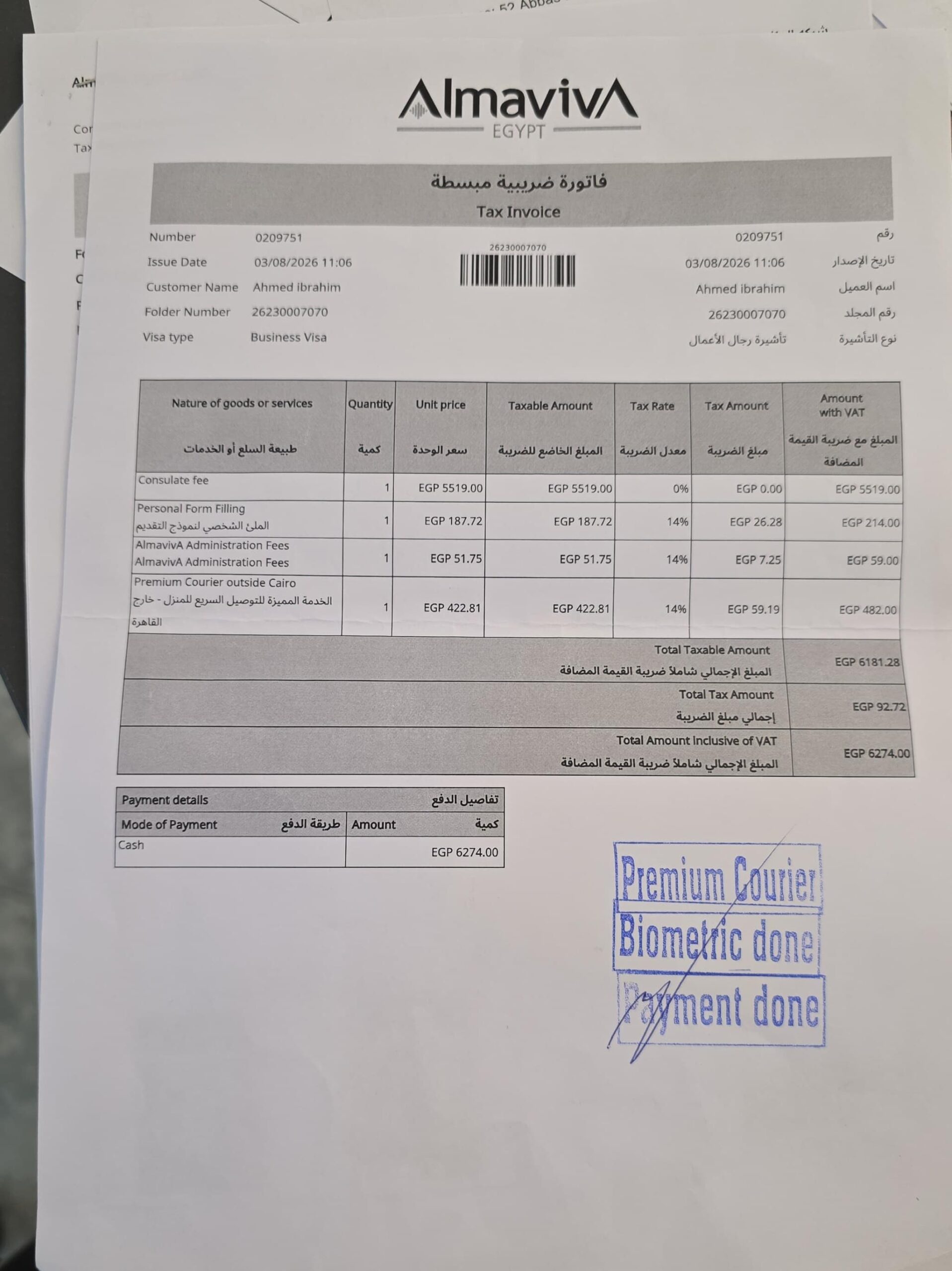
He submits his application for an Italian visa on August 3, 2026.
Today is October 5, 2026.
That means 63 days have passed.
Tomorrow, the conference begins in Milan.
But the visa has yet to arrive.
What exactly are we supposed to call this?
A visa procedure?
A test of patience?
Or perhaps a new European tradition in which the applicant arrives after the conference has already gone home?
The European Union’s own Schengen rules provide that visa applications should normally be decided within 15 calendar days, with the period extendable to 45 days in individual cases requiring further scrutiny.
Here, however, we are looking at 63 days.
So the obvious question is:
Has obtaining an Italian visa become more complicated than attending the conference itself?
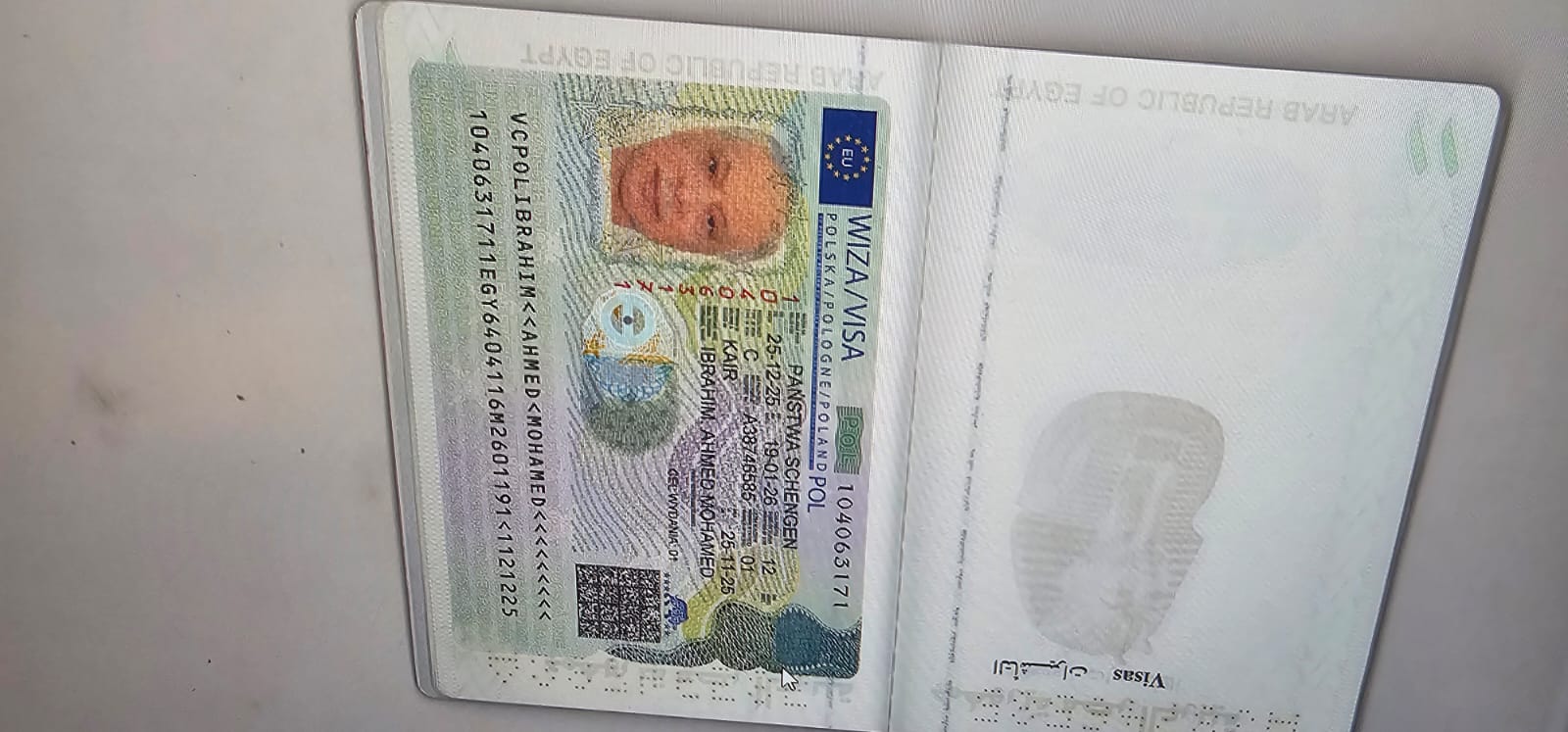
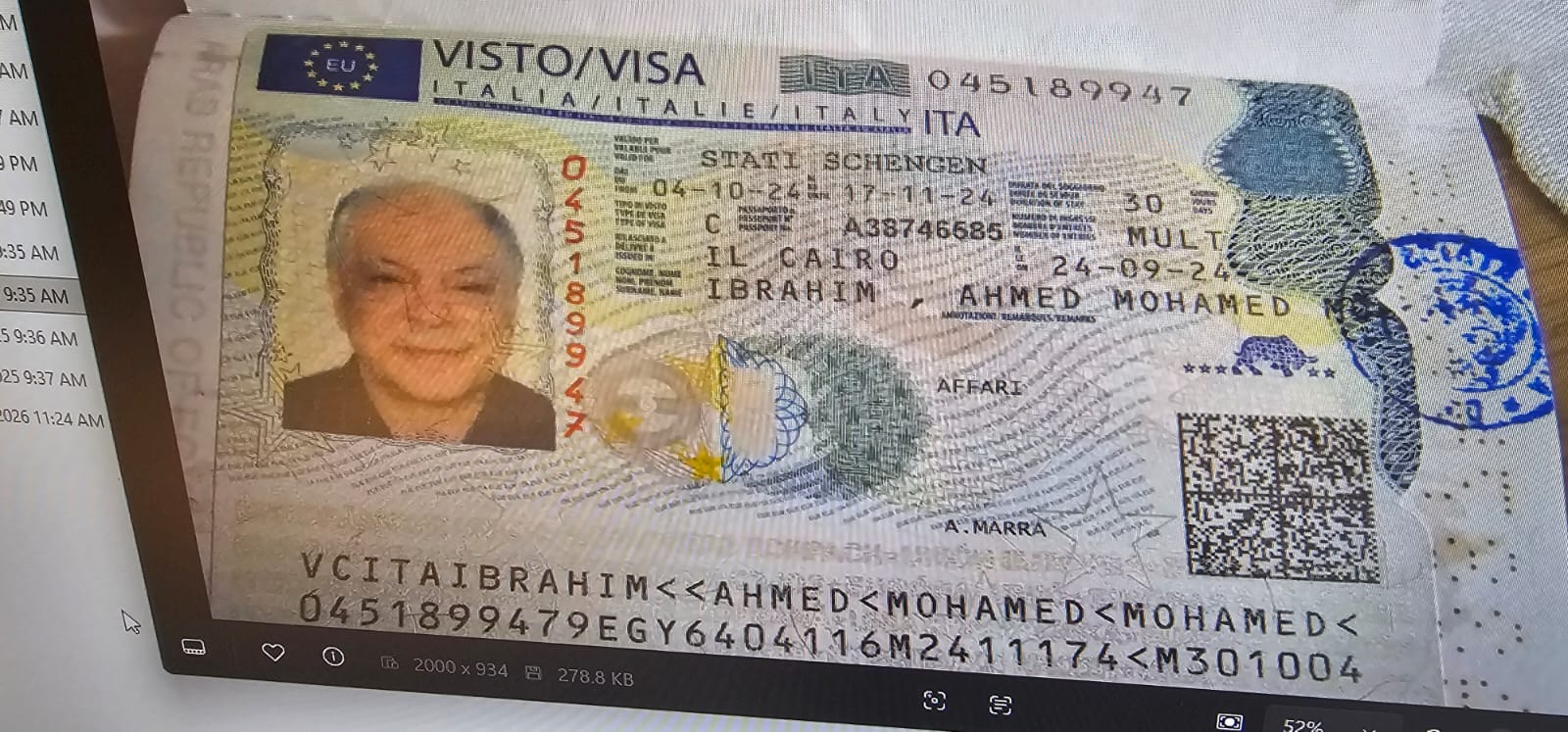
The irony becomes even sharper when we consider that Mr. Ahmed Mohamed Ibrahim is not applying for his first Schengen visa. He has previously obtained an Italian visa as well as a Polish visa, meaning that he has already gone through the relevant procedures and provided his personal and travel information through the Schengen system.
Of course, a previous visa does not automatically guarantee a new one. Every application must be assessed according to the applicable rules.
But that is precisely why the question deserves an answer:
If an applicant has submitted his documents properly, applied more than two months before a clearly scheduled professional event, and has a previous Schengen travel record, why has he still not received a decision?
This is not simply about a tourist wanting to spend a few days in Italy.
It is about an Egyptian engineer officially invited to an international professional conference.
Such conferences are supposed to build bridges between countries, institutions, businesses, professionals and people.
But how can we build bridges when the visa itself cannot cross the bridge in time?
And here the matter becomes larger than one individual case.
The European Union and Egypt repeatedly emphasize the importance of their partnership and people-to-people relations.
Yet ordinary citizens do not experience international partnerships through diplomatic communiqués in Brussels or Cairo.
They experience them through the treatment they receive when they walk through the doors of an embassy or consulate.
So a legitimate question must be asked:
Does the actual visa experience reflect the level of partnership that Europe and Egypt repeatedly speak about?
If an international conference begins on October 6, and the visa application was submitted on August 3, yet no visa has been issued by October 5, the question is no longer merely:
“Where is the visa?”
It becomes:
Where is respect for time? Where is clarity? And where is adequate service to the applicant?
I am not accusing any individual diplomat or employee of bad faith. There may be administrative, security or technical reasons that are not visible to the applicant.
But the absence of an explanation does not eliminate the citizen’s right to ask questions.
Nor does it eliminate the right to know the fate of his application.
The irony becomes almost unbearable when the applicant has already contacted the EU Delegation in Cairo, asking for the procedure to be expedited because he must attend a conference beginning on October 6.
And yet, on October 5, the visa is still missing.
So allow me one deliberately sarcastic question:
Does an official invitation to an international conference in Milan now require a second invitation from Rome before the first one can be believed?
And does an Egyptian citizen have to prove his credibility from scratch every time, even when he has previously been granted Schengen visas?
What about Egyptian engineers, businesspeople, academics, researchers and professionals whose work depends on appointments and conferences that simply cannot be postponed?
The conference does not wait for the embassy.
The airplane does not wait for the visa.
And international business does not wait for bureaucracy.
If the visa arrives after the conference has ended, what exactly is the traveler supposed to do with it?
Walk into the conference hall on October 7 and tell the organizers:
“Sorry. My visa finally arrived—but your conference ended yesterday!”
At that point, the visa ceases to be a travel document and becomes something rather more amusing:
a document confirming that the appointment has already been missed.
Therefore, I call upon the Egyptian Ministry of Foreign Affairs to examine this case urgently, determine the circumstances surrounding the delay, and establish whether this is an isolated incident or reflects a broader problem affecting Egyptians applying for Italian or Schengen visas.
I also call upon the European Union Delegation in Egypt to engage seriously with the experience of Egyptian applicants and review whether current procedures are adequately responsive to professional, scientific, economic and cultural travel involving fixed conference dates and international commitments.
And the question should reach Rome itself—and Prime Minister Giorgia Meloni:
Is this really how we want to build stronger bridges between Egypt and Italy?
Italy is a friendly country. Egypt is a major regional state. The relationship between the two peoples is much deeper than a stamp in a passport.
But friendship is sometimes tested through the smallest details.
A visa may be a very small detail—but it can reveal a great deal.
If an Egyptian citizen officially invited to a conference in Milan waits 63 days for a decision, while the Schengen framework provides for a normal 15-day period and, in certain individual cases, an extension to 45 days, then the discrepancy deserves a clear explanation.
We are not asking for special treatment.
We are not asking for a favor.
We are not asking anyone to bypass the law.
We are asking for something much simpler:
Respect the law.
Respect the applicant’s time.
Respect the human being.
If Europe genuinely seeks deeper economic, scientific and cultural cooperation with Egypt, then efficient and predictable visa procedures for legitimate professional travel should be part of that partnership.
Because when a citizen receives his visa after the conference for which he applied has already ended, it is no longer really a Schengen visa.
It is a visa to the past.
Perhaps this message will finally reach Rome, Brussels and the EU Delegation in Cairo.
Because Mr. Ahmed Mohamed Ibrahim is not asking Europe to open its doors without rules.
He is simply asking that the door be opened while the person invited to enter is still standing outside it.
And in international relations, that is not a privilege.
It is the simplest expression of mutual respect.