 Editor in-chief writes
IN the first part of this press campaign, the question was simple and painfully ironic:
Italy… when the conference arrives before the visa?!
https://www.aldiplomasy.com/en/?p=45587
Today, the issue is no longer merely a delayed visa.
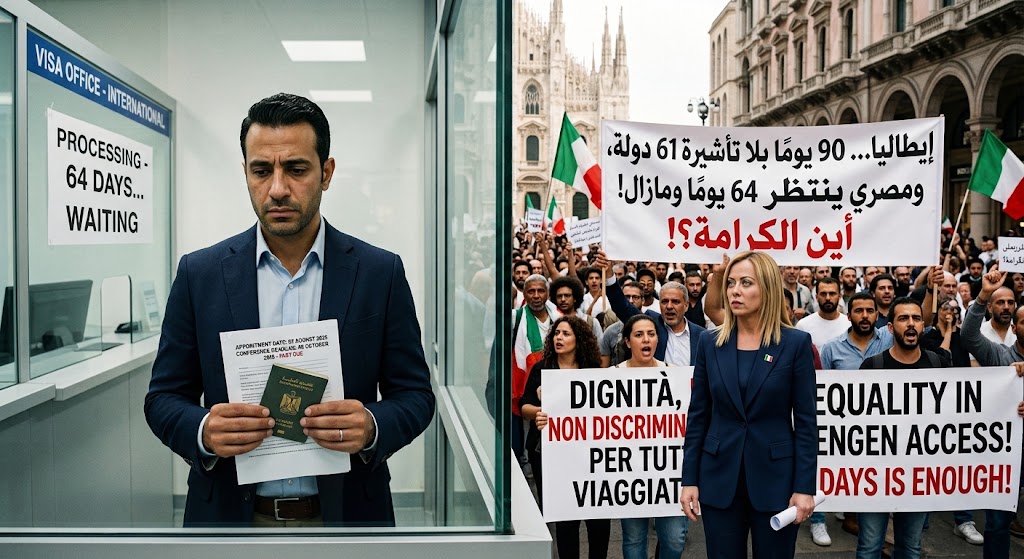
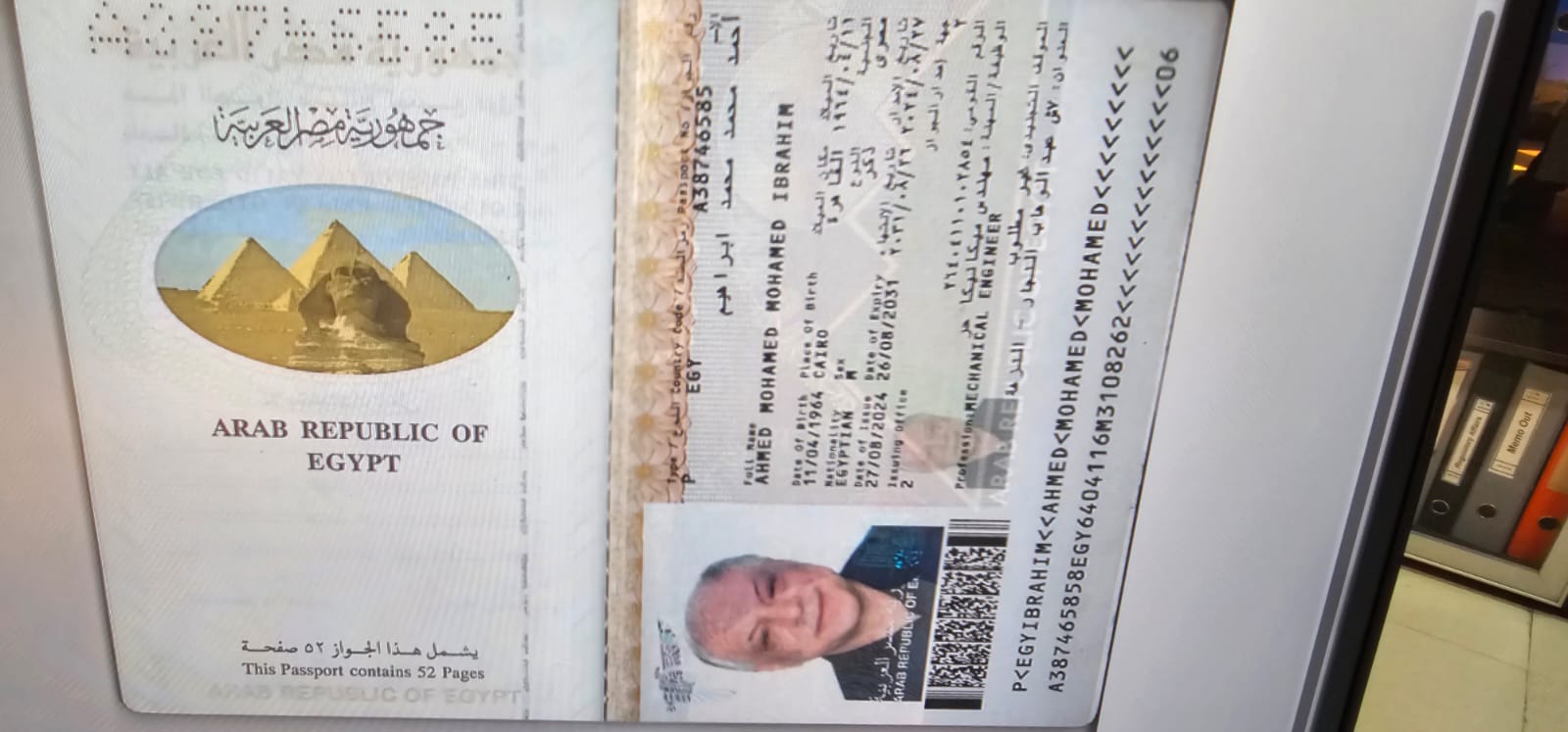
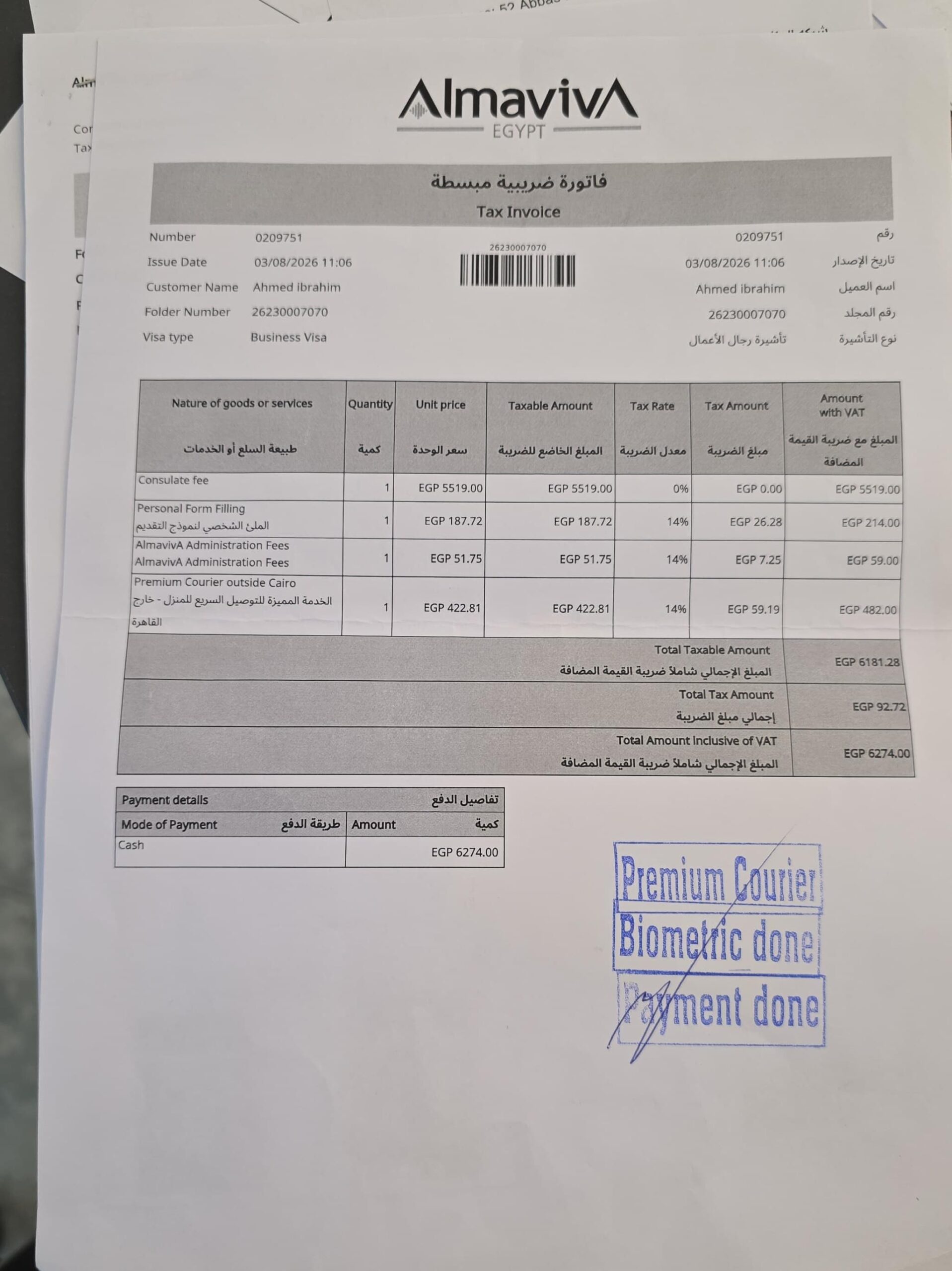
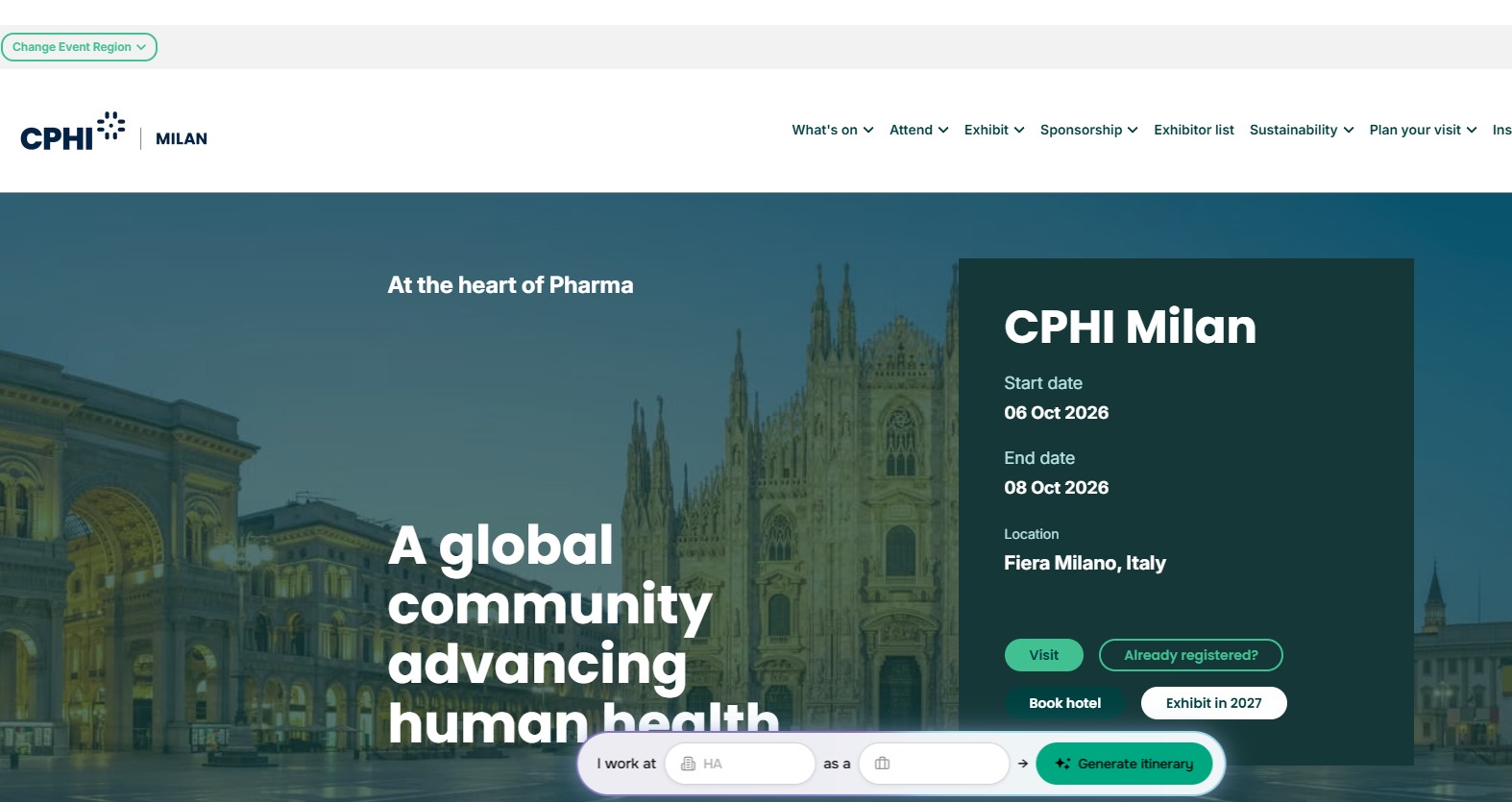
The professional conference in Milan was scheduled for October 6, 2026. Yet Egyptian engineer Ahmed Mohamed Ibrahim was still waiting for his Italian visa, despite having submitted his application on August 3, 2026 — approximately 64 days before the conference.
The conference has come and gone… but the visa has not!
And this raises much more serious questions:
Who bears responsibility for the moral and material damage caused to Ahmed Mohamed Ibrahim after he was prevented from attending an officially organized professional conference in Italy? Who will compensate him for the professional opportunity he lost, the expenses he incurred, and the moral harm he suffered?
61 Countries Can Enter Italy Visa-Free… While an Egyptian Waits
According to the current European list, citizens of 61 non-EU countries benefit from visa-free short stays in the Schengen Area, allowing them, subject to the applicable conditions, to remain for up to 90 days within any 180-day period.
The countries include:
Albania, Andorra, Antigua and Barbuda, Argentina, Australia, the Bahamas, Barbados, Bosnia and Herzegovina, Brazil, Brunei, Canada, Chile, Colombia, Costa Rica, Dominica, East Timor, El Salvador, Georgia, Grenada, Guatemala, Honduras, Israel, Japan, Kiribati, Kosovo, Malaysia, the Marshall Islands, Mauritius, Mexico, the Federated States of Micronesia, Moldova, Monaco, Montenegro, New Zealand, Nicaragua, North Macedonia, Palau, Panama, Paraguay, Peru, Saint Kitts and Nevis, Saint Lucia, Saint Vincent and the Grenadines, Samoa, San Marino, Serbia, Seychelles, Singapore, Solomon Islands, South Korea, Tonga, Trinidad and Tobago, Tuvalu, Ukraine, the United Arab Emirates, the United Kingdom, the United States, Uruguay, Venezuela, and the Vatican.
Hong Kong, Macao and Taiwan also have special arrangements.
Egyptian citizens, however, remain required to obtain a short-stay visa to enter Italy and the Schengen Area.
And here is the question — not an accusation:
Why does the road to Italy appear open for citizens of dozens of countries for stays of up to 90 days, while an Egyptian engineer officially invited to a professional conference waits for more than two months — only to see the conference itself pass him by?
Where Is the Egyptian-European Partnership on Irregular Migration?
The question becomes even more compelling when one considers that Egypt is not a marginal player in its relationship with Europe.
Egypt is a key partner in highly sensitive regional issues, including combating irregular migration, human trafficking, border management and broader cooperation on migration.
If Egypt is a partner in addressing one of the major challenges facing Europe, and if Egyptian-Italian and Egyptian-European relations are based on cooperation and partnership, where is that partnership reflected when an Egyptian citizen seeks a visa for legitimate professional purposes?
Should an Egyptian citizen feel that his passport has become a burden, despite the important responsibilities and roles undertaken by his country in protecting European interests?
Are We Facing Unjustified Discrimination?
One individual case cannot, by itself, establish racism.
But journalism has every right to ask a direct question:
Could there be unjustified discriminatory treatment of an Egyptian citizen?
And if there is no discrimination, what explains such a prolonged delay?
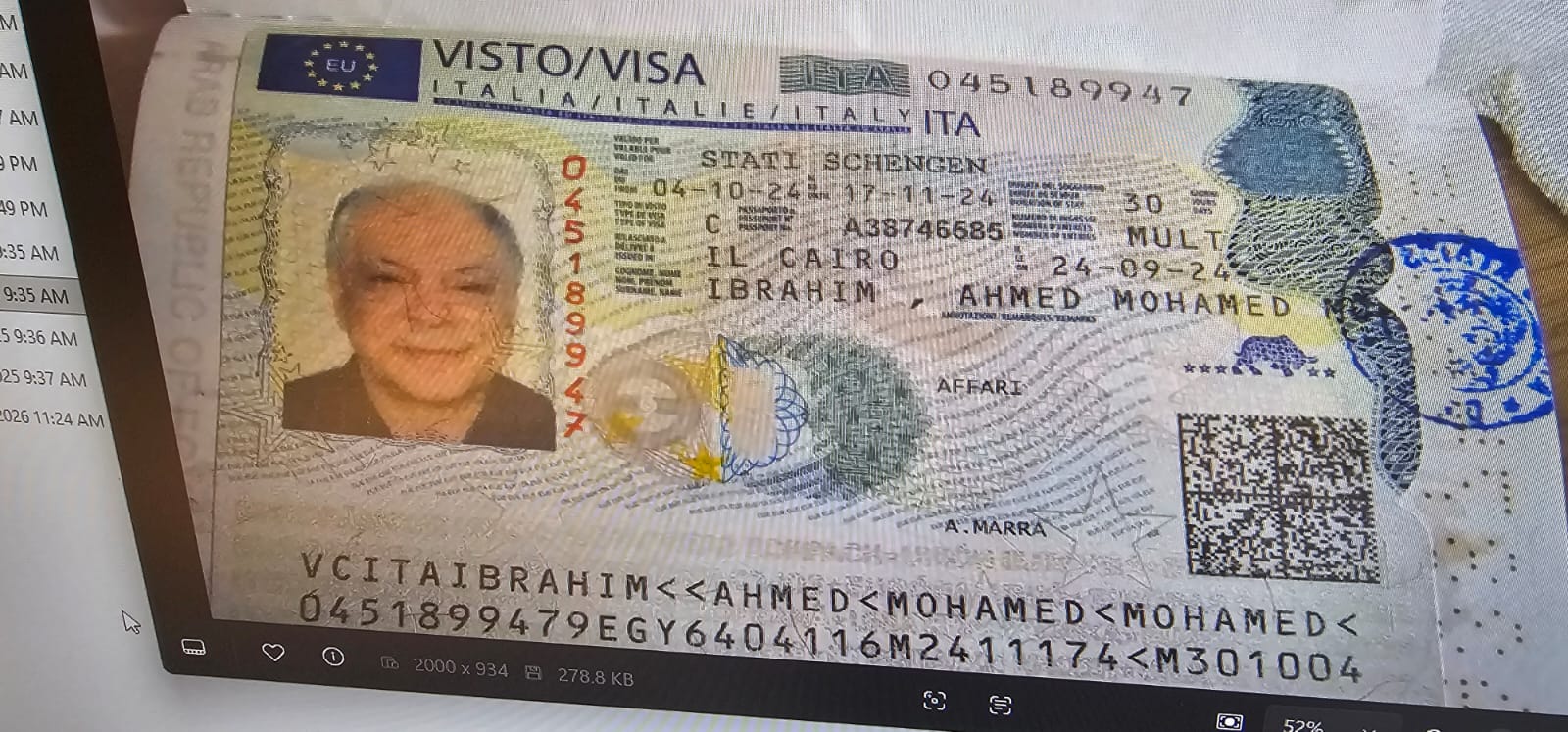
Ahmed Mohamed Ibrahim has previously obtained an Italian visa and has also previously obtained a Polish Schengen visa.
In other words, he has a previous Schengen visa record, while the European Visa Information System provides mechanisms for checking previous visa applications and related information in accordance with the applicable rules.
So what exactly requires all this time?
Who Will Pay the Price for the Conference That Was Lost?
This is the question that can no longer be postponed.
The conference is over.
And with it, a genuine professional opportunity has been lost.
Therefore, this press campaign calls upon the Italian Government and the competent Italian visa authorities to issue an immediate and official apology to Ahmed Mohamed Ibrahim and to urgently consider compensation for the material and moral damages resulting from his inability to attend the conference, if it is established that unjustified procedural delay was responsible for the loss of his participation.
An apology is not a courtesy.
And compensation, where legal responsibility is established, is not a favor.
It is a matter of dignity, rights and accountability.
And Another Question: Why the Silence?
What makes this case even more troubling is that it has not remained confined to the pages of the press.
The article was sent to the Italian Embassy in Cairo, the Egyptian Ministry of Foreign Affairs, the European Union Delegation in Cairo, and other parties within the European Union.
And, as of the time of writing, no response whatsoever has been received from any of these parties.
No explanation.
No clarification.
No information.
Not even an official acknowledgment stating that the matter is under review.
This silence itself raises another set of questions:
Has an Egyptian citizen become obliged to address all these institutions merely to obtain an explanation?
If the matter does not deserve a response, why?
And if it deserves an investigation, why has no investigation begun?
What Is Needed Now… An Investigation, Not Statements
What is needed is not a diplomatic statement filled with formal language, nor expressions of courtesy.
What is needed is an urgent and transparent investigation by the Italian side into the reasons behind the delay in Ahmed Mohamed Ibrahim’s visa application, identifying the authority responsible and determining whether the procedures applied to him were consistent with the standards applied to other applicants.
The Egyptian Ministry of Foreign Affairs is also expected to follow the matter officially, in defense of the rights of an Egyptian citizen who has lost a professional opportunity because of a prolonged visa procedure, and to seek a clear explanation from the Italian side.
The European Union Delegation in Cairo should likewise treat the case as a practical test of equality and transparency in the implementation of visa policies — not merely as an individual complaint that can disappear into correspondence files.
Dignity… Then Dignity… Then Dignity
This is not about being against Italy.
Nor is it about being against Europe.
On the contrary, Egypt, Italy and Europe share broad historic and strategic interests and partnerships.
But genuine friendship does not mean remaining silent in the face of a possible wrong.
True partnership does not mean allowing the citizen to become the weakest link.
And genuine cooperation cannot be complete without respect for human dignity.
Therefore, this press campaign will continue until a clear, transparent and convincing response is provided regarding the case of Ahmed Mohamed Ibrahim; until responsibility for the damage he suffered is clarified; and until it becomes clear whether the matter resulted from an administrative error, a procedural failure, or another reason requiring explanation and accountability.
This is no longer merely about a visa.
It is about the dignity of an Egyptian citizen.
Dignity first… then dignity… then dignity.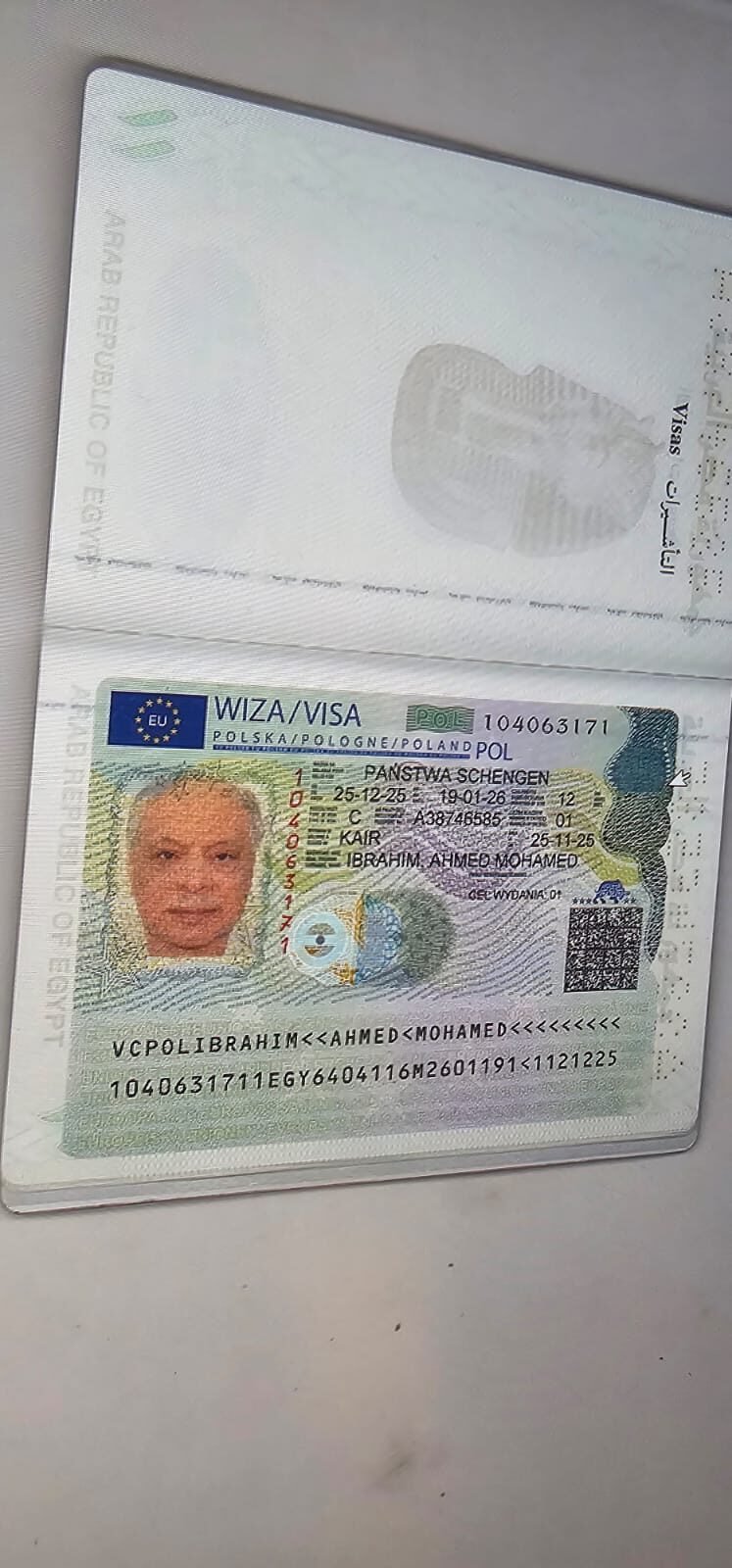
And this campaign will not stop until the question reaches those who have the authority to provide the answer.