 Chief editor writes
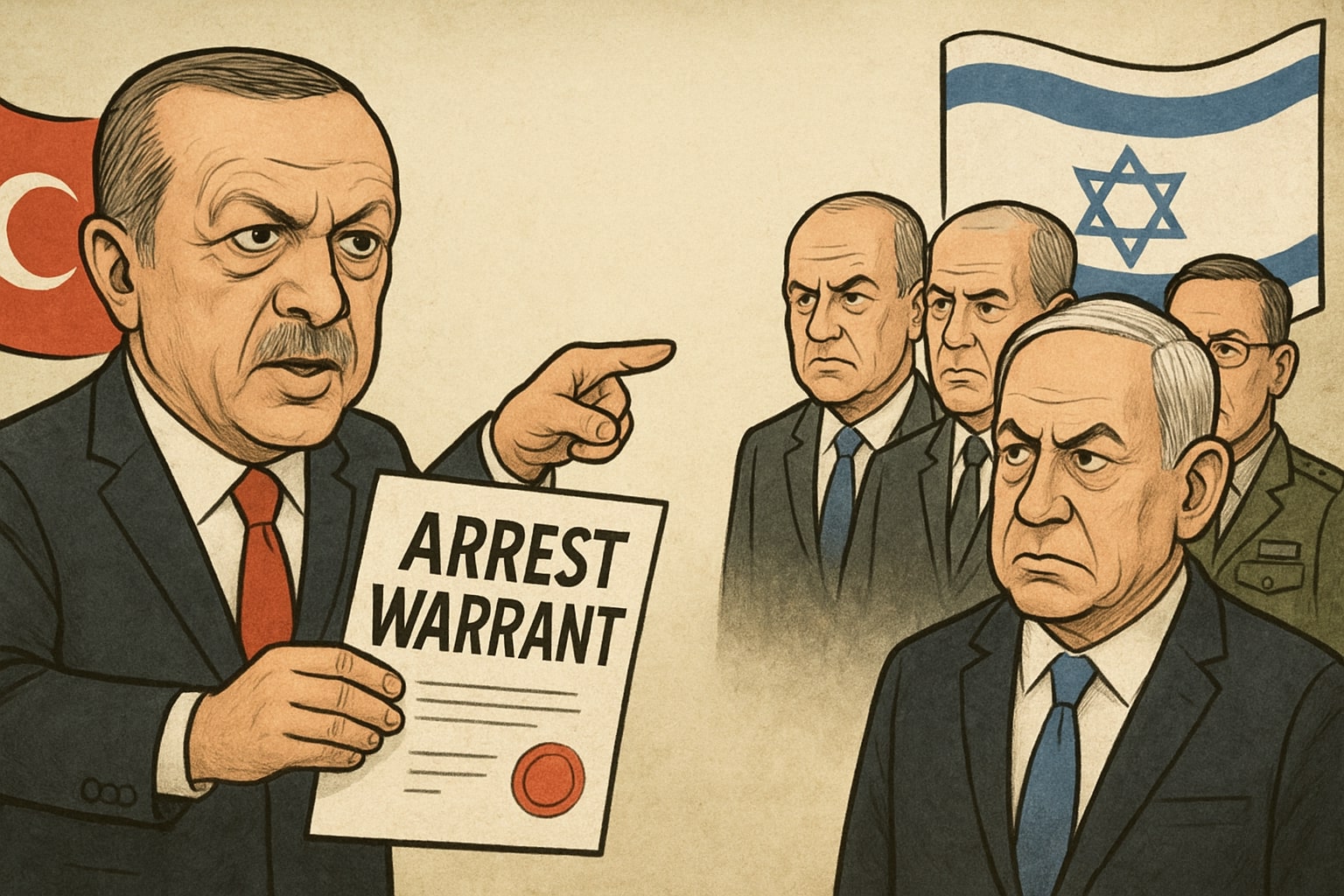
A Legal Moment Without Precedent.. The Istanbul Chief Public Prosecutor has issued an arrest warrant for Israeli Prime Minister Benjamin Netanyahu and 36 senior military and political officials, accusing them of genocide and crimes against humanity in Gaza.
This decision represents a global precedent—not only because of whom it targets but because a major regional state has openly invoked the principle of universal jurisdiction against top officials of another state.
This development raises a crucial question:
Can Arab states take a similar step?
I. What Does the Turkish Decision Actually Mean?
1. A bold use of universal jurisdiction
Turkey has activated a powerful legal doctrine that allows any state to prosecute major international crimes—genocide, crimes against humanity, war crimes—even if they did not occur on its soil.
Many Western states possess this legal tool, but few have used it so directly against Israel.
2. Accusing Netanyahu of “genocide” — not merely war crimes
Labeling the atrocities in Gaza as genocide is extremely significant. Genocide is the most severe crime in international law, and it does not expire or fall under political immunity.
3. A political message delivered through legal means
The arrest warrant is unlikely to be executed anytime soon, but it sends a loud message:
Israel’s historic shield of impunity is cracking.
II. Arab Precedents: Lessons From Recent History
1. Sudan and the ICC Case Against Omar al-Bashir
The International Criminal Court issued warrants for Sudan’s former president.
Lesson:
Arrest warrants are only effective when backed by strong political will; law alone is not enough.
2. The Special Tribunal for Lebanon
Lebanon itself, with international support, created a tribunal for the Hariri assassination.
Lesson:
The court issued convictions, but implementation was limited, proving that legal victories require political backing.
3. The Palestinian Files Before the ICC
The Palestinian Authority has submitted extensive evidence on Israeli war crimes, yet progress is extremely slow due to Western pressure.
Lesson:
The legal case is strong, but political obstacles are immense.
4. Kuwait’s Legal Battle After the Iraqi Invasion
Kuwait secured international mechanisms for compensation.
Lesson:
Arabs can succeed legally when a strong global consensus exists.
III. Why the Arabs Actually Have Strong Legal Tools
1. A prepared legal environment
Many Arab constitutions and criminal codes allow prosecution of international crimes—or at least do not prohibit it.
2. An extraordinarily documented Palestinian case
The Israeli violations in Gaza and the West Bank are among the most documented crimes in modern history.
3. Global public opinion is shifting
International sentiment toward Israel is more critical than ever, offering Arab states a rare strategic opportunity.
IV. What Prevents Arab States From Acting Like Turkey?
1. Political calculations and sensitive alliances
Some Arab states maintain formal ties with Israel or rely heavily on Western powers for security—making aggressive legal steps undesirable.
2. Fear of reciprocal legal exposure
Certain states worry that involvement in universal jurisdiction could open the door to legal scrutiny of their own human-rights files.
3. Lack of pan-Arab coordination
Turkey acted alone with a centralized decision.
Arab states often move slowly and separately, which reduces the likelihood of bold, unified action.
V. Will the Arabs Do It? — A Conditional Yes
1. Yes, if political will exists
Legally, nothing prevents it.
Politically, everything depends on leadership.
2. Yes, if one courageous Arab state leads the way
A single country—Algeria, Qatar, Kuwait, Morocco, Tunisia—could open the door for others by issuing its own symbolic or formal arrest warrants.
3. Yes, if Arab decision-makers understand that law is now a political weapon
Turkey has shown that legal mechanisms can shift global narratives and pressure Israel, even if arrests never occur.
VI. What Can Arab States Do Today?
1. Form an “Arab Legal Coalition”
This coalition could:
- Document crimes
- File cases before the ICC
- Launch cases in European courts using universal jurisdiction
- Support Palestinian submissions
2. Issue domestic arrest warrants — even symbolic ones
Symbolic warrants can create powerful diplomatic and media pressure.
3. Offer official support for Turkey’s action
A single Arab endorsement would amplify the impact of Istanbul’s decision exponentially.
AnyWay: Turkey Has Moved—Arabs Can Follow If They Dare
The Istanbul arrest warrant against Netanyahu is more than a legal step; it is a strategic strike against Israel’s long-standing immunity.
The critical political question remains: Will the Arabs take a similar step?
The answer lies not in legal codes but in political courage—and in recognizing that the global tide is shifting, perhaps opening space for historic Arab action.