Ashraf AboArafe
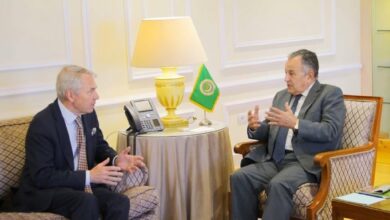
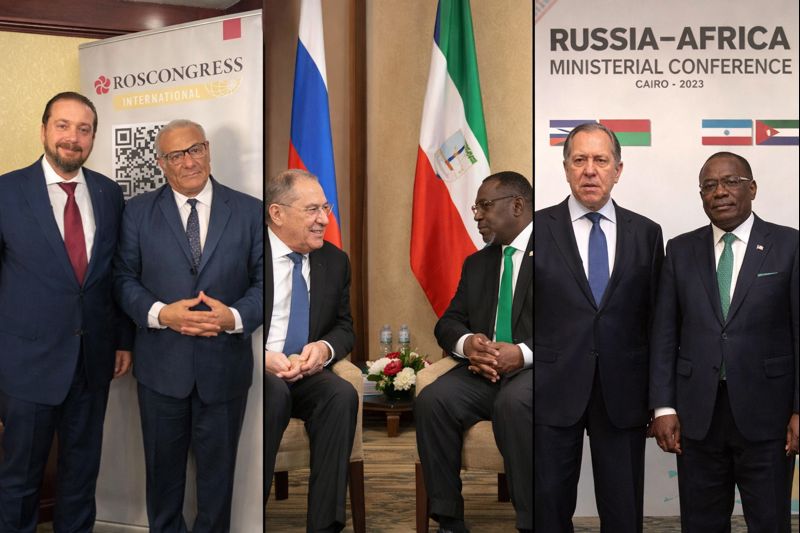
On December 19 in Cairo, diplomacy unfolded with a calm but deliberate rhythm as Sergey Lavrov met with Simeón Oyono Esono Angüe, Minister of Foreign Affairs, International Cooperation and Diaspora Affairs of Equatorial Guinea. The meeting took place on the margins of the Second Ministerial Conference of the Russia-Africa Partnership Forum, reaffirming Cairo’s role as a neutral crossroads where African–Russian dialogue gains strategic depth.
The talks reflected continuity rather than improvisation. Both sides reviewed the current state of Russia–Equatorial Guinea relations, with particular attention to the swift and practical implementation of agreements reached during the high-level meetings between Vladimir Putin and Teodoro Obiang Nguema Mbasogo in Moscow in November 2023 and September 2024. These agreements now form the backbone of a partnership seeking tangible outcomes rather than symbolic alignment.
At the political level, the ministers reaffirmed their shared commitment to deepening a trust-based dialogue and strengthening coordination on regional and international issues, particularly within the United Nations and other multilateral platforms. This convergence highlights a mutual preference for institutional diplomacy and coordinated positioning in an increasingly fragmented global order.
Economic and humanitarian cooperation featured prominently in the discussions. The two sides reviewed the steady progress of bilateral relations in trade, energy, and social development, focusing on promising joint projects in hydrocarbon extraction and processing, power generation, healthcare, and the training of national personnel. These sectors reveal a pragmatic understanding of development—where energy security, human capital, and social infrastructure move in parallel rather than isolation.
Lavrov’s opening remarks carried both memory and momentum. Recalling his meeting with the Equatorial Guinean foreign minister at the first Russia–Africa Forum in Sochi, he emphasized that the Ministerial Forum serves as a practical instrument to ensure the implementation of decisions taken at the Russia–Africa Summits in Sochi and St. Petersburg. His reference to President Mbasogo’s participation in the 80th anniversary celebrations of Victory in the Great Patriotic War in Moscow underscored how shared historical symbolism continues to reinforce contemporary political trust.
By extending an official invitation for a future visit to Russia, Lavrov signaled that bilateral engagement is not confined to conference margins but is intended to evolve through sustained high-level exchanges. The message was clear: Russia’s partnership with Equatorial Guinea is anchored in continuity, respect for sovereignty, and a long-term vision that integrates bilateral cooperation with multilateral coordination.
In Cairo, far from the capitals of either country, diplomacy found its quiet strength. The meeting did not announce dramatic shifts, but it reaffirmed something more enduring—a partnership shaped by memory, driven by energy and development, and projected onto the wider stage of Africa–Russia relations.