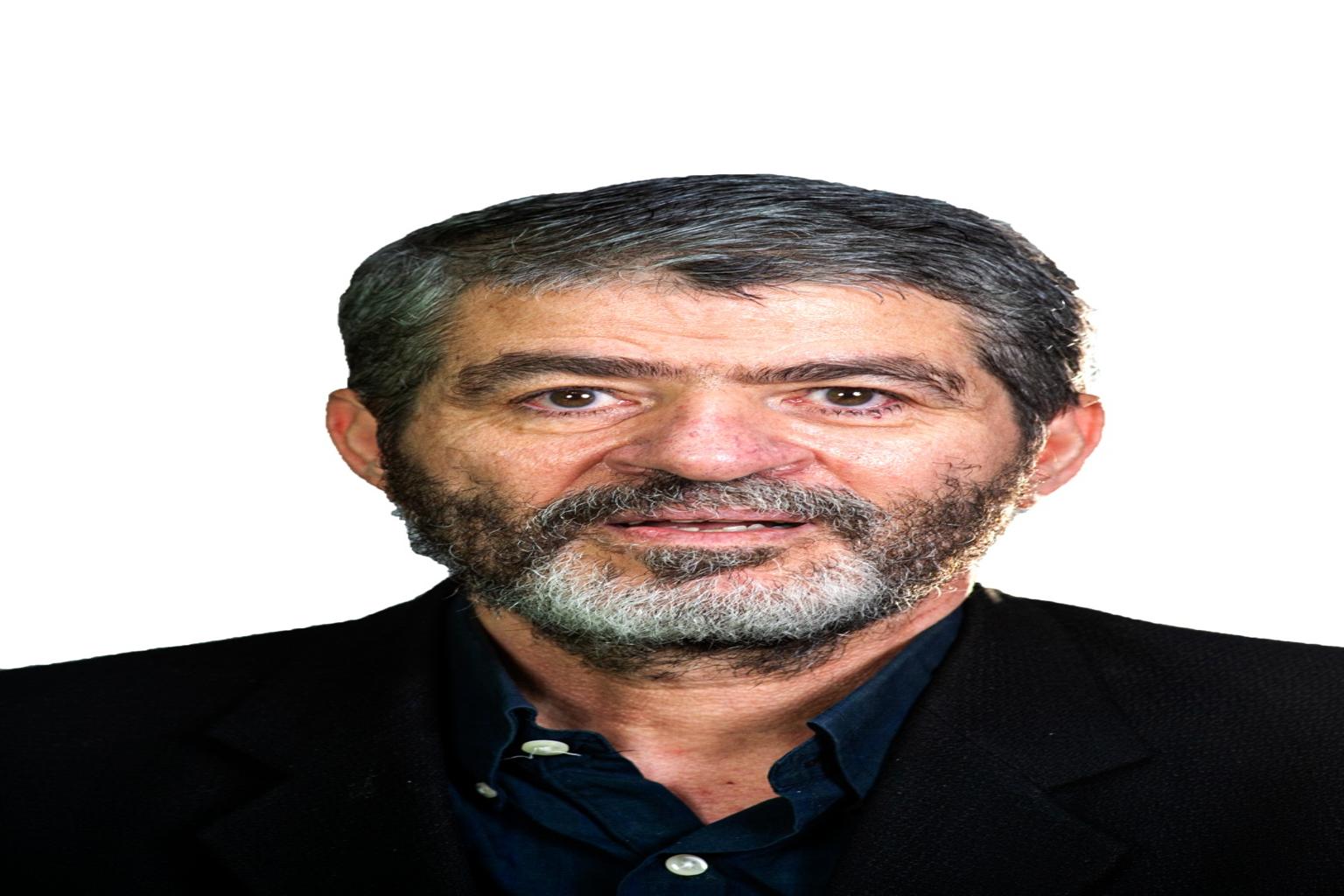
Mohamed Sabreen Writes
Editing manager of Ahram daily
“WHAT kind of world is this
When childhood is hung
On the wall of war?”
With these haunting lines, the poet and writer Ashraf AboArafe confronts us with a question that is as painful as it is unavoidable—through his latest poem, “Zahra’s Dress.”
It is a question that lingers, disturbs, and refuses to fade. For despite their differing geographies and political contexts, all wars ultimately share one defining truth: they are human tragedies. Whether in the Middle East—amid tensions involving Iran, the United States, and Israel—or in Europe, where the conflict between Russia and Ukraine continues to unfold, the essence remains the same.
War always has another face—the face of its victims.
These victims are often reduced to numbers without identity, their stories lost beneath the thunder of artillery and the rhetoric of power. Their questions—raw, human, and urgent—are drowned out by the noise of conflict.
From the Russian side, voices emerge with desperation and confusion:
Why is the world silent? Why is no one paying attention to what we are enduring? Why are civilians being targeted? Why does this war appear to violate every principle of international humanitarian law?
These are not abstract inquiries—they are the lived reality of civilians, caught in what is widely described as a broader confrontation between Russia and the West on Ukrainian soil.
During a Zoom conference hosted by the Russian House in Cairo, residents of the border city of Belgorod shared their testimonies. Among all the voices, one question rose above the rest—simple, yet overwhelming in its weight:
“What is happening?”
It is, undeniably, war in its most brutal and unfiltered form—marked by destruction, suffering, and innocent casualties. It is also, by many accounts, a proxy war, shaped by competing global interests.
Again, the question returns: What is happening?
What we may be witnessing is not an anomaly, but a profound transformation—a new global reality in which war is no longer the exception, but an enduring feature of international life. In such a world, the faces of victims fade, and the rest of humanity grows accustomed to looking away.
Amid this chaos, deeper questions emerge—questions that resist easy answers:
Will the future bring a negotiated settlement or continued military escalation?
Can any agreement be trusted, given the fragile history of past negotiations?
And is this conflict evolving into a prolonged war of attrition for Russia?
There are no simple answers.
However, Russian President Vladimir Putin has consistently maintained that Russia is prepared to continue the fight until it achieves all of its stated objectives—should Ukraine refuse a negotiated settlement.
Moscow’s conditions for ending the war remain firm and uncompromising:
- Territorial concessions: Ukraine must withdraw from Donetsk, Luhansk, Kherson, and Zaporizhzhia, recognizing them as Russian territory.
- Neutrality: Ukraine must formally abandon its aspirations to join NATO.
- Military limitations: A commitment to refrain from hosting Western military bases or forces.
- Sanctions relief: The lifting of Western sanctions as part of any agreement.
- Protection of Russian-speaking populations: Legal guarantees for their rights.
Putin’s stance on negotiations reflects a dual-track strategy:
- A willingness to freeze the conflict along current front lines.
- A readiness for continued military escalation if conditions are rejected.
- Openness to international mediation, including figures such as Donald Trump, albeit with deep skepticism toward Western intentions.
Ukraine, for its part, rejects these terms outright, viewing them as an attempt to legitimize occupation, and insists on the restoration of full sovereignty.
Meanwhile, Russian Foreign Minister Sergey Lavrov has reiterated Moscow’s stated commitment to a diplomatic solution, while arguing that Kyiv is not yet prepared for meaningful negotiations.
Analysts such as Pavel Danilin argue that the roots of the conflict lie in ignored security concerns, and that the war represents a decisive geopolitical turning point rather than a temporary crisis.
At the same time, tensions extend beyond Ukraine. Statements attributed to figures like Anna Okulova highlight the growing volatility of the international landscape, where rhetoric and strategic signaling increasingly intersect.
What is becoming clear is that Russia does not view this war as a losing battle, but as an existential struggle—one tied to national security, geopolitical status, and the future of its leadership.
Russia’s resilience is reinforced by its substantial military and economic resources, particularly in energy. These factors have enabled it to withstand sanctions and pursue a long-term strategy of endurance, testing the limits of Ukraine’s capacity and the cohesion of Western support.
In essence, this is a war of attrition.
A conflict defined not by rapid victories, but by the ability to outlast the opponent.
And yet, beyond strategy, politics, and power calculations, one truth remains unchanged:
The suffering of ordinary people continues…
—and shows little sign of ending soon.
For while Russia frames the conflict as a battle for survival and sovereignty, many in the West view it as an effort to contain or weaken Russia, limit its resurgence, and prevent it from reasserting itself as a defining force in a new global order.
Between these competing visions, the victims remain—caught in the silence between competing narratives.
And the question still echoes: