Ashraf AboArafe
In light of ongoing global discussions—especially across Egyptian and Arab public spheres—a question emerges that seems simple on the surface, yet deeply complex at its core:
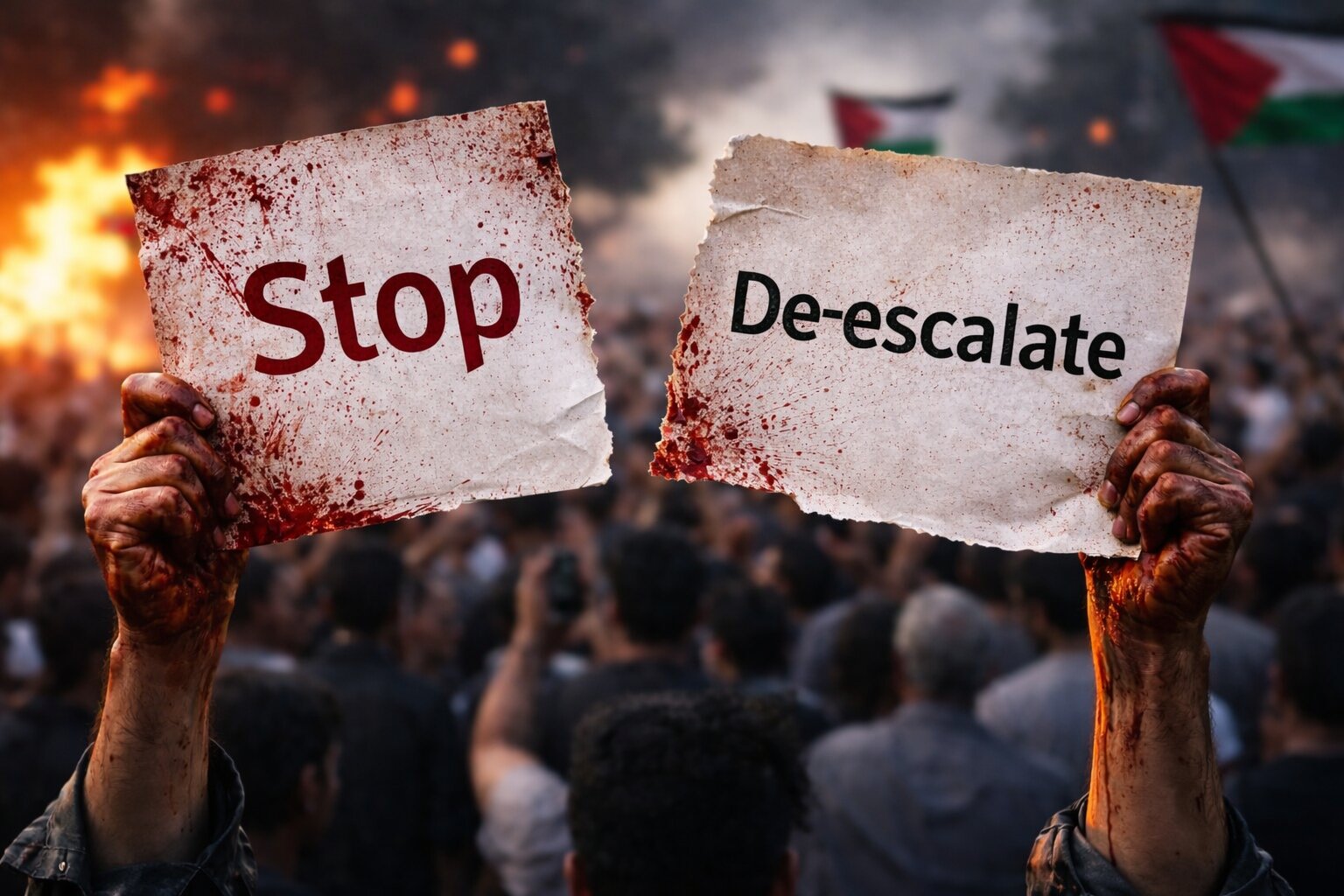
Which is better—“stop” or “de-escalation”?
Between the noise of official statements and the pulse of the street, a clear gap appears between the language of diplomacy and media and the hope of ordinary people.
The prevailing discourse—across meetings, reports, and news coverage—leans toward the term “de-escalation”, as it is seen as more pragmatic and capable of containing crises without leaping toward what may seem unattainable in moments of intense conflict.
Yet, on the streets, one word dominates:
“Stop.”
Because people do not see blood as numbers to be reduced, nor war as a curve to be softened, but as a tragedy that must end, not be managed.
Here, words shift from tools of description into a true moral test:
Are we seeking temporary calm—or a real end?
The contrast between “de-escalation” and “stop” is not merely linguistic; it reflects two fundamentally different visions of the world:
- One that manages and postpones conflict
- Another that seeks to end it, no matter the cost
At a moment when events are accelerating and anxiety is spreading, the question remains open—not only before policymakers, but before the human conscience:
Is it enough to reduce the pain… or is it time to stop it?