Ashraf AboArafe
Egyptian and Pakistani Foreign Ministers Discuss Strengthening Bilateral Ties and Regional Developments
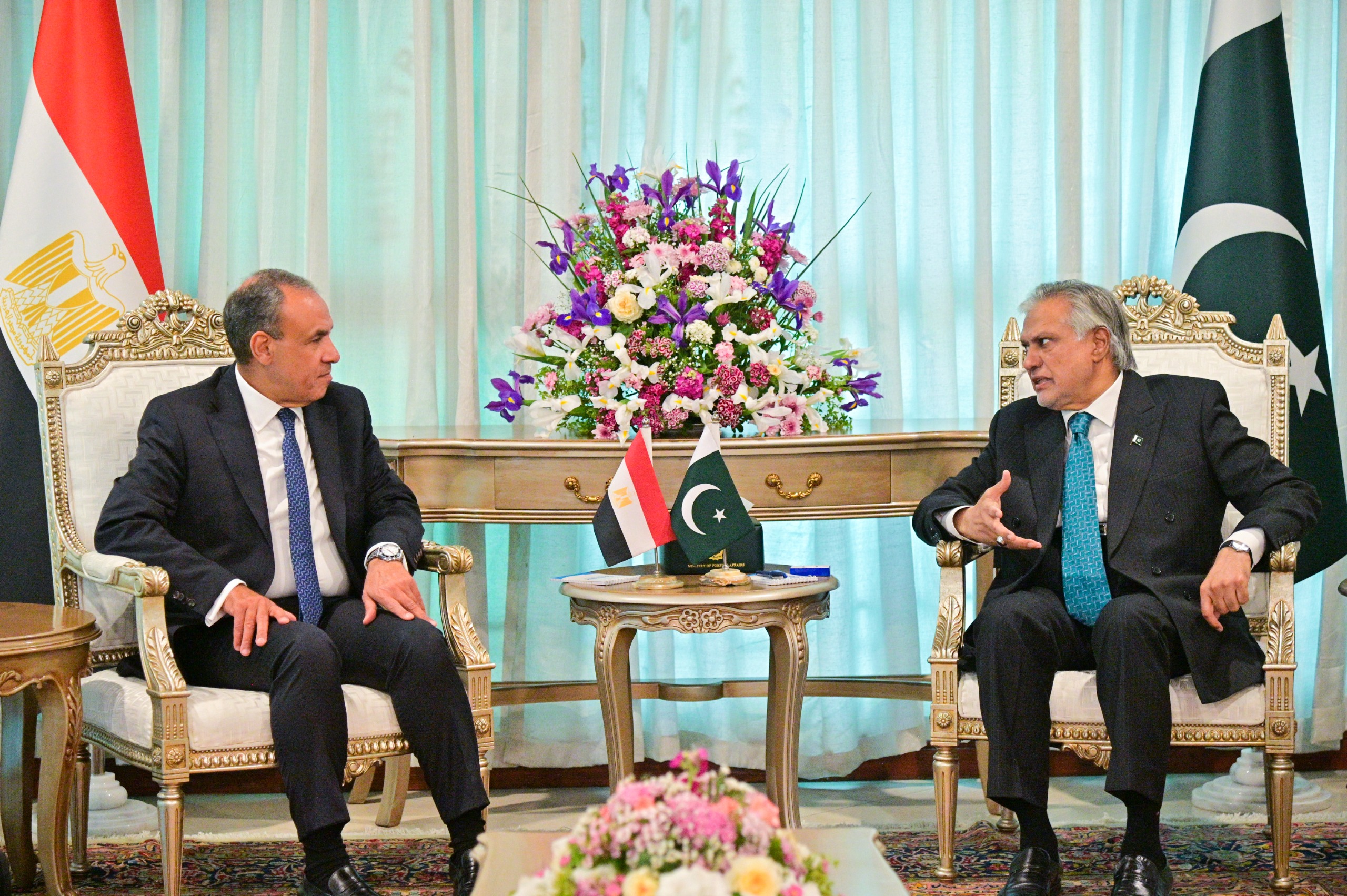
Dr. Badr Abdelatty, Egypt’s Minister of Foreign Affairs, Emigration, and Egyptian Expatriates, met with Mr. Ishaq Dar, Pakistan’s Deputy Prime Minister and Minister of Foreign Affairs, on Sunday, March 29, during his visit to Islamabad. The visit coincides with his participation in the quadrilateral ministerial meeting addressing recent regional developments, de-escalation efforts, and pathways toward calm.
According to Ambassador Tamim Khallaf, the official spokesperson for Egypt’s Ministry of Foreign Affairs, Dr. Abdelatty expressed deep appreciation for the historic and enduring ties between Egypt and Pakistan. He praised the notable progress in bilateral relations across various sectors and reaffirmed Egypt’s commitment to maintaining regular institutional engagement—particularly through the Joint Committee chaired by the two Foreign Ministers, which is expected to convene soon to advance shared interests.
The Egyptian Foreign Minister emphasized the importance of enhancing economic and investment cooperation, and increasing trade exchange to reflect the vast potential of both nations. He highlighted the pressing global economic shifts, including supply chain disruptions and volatility in energy and commodity markets, stressing the need for developing countries to adopt more integrated approaches to strengthen economic resilience.
In this context, Dr. Abdelatty underscored the significance of deepening economic partnership by linking logistical and industrial hubs in both countries. Such integration, he noted, would expand access to markets across Africa and Asia. He further pointed to the strategic geographic positions of Egypt and Pakistan as pivotal logistics corridors in global trade, calling for stronger economic connectivity between the Suez Canal Economic Zone and Gwadar Port. He also highlighted opportunities to localize value-added industries within the Suez Canal Economic Zone to reinforce regional supply chains and promote strategic industrialization.
The Minister also reviewed Egypt’s recent economic reforms, emphasizing the need to activate the Joint Business Council to energize economic ties and encourage greater private sector engagement in bilateral cooperation.
On the regional front, both ministers discussed developments in the Middle East, focusing on de-escalation efforts and advancing a path toward stability. They reviewed ongoing initiatives within the quadrilateral framework aimed at reducing tensions and fostering negotiations between the United States and Iran, in an effort to prevent the region from descending into widespread chaos and its severe repercussions on the global economy.
Dr. Abdelatty stressed the urgency of coordinated regional and international efforts to contain the situation, affirming that diplomacy and de-escalation remain the only viable path to resolving the current crisis. He expressed hope that joint efforts would lead to tangible progress toward calm, ultimately paving the way to ending conflict.
Both ministers agreed on the necessity of sustained coordination and close consultation to support regional security and stability, and to prevent further escalation of conflict.
At the confluence of diplomacy and geography, Cairo and Islamabad sketch a map—not of borders, but of balance.