 By Dr. Onur Sinan Güzaltan
Author and Political Scientist, University of RUDN
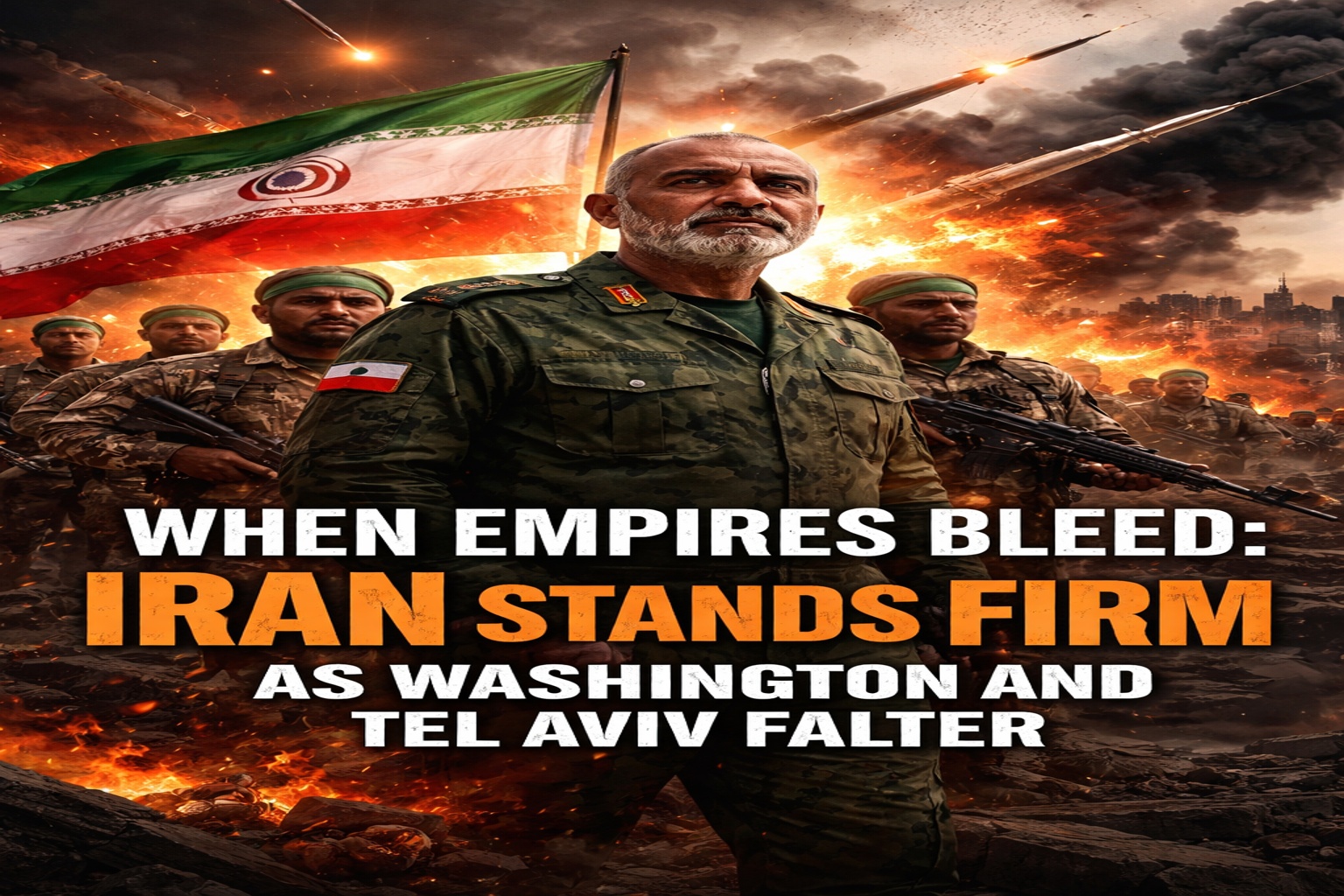
THERE are growing and serious doubts about the ability of the United States and Israel to sustain their war against Iran—a conflict that has already fractured the global financial system. Since its eruption on February 28, following US-Israeli airstrikes on Iranian cities, the war has entered an uncertain and volatile phase, with no clear timeline for its end or limits to its escalation.
At its core, this is a bloody and illegitimate war, driven by strategic overreach rather than necessity.
A War Expanding by Design
Washington and Tel Aviv appear determined to widen the battlefield, seeking to draw in regional actors—most notably the Gulf states and Turkey. Missile incidents on Turkish territory, widely disputed in origin, are viewed here not as accidents but as calculated provocations.
Evidence and statements from multiple sides suggest these missiles may not have been Iranian at all. Both Turkish and Iranian voices, alongside early remarks from British officials, point toward a deliberate attempt to manufacture escalation.
Statements from Recep Tayyip Erdoğan reflect this suspicion. His warnings about “Zionist provocations” signal a broader concern: that external actors are attempting to ignite divisions across the region, from Ankara to Tehran, and even into the Caucasus.
If Winning, Why Seek an End?
A paradox lies at the heart of this war:
If the United States and Israel are winning, why the urgency to end it?
Signals from Donald Trump suggesting the conflict may be nearing its conclusion, alongside reports of mediation efforts, reveal something deeper. They hint not at victory—but at strategic exhaustion.
The question remains unavoidable: Why stop now—unless the cost of continuation is becoming unbearable?
NATO’s Selective Alarm
The reaction of NATO further exposes contradictions. Silence during Turkey’s 2016 crisis contrasts sharply with its swift response to alleged Iranian threats.
This inconsistency raises a troubling possibility: that NATO’s positioning is not neutral, but part of a broader effort to pressure Ankara into the conflict—despite Turkey’s long-standing struggles against groups like the PKK and its affiliates receiving little acknowledgment.
Fog of War and Manufactured Narratives
Drone strikes on Gulf states add another layer of ambiguity. Some officials in the region have suggested that not all attacks originated from Iran, reinforcing the notion that disinformation and false-flag operations may be shaping perceptions of the war.
Meanwhile, Tehran insists its operations are strategically targeted, focusing on military installations rather than civilian infrastructure.
Early Conclusions from a Prolonged Conflict
Despite ongoing mediation efforts, the war’s geographic and temporal boundaries remain undefined. However, several key conclusions are already emerging:
- Strategic Failure: The US and Israel have failed to achieve core objectives—regime change, internal destabilization, or military collapse in Iran.
- Iranian Leverage: Tehran has imposed significant costs, including pressure on US assets and regional bases.
- Strain Inside Israel: Reports indicate infrastructure damage and rising internal tension within Israeli cities.
- Economic Shockwaves: Iran’s strategy targeting energy routes—particularly the Strait of Hormuz—has shaken global markets, nearly doubling oil prices in the war’s first week.
- Allied Reluctance: Europe and Gulf states remain hesitant, avoiding direct confrontation with Iran.
- Information Warfare: Disinformation campaigns have become a central tool, aimed at dragging new actors into the conflict.
- Western Fractures: Tensions between the US and key allies, including the UK, are becoming increasingly visible.
- Iran’s Hardline Continuity: Leadership signals from Tehran suggest no retreat on national interests.
- Axis of Resistance Mobilization: Groups like Hezbollah and Ansar Allah are increasingly engaged, raising the stakes—especially for Israel in any ground confrontation.
- Eastern Backing: Russia and China continue to provide implicit yet consequential support to Iran.
The Most Dangerous Threshold
Perhaps the most alarming possibility lies ahead:
If Washington and Tel Aviv conclude that conventional means are failing, the temptation to escalate—potentially even toward weapons of mass destruction—cannot be dismissed.
Such a move would not only devastate Iran but could trigger irreversible regional and global consequences.
A War That Could Redefine the World Order
This war is no longer just a regional confrontation—it is a stress test for the global system itself.
For the United States, defeat would signal more than a military setback. It would mark the erosion of unipolar dominance and accelerate the shift toward a multipolar world order.
For Israel, the implications are existential:
its current regional posture may become unsustainable.
The Inevitable Reckoning
The trajectory is becoming clearer. The burden of this war is growing heavier by the day, and its consequences are extending far beyond the battlefield.
What lies ahead is not merely a political outcome—but a reckoning.
And as the dust gathers over this expanding conflict, one conclusion grows harder to ignore:
the price awaiting Donald Trump and Benjamin Netanyahu may far exceed the loss of power—it may redefine their place in history.