Ashraf AboArafe ✍️
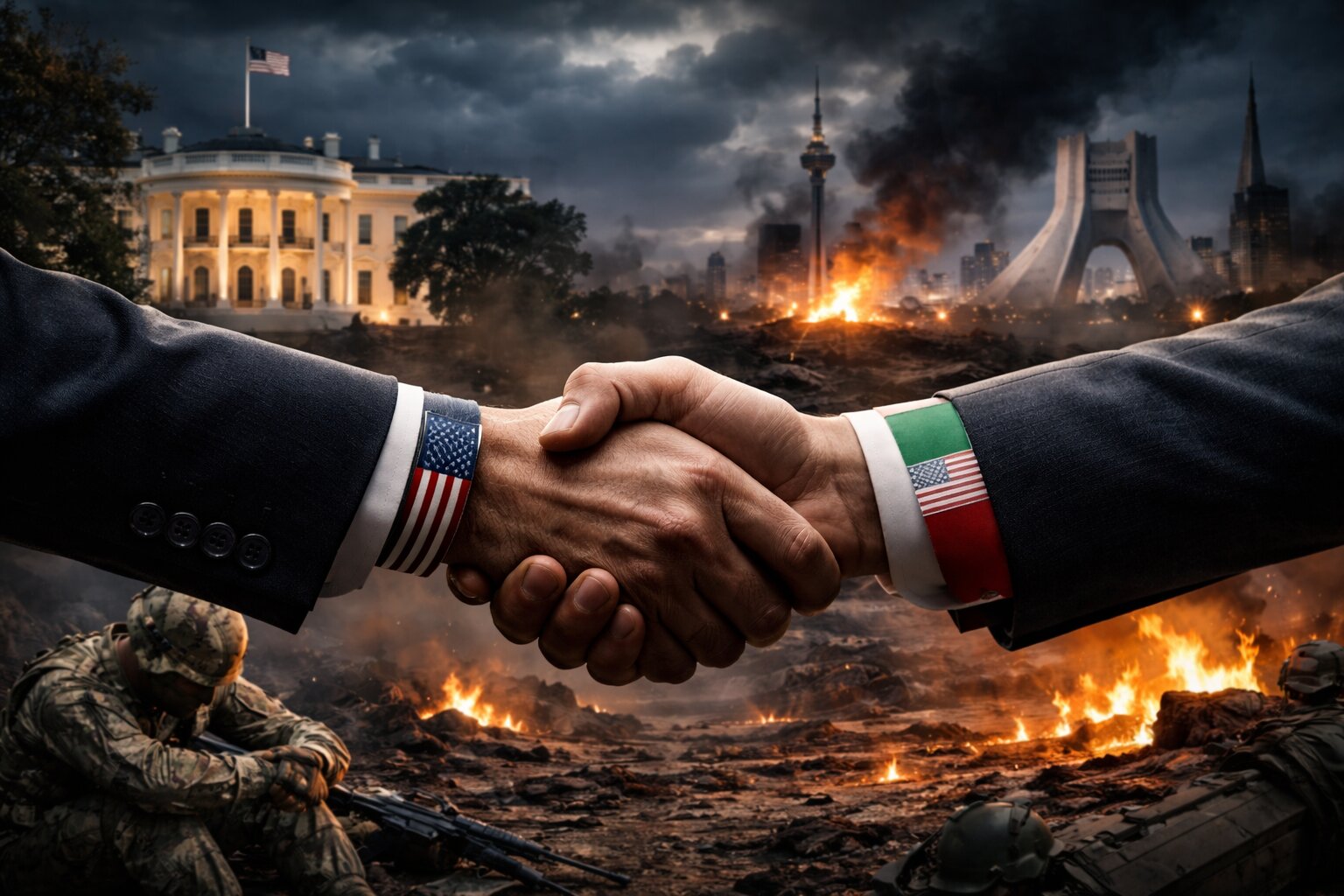
The message conveyed in the AsreFori post is not merely a political observation—it is a diagnosis of strategic fatigue. Beneath its concise wording lies a deeper assertion: that the balance of urgency between Washington and Tehran may be shifting in ways the United States is reluctant to publicly admit.
At its core, the claim rests on three intertwined pressures:
1. The Economics of Endless Engagement
The United States is no stranger to prolonged conflicts, but what distinguishes the current moment is the compounding economic strain. War today is not only fought on battlefields—it is waged through budgets, inflation, and public tolerance.
Sustained military readiness, coupled with global commitments, has created a scenario where every additional escalation carries exponential cost, not just in dollars, but in domestic political capital. The argument here is clear:
negotiation is no longer diplomacy—it is economic survival strategy.
2. Strategic Attrition vs. Political Optics
The reference to “attrition of forces” signals something more subtle than battlefield losses. It points to overextension—a slow erosion of operational flexibility across multiple theaters.
For Washington, projecting strength has always been essential. But when perception diverges from capability, the risks multiply. Entering negotiations under such conditions becomes paradoxical:
- Publicly, it may appear as concession.
- Privately, it may be the only viable path to strategic recalibration.
3. Donald Trump and the Burden of Credibility
The post frames negotiations as existential for Trump—not optional, but necessary to “prevent catastrophe.” This reflects a broader political truth:
Presidential credibility in the United States is deeply tied to economic stability and control over crises. If tensions spiral into economic disruption—energy shocks, market instability, or defense overspending—the consequences would not remain foreign policy issues. They would become domestic liabilities.
Thus, negotiations with Tehran are recast not as weakness, but as damage control at the highest level of leadership.
Between Reality and Narrative
However, this analysis—while compelling—must be approached critically. It reflects a perspective often emphasized in regional or alternative media narratives:
that the United States is cornered.
In reality, the situation is more complex:
- Washington still retains significant economic and military leverage.
- Tehran, too, faces internal and external pressures that make negotiations mutually beneficial.
The truth likely lies not in one side “needing” talks more—but in a rare moment where both adversaries recognize the cost of miscalculation is no longer tolerable.
Final Reflection
What we are witnessing is not simply a call for dialogue—it is a quiet admission of limits.
In geopolitics, the most powerful actors rarely negotiate from comfort. They negotiate when the alternative becomes too dangerous to sustain.
And in that sense, the statement captures a profound shift:
when superpowers begin to seek talks out of necessity, the world has already entered a more fragile phase.