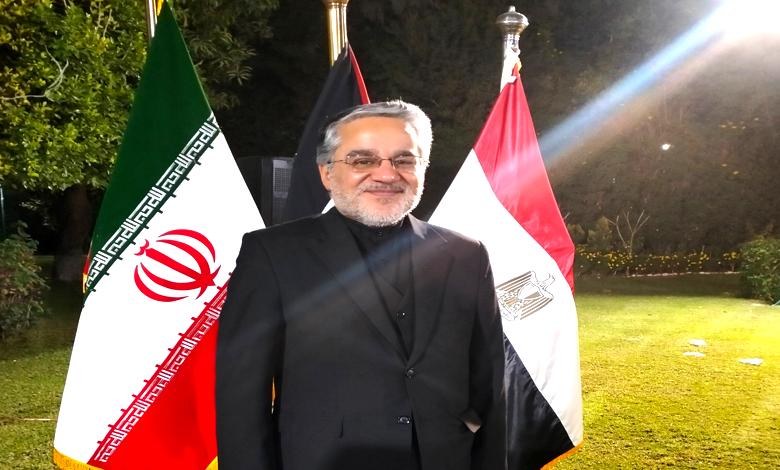
Iran’s ambassador to Cairo, Dr. Mojtaba Ferdosi Pour…
Ashraf AboArafe
“We reserve all our maritime rights in the Strait of Hormuz.” With this clear and assertive statement, Iran’s ambassador to Cairo, Dr. Mojtaba Ferdosipour, opened a new chapter in the unfolding maritime security debate—just as the European Union moves to broaden its naval operations across key international waterways.
The Council of the European Union has approved updated mandates for its naval missions EUNAVFOR ASPIDES and EUNAVFOR ATALANTA, signaling a stronger European role in safeguarding maritime security in the Red Sea and surrounding regions.
Launched in February 2024, ASPIDES was initially designed as a defensive operation to protect commercial shipping following a surge in attacks on international vessels. Under its expanded mandate, the mission will now:
- Monitor threats to critical submarine infrastructure, including cables and pipelines
- Support capacity-building efforts for regional partners, particularly in Djibouti
- Enhance coordination with maritime security initiatives and local coast guards
Meanwhile, ATALANTA—active since 2008—will continue its core mission of countering piracy and illicit trafficking, while adapting to emerging threats such as arms smuggling, narcotics trade, and illegal fishing. It will also take on a new role in monitoring risks to underwater infrastructure.
Both operations have been extended until 28 February 2027, underscoring the EU’s long-term commitment to protecting global trade routes and ensuring freedom of navigation.
Strategic Waters, Rising Tensions
At the heart of the geopolitical response lies Strait of Hormuz—one of the world’s most vital maritime chokepoints, through which a significant share of global energy supplies flows.
Iran’s message is both direct and strategic:
Any expansion of foreign naval presence near its sphere of influence will be viewed through the lens of sovereignty and national security.
Between Protection and Power Projection
While the European Union frames its actions as necessary to secure maritime routes and stabilize a volatile region, the broader picture suggests a more complex dynamic—where security operations intersect with geopolitical positioning.
As Europe steps further into maritime security roles traditionally dominated by global powers, and as Iran reinforces its red lines, the waters from the Red Sea to the Gulf are becoming not just corridors of commerce—
but arenas of strategic signaling and competing influence.