 Ashraf AboArafe writes ✍️
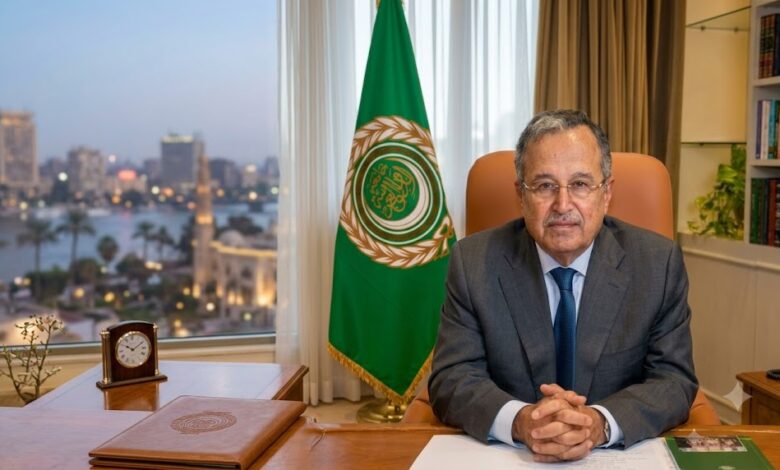
The courageous initiative announced by His Excellency the Secretary-General of the League of Arab States (LAS), Mr. Nabil Fahmy, to personally travel to the Occupied Palestinian Territories and meet with President Mahmoud Abbas (Abu Mazen) in Ramallah, marks a strategic and bold shift in joint Arab action. Despite the anticipated Israeli insolence in rejecting the visit and preventing the General Secretariat from completing it, this daring step—which has long been absent from the halls of the Arab League—has fully achieved its political and diplomatic objectives. It has placed the regional and international systems before a truly pivotal test.
Expanded Political Analysis of the Initiative and Its Implications:
1. Anchoring National Identity and Returning “Centrality” to the Forefront
The choice by Mr. Nabil Fahmy to make Occupied Palestine his first foreign destination carries a profoundly significant message to both the international community and the Arab public. It underscores that the Palestinian cause has not receded. Instead, under his leadership of the Arab League, it will remain at the very top of the Arab world’s priorities, serving as the primary compass by which all Arab diplomatic movements are measured.
2. Exposing Israeli Fear and Complicating the Position of “Normalizing States”
The haste of the Israeli occupation authorities to prevent the Secretary-General from entering the occupied territories is a blunt admission of isolation and panic over the presence of an official Arab diplomatic movement on the ground documenting violations firsthand. This refusal places Arab states that maintain diplomatic relations with Israel, specifically the United Arab Emirates, in a significant political predicament:
-
A Test for the Viability of the “Abraham Accords”: Preventing the head of Arab diplomacy from entering Ramallah is a direct insult to joint Arab action. This could push Abu Dhabi to exert diplomatic pressure behind the scenes or adopt sharper public stances to protect the bare minimum of Arab political dignity.
-
Balancing Commitments: Normalizing states may find themselves forced to temporarily freeze certain bilateral meetings or official receptions as a protest against the undermining of the role of the Arab League, in which the UAE is a prominent and founding member.
3. Experiencing the Suffering and Providing Field Support for Resilience
A meticulous analysis of the official spokesperson’s statement reveals that Mr. Nabil Fahmy’s initiative was not merely a political maneuver from behind a desk. Rather, it aimed to directly engage with the bitter reality experienced by the Palestinian people—from the suffocating blockade within their cities to the expansion of settlements and state-backed settler terrorism. The visit was an Arab outcry supporting steadfastness against a brutal reality of unchecked escalation and savagery.
4. The Arab League’s Options: Will We See a Withdrawal of Ambassadors?
The discourse of Mr. Nabil Fahmy demonstrated a qualitative shift in the tools of the Arab League, moving beyond traditional condemnation toward demanding actual accountability for Israel and its violations. While the decision to withdraw ambassadors is a sovereign matter for each individual state, the Arab League now holds strong leverage, including:
-
Collective Recall for Consultations: Recommending that member states with ambassadors in Tel Aviv immediately recall them for consultations as a unified escalatory step proportional to the diplomatic affront against the League.
-
The Weapon of Diplomatic Boycott: Suspending Arab participation in any regional forums that include Israel and freezing diplomatic coordination until there is compliance with Arab will.
Concluding Commentary: “A Bold Step Long Overdue”
The initiative by His Excellency Secretary-General Nabil Fahmy has clearly set the record straight. It has transitioned the Arab League from “the diplomacy of offices and paper statements” into the “diplomacy of field engagement.” It has placed the occupation in a tight corner: they either had to accept the visit—thereby recognizing direct Arab involvement in Ramallah—or reject it, which is what happened, consequently exposing them as a panicked entity that fears diplomacy. This historic step restores spirit to the Arab public and proves that Palestine does not stand alone.