Ashraf AboArafe
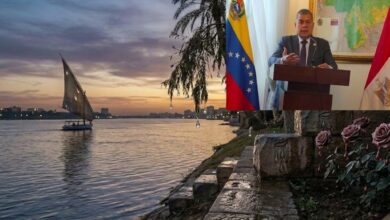
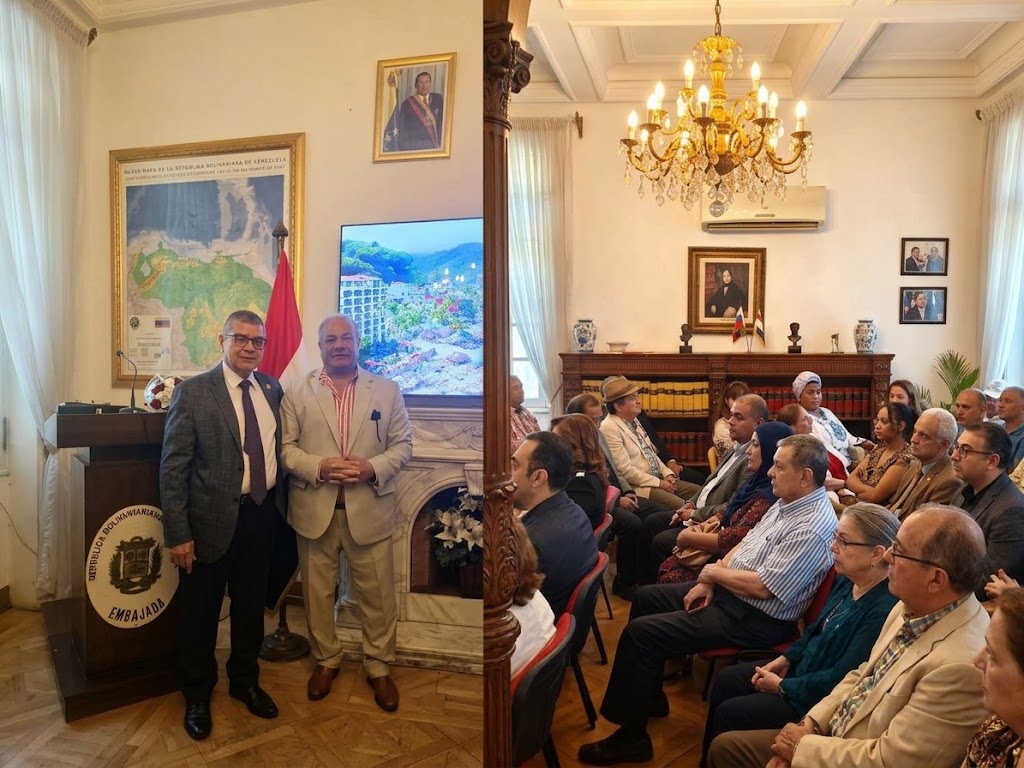
IN a moment blending farewell emotions with political discourse, history, and human connection, Venezuelan Ambassador Wilmer Omar Barrientos delivered a comprehensive message marking the end of his diplomatic mission in Egypt. Reflecting on his eight-year tenure, which he described as filled with “unprecedented and unimaginably difficult conditions,” he affirmed that Venezuela emerged from its consecutive crises more steadfastly attached to its sovereignty and independent decision-making.
The Ambassador noted that the past eight years brought rapid shifts and ongoing crises, highlighting that Venezuela began facing severe economic hardship in 2014 due to sanctions and blockades, directly impacting the lives of its people. However, he emphasized that the Venezuelan public overcame these successive trials like a “phoenix rising from the ashes,” acknowledging that the path was far from easy and that his country faced both constructive and destructive feedback along the way.
Unique Historical Experiences
Barrientos stressed that while conditions across nations may appear similar, they are never identical, as each country carries its own history, social dynamics, and geopolitical context. Highlighting Venezuela’s modern history, he noted that the republic is only 215 years old compared to ancient civilizations like Egypt or Europe, adding that even nations with long histories continually face modern challenges.
Sovereignty and Self-Determination
The Ambassador’s primary message emphasized Venezuela’s commitment to defending its sovereignty and the right to self-determination. Under current strategic conditions, he explained, his nation chose to rely on political and diplomatic instruments—chiefly “peace diplomacy”—as the most effective path out of crises to avoid escalating conflicts. He likened pressuring major powers without offering a political exit to “a trapped tiger with no escape route,” warning that relentless pressure risks severe fallout.
Global Conflicts and Resource Dynamics
Referencing conflicts in Ukraine, Palestine, Syria, Iraq, Libya, Lebanon, and Sudan, Barrientos observed that a common thread in many global crises is the abundance of natural and mineral wealth. He maintained that resolving disputes requires dialogue, diplomacy, and peace rather than warfare, ensuring nations retain the right to self-determination and resource control.
Negotiation Without Compromising Principles
Addressing Venezuela’s negotiations with the United States despite past friction, the Ambassador clarified that engaging in talks does not signify compromising fundamental principles. He stated that the welfare, safety, and interest of the Venezuelan people remain top priorities, and opening up to the world does not equate to surrendering sovereignty. Venezuela aims to build international relations grounded in mutual respect, equality, and state-to-state engagements. Furthermore, the country is actively restoring ties with several Latin American nations—including Chile, Peru, the Dominican Republic, and Argentina—while maintaining consular and humanitarian channels to support citizens abroad.
Firm Support for Palestine
Barrientos affirmed that diplomatic outreach across the globe does not diminish Venezuela’s stance on the Palestinian cause. Reassuring his country’s continued support for the Palestinian people, he described their cause as just and praised their resilience through ongoing hardship, illustrating that diplomacy can safeguard national interests without sacrificing principled positions.
Social Media and Family Dynamics
Shifting from international politics to societal challenges, the Ambassador expressed concern over the growing impact of social media and mobile devices on family cohesion. He cautioned that weakening family bonds destabilizes broader society, pointing to a common sight in public places where families sit around a table, yet each member remains absorbed in their phone. Preserving family structure, education, and social awareness, he argued, is vital to national security.
Internal Stability and Bolívar’s Legacy
Barrientos reaffirmed that Venezuela seeks to prevent civil conflict, noting that external forces often exploit internal divisions. He recalled the historical legacy of Simón Bolívar, who endured severe hardship and lacked resources yet maintained unwavering faith in independence. According to the Ambassador, this spirit of resistance remains central to the Venezuelan identity.
Oil Infrastructure and Long-Term Investment
Regarding the energy sector, the Ambassador explained that signing oil contracts does not yield immediate financial returns or immediate production surges. Expanding oil field development demands substantial capital investment, machinery, drilling operations, and infrastructure development, taking years rather than months. Achieving target production levels requires long-term investment estimated at around $100 billion, with ultimate returns intended to fund health, education, purchasing power, and working-class livelihoods.
Balanced Global Engagement
Highlighting relations with global powers including China, Russia, India, the United States, Iran, and Israel, Barrientos emphasized Venezuela’s right to pursue balanced international relations that serve its citizens while respecting sovereignty. In this regard, he praised Egypt’s foreign policy, calling its ability to maintain diverse global partnerships a commendable model.
Reflections on Egypt
Egypt held a prominent place in the Ambassador’s closing remarks. He recalled that upon his arrival eight years ago, international media coverage of Venezuela was largely negative, prompting efforts alongside partners, institutions, and media figures to counter misinformation and present a balanced perspective. Expressing gratitude to his local collaborators, Barrientos commended Egypt’s visible transformation, noting that the country he departs today has advanced significantly, with expanded infrastructure and development projects serving as catalysts for long-term economic growth.
Diplomacy as a Bridge Between Nations
In conclusion, the Ambassador expressed gratitude to the institutions, organizations, and individuals who supported his mission. He emphasized that bilateral relations are built not only by governments, but also by media, think tanks, political entities, and citizens dedicated to cross-cultural connection. Drawing an analogy to the spread of ideas through human interaction, he highlighted education and awareness as key tools for personal and social growth.
Reflecting on his eight years in Cairo, Barrientos leaves behind established partnerships and a message centered on balance: peace does not mean surrender, global engagement does not require forfeiting sovereignty, and maintaining broad diplomatic ties should never mean abandoning just causes.