Bridges of Excellence: Day Two Highlights of the First Arab-Gulf Conference for Training and Developing

Ashraf AboArafe
The activities of the second and final day of the “First Arab-Gulf Conference for Training and Development” concluded in Cairo. Organized by the International Union for Training and Development (IUTD), under the presidency of Professor Dr. Dera’a Mo’ajab Al-Dousari, the landmark event gathered an esteemed international and regional audience of human development experts, academics, and policymakers.
📖 Inspirational Milestones and Success Stories
The second day commenced with the Fifth Session, chaired by Dr. Tarfa Al-Malki, which focused entirely on powerful real-world success stories:
-
Dr. Amal Mohamed Abdullah Al-Haydos set an inspiring tone with her presentation, “Inspiration and Resilience.”
-
Ms. Samira Saleh Hamad Ahmed Al-Khalaqi offered a philosophical reflection in her paper, “The Embrace of Two Mountains: Between the Wisdom of Experience and the Logic of the Era.”
-
Ms. Reem Saleh Ali Al-Humaidi concluded the session with a global outlook on “Empowering Women Through Training Capacity Building: A Reading of International Experiences.”
💡 The Philosophy of Leadership and Anchors of Change
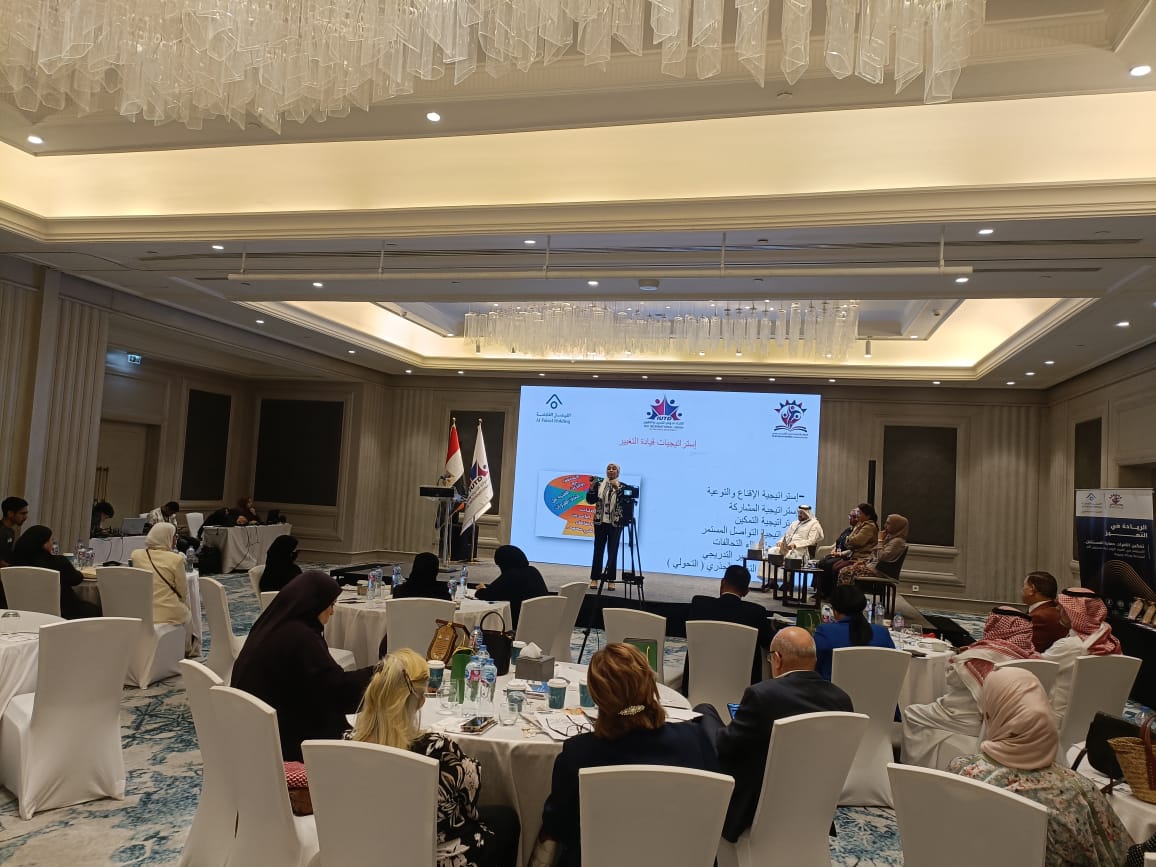 The Sixth Session, led by Dr. Shadi Al-Malki, dived deep into structural and behavioral dynamics within modern leadership:
-
Dr. Enas Fouad Al-Khabbaz examined the psychological framework of corporate shifts in “Emotional Intelligence and its Impact on Leading Change”.
-
Ms. Zohour Majid Sultan explored the intricacies of “Leadership in Voluntary Work and the Non-Profit Sector.”
-
Dr. Sanaa Abdel-Hamid Al-Suraidi linked academic discipline to social impact in “Civil Diplomacy and Voluntary Work as an Arab Soft Power.”
-
Dr. Farida bint Khalifa Al-Hadramiya outlined futuristic pathways in “Women’s Leadership for the Future of Training in the Knowledge Era.”
 🧭 Personal Resilience and the Digital Shift
Chaired by Dr. Aida Nour El-Din, the Seventh Session addressed adaptability in changing times. Ms. Hanan Mohamed Rashed Al-Ghufrani delivered a vital presentation on “How to Deal with Change Without Breaking.” This was followed by Ms. Ilham bin Ammar’s analysis of “Women and Arbitration between Reality and Expectations.” Mr. Ibrahim Abdullah Al-Muhammadi introduced the concept of “The Leading Teacher,” while Ms. Sarah Mohamed Abdel-Latif bin Khanin closed the session by addressing skill gaps through her paper on “The Impact of Executive and AI-Driven Training in the Non-Profit Sector.”
The Eighth Session, presided over by Dr. Mohamed Al-Jandali, shifted focus heavily toward digital tools and institutional performance:
-
Dr. Neama Diab Awad Zagout presented a regional model on “The Digital Transformation of Education in the State of Qatar.”
-
Ms. Najat Issa Abdullah Ahmed mapped out “Smart Women’s Leadership: A Strategic Vision to Reshape the Future of Training.”
-
Ms. Shahad Mubarak Al-Hussaini assessed classroom technologies in “The Effectiveness of Smart Training (AI) in Developing Teacher Competencies.”
-
Ms. Kholoud Saeed Al-Buhaih Al-Marri investigated institutional security in “The Impact of Emotional Intelligence on Job Performance in Security Institutions.”
🎯 The Final Horizon: Smart Governance and AI
The Ninth and Final Session, chaired by Dr. Enas Al-Khabbaz, brought forward contemporary administrative strategies. Ms. Dana Abdullah Al-Obaidli highlighted interpersonal dynamics in “The Impact of Understanding Personality Types on Communication Effectiveness in the Workplace.” Trainer Waleed Al-Tararwah introduced an innovative framework in “Invisible Competencies in Modern Organizations: The Role of Smart Governance and AI in Generating Organizational Value.”
Trainer Hanadi bint Mohamed bin Ibrahim Al-Obaidan looked at contemporary corporate evolution in “Advanced Creative Strategies in Institutional Training and Development.” Finally, Trainer Anwar Al-Budair wrapped up the academic proceedings with her forward-looking paper, “Artificial Intelligence: A New Revolution and its Implications in the World of Management.”
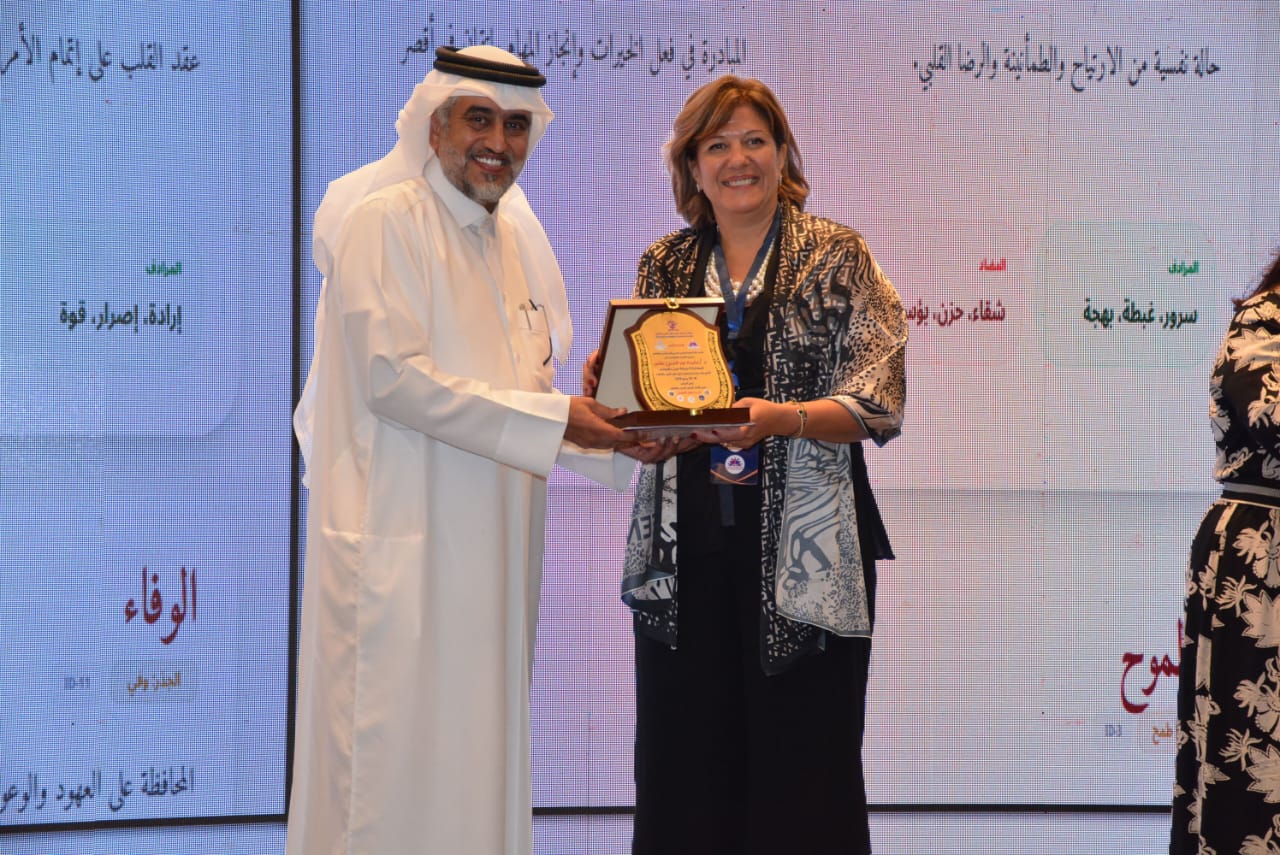
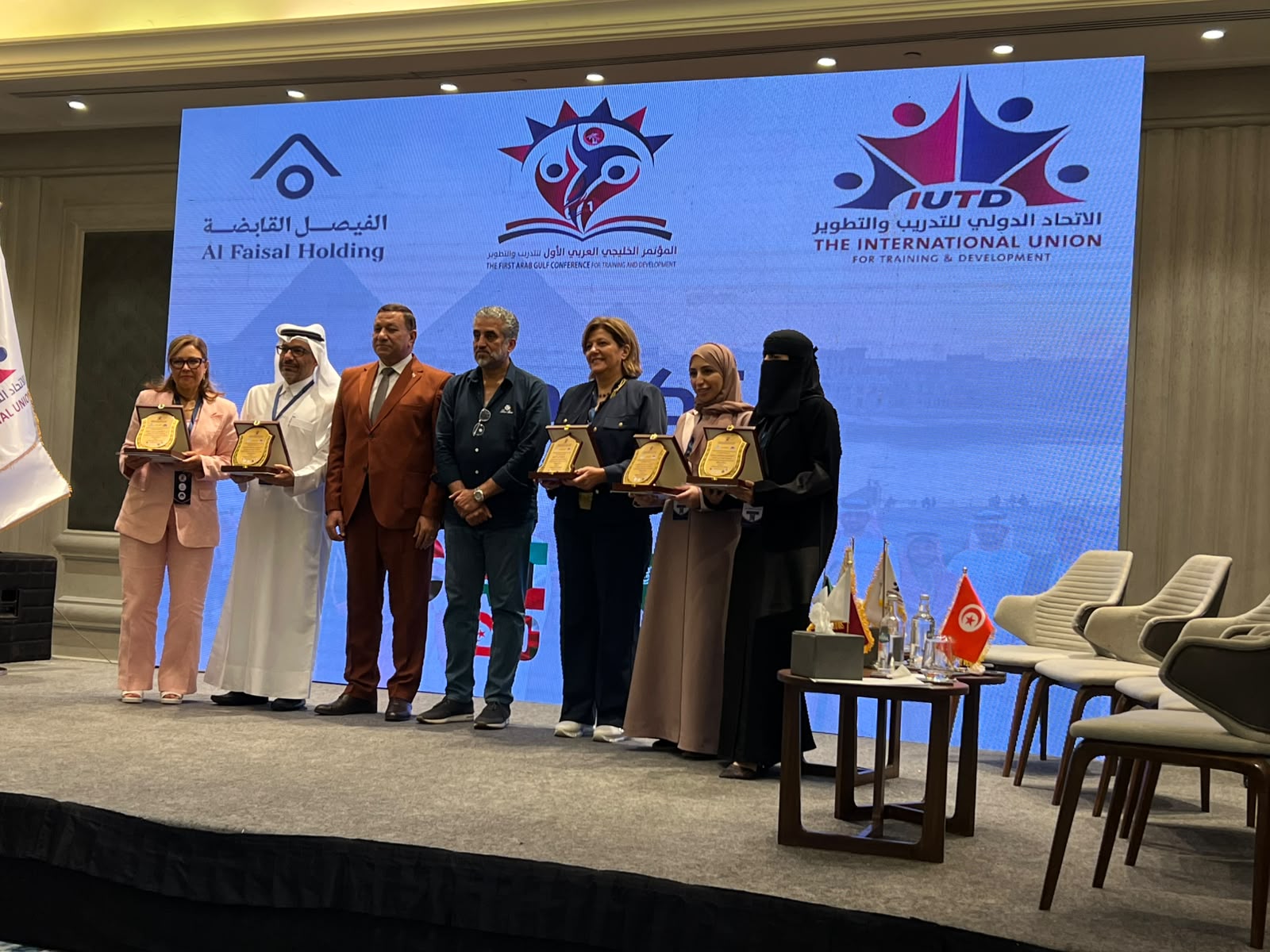
The conference drew to a close with a formal closing ceremony featuring honorary recognitions, the presentation of actionable recommendations, and commemorative group photographs marking a historic milestone in Arab cultural and educational integration.
🎙️ Keynote Address by the Arab Organization for Administrative Development: “Human Capital First”
A major highlight of the event was the distinguished participation of His Excellency Dr. Nasser Al-Hatlan Al-Qahtani, Director General of the Arab Organization for Administrative Development (ARADO) — an organization operating under the auspices of the League of Arab States.
Dr. Al-Qahtani delivered a comprehensive and data-driven speech addressing dignitaries, including His Excellency Sheikh Jassim bin Abdulrahman bin Mohamed Al Thani, Ambassador of the State of Qatar to Egypt, and IUTD President Dr. Dera’a Mo’ajab Al-Dousari. He noted that the conference slogan, “From the Gulf to the Ocean… Bridges of Knowledge and Development,” perfectly encapsulates the Arab world’s urgent need for a unified, human-centric developmental framework.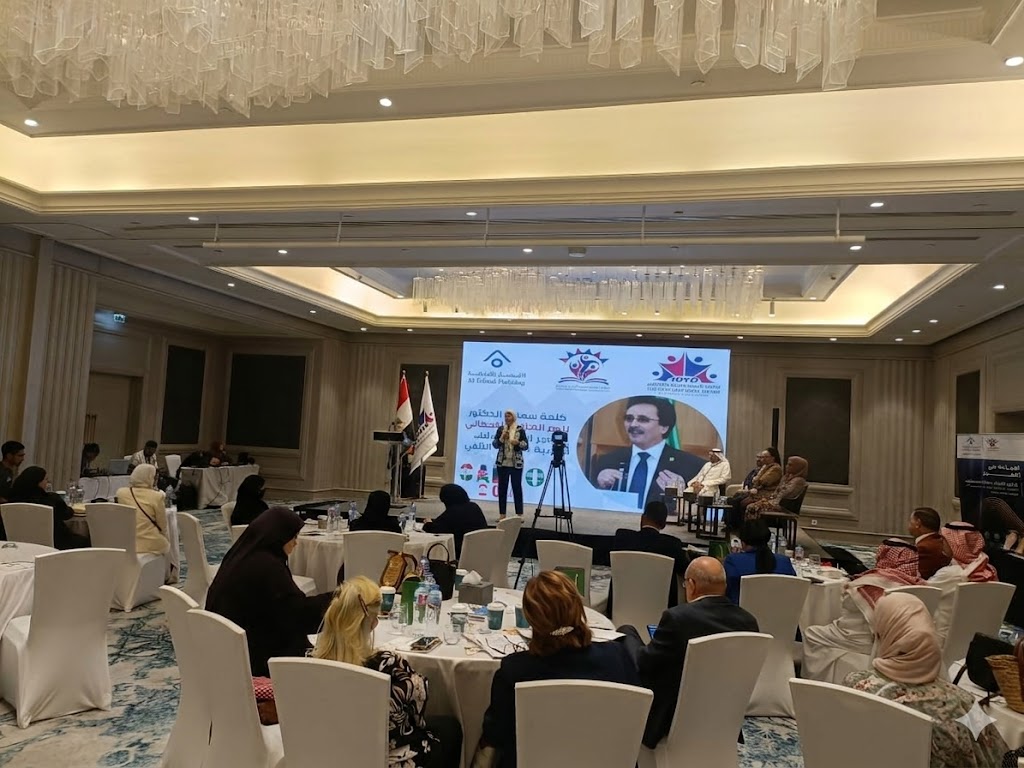
📊 The Global Reality: A Wake-Up Call in Numbers
Grounding his address in modern global metrics, Dr. Al-Qahtani shared critical statistics that demand immediate regional adjustment:
-
39% of current professional skills will radically change by 2030.
-
More than 59% of the existing workforce will imminently require comprehensive upskilling or retraining.
-
50% of global workers have already begun navigating continuous, lifelong learning pathways.
-
Over 80% of business employers state that Artificial Intelligence and digital transformation will fundamentally disrupt standard business models in the coming years.
While celebrating that internet penetration across the Arab world has risen significantly to exceed 70%, Dr. Al-Qahtani accurately diagnosed the current crisis: “The fundamental challenge is no longer about digital access; rather, it is about digital readiness—our capacity to translate connectivity into measurable productivity and genuine economic development.”
🗺️ The Five Strategic Shifts for Arab Training Ecosystems
To successfully bridge this gap, Dr. Al-Qahtani outlined a roadmap consisting of five pivotal institutional transformations:
-
From Volume to Impact: Moving away from merely counting the number of programs held, and shifting toward measuring actual behavioral improvement and real-world performance.
-
From Generic to Future Skills: Prioritizing next-generation capabilities, including Artificial Intelligence, data analytics, and transformational leadership.
-
From Temporary to Continuous Learning: Cultivating learning as a permanent, sustainable culture embedded directly within institutional DNA.
-
From Fragmented Efforts to Arab Integration: Building strong, pan-Arab strategic partnerships across cross-border training institutions.
-
From Expense to Investment: Changing organizational mindsets to treat training budgets as high-return strategic investments with measurable outcomes.
Concluding his speech, the Director General called for the establishment of unified Arab standards for training quality and metric frameworks to evaluate the true Return on Investment (ROI) of human development. He thanked the International Union for Training and Development for creating an essential platform capable of converting knowledge into lasting regional progress.