Ashraf AboArafe
THE relationship between Uzbekistan and Uzbekistan/Azerbaijan has undergone a structural shift, evolving from standard diplomatic relations to a strategic alliance. Despite intense institutional integration led by top-down presidential coordination, economic realities lag behind political goodwill. The path forward requires transitioning from simple commodity trade toward deep supply-chain integration, cross-border investment, and structural friction reduction.
       POLITICAL INTEGRATION                    ECONOMIC REALITY
┌─────────────────────────────────┐      ┌───────────────────────────────┐
│ • Treaty on Allied Relations    │      │ • Trade Volume: $307M (2025)  │
│ • Supreme Interstate Council    │ ───► │ • Share of UZ Trade: < 0.4%   │
│ • 15+ Intergovernmental Mtgs   │      │ • Target Trade: $1.0 Billion  │
└─────────────────────────────────┘      └───────────────────────────────┘
                                   │
                                   ▼
                       STRATEGIC BRIDGE REQUIRED
┌────────────────────────────────────────────────────────────────────────┐
│ Industrial Co-Production  │ Financial Interoperability │ Caspian Logistics │
└────────────────────────────────────────────────────────────────────────┘
Core Analytical Dimensions
1. Institutional Architecture vs. Economic Reality
The bilateral framework exhibits top-heavy alignment, driven primarily by President Shavkat Mirziyoyev and President Ilham Aliyev. While this institutional scaffolding minimizes administrative friction, it exposes a structural imbalance:
-
Institutional Density: Extraordinary for non-neighboring states separated by the Caspian Sea (e.g., Treaty on Allied Relations, Supreme Interstate Council, 11 sister-city agreements, and dozens of parliamentary exchanges).
-
Scale Mismatch: Bilateral trade reached $307 million in 2025 (+15% YoY). However, against Uzbekistan’s total global trade turnover of $81 billion, Azerbaijan accounts for less than 0.4%.
2. Structural Bottlenecks & Strategic Pivots
| Structural Constraint | Operational Impact | Strategic Solution |
| Geographic Separation | High reliance on volatile Caspian multimodal transit and ferry availability. | Transport harmonization, digital cargo tracking, and tariff alignment. |
| Market Overlap | Direct competition in third markets across textiles, agriculture, and chemicals. | Joint production chains targeting third markets via Azerbaijan’s trade deals. |
| Financial Friction | Delayed cross-border payments, cargo insurance barriers, and high transaction costs. | Expanded correspondent banking and local currency settlement mechanisms. |
3. Industrial Cooperation: The Primary Growth Engine
Because conventional bilateral trade is capped by market size and export similarities, reaching the official $1 billion bilateral target relies entirely on joint industrial ventures:
-
Capital Mechanisms: The Azerbaijan–Uzbekistan Investment Company (AUIC) (charter capital: $500M) anchors the financial framework, with 15 active projects ($360M) and a planned pipeline exceeding $6 billion.
-
Production Anchors: The Uzavtosanoat–Azermash joint vehicle assembly at Hajigabul (11,000+ units produced) is transitioning into an $84M+ full-cycle manufacturing plant.
-
Secondary Clusters: Development of joint textile, sericulture, agro-industrial, and regional logistics nodes.
Priority Action Items for Acceleration
-
Standards Synchronization: Implement mutual recognition of agricultural safety certificates and laboratory testing to eliminate non-tariff trade barriers.
-
Financial Settlement Routes: Build direct banking channels and standardized currency conversion mechanisms to bypass foreign banking intermediaries.
-
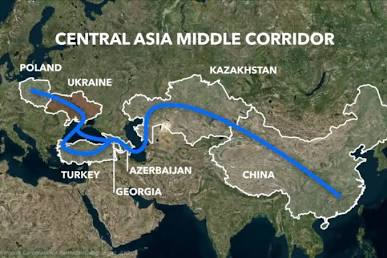
Middle Corridor Integration: Harmonize shipping schedules and expand infrastructure capacity across Caspian maritime routes.
The next phase of Uzbek–Azerbaijani relations will be measured not by new committees or treaties, but by the volume of shared manufacturing output that flows across the Caspian.